Keeping your car Maintenance running great does not have to be a giant headache. Most drivers spend too much money because they wait for things to break. You can stop those big repair bills today.
Key Highlights
- Average car maintenance costs can reach $1,500 yearly
- Tire replacement for 4 tires often costs $400 to $1,500
- Regular servicing improves fuel efficiency and safety
- Seasonal checks help prevent breakdowns
- Simple DIY checks can extend engine life
- Tire care plays a major role in road safety
- Following a maintenance schedule protects resale value
- Car insurance and maintenance work together to reduce financial stress
Why Car Maintenance Matters More Than Ever
Cars have become more advanced, but repair costs are climbing fast. According to recent AAA data, the average cost of owning and maintaining a vehicle in the United States reached about $11,577 annually in 2025. Maintenance, repair, and tire expenses alone averaged over 11 cents per mile.
That means skipping a simple oil change can turn into a $3,000 engine repair later. Many drivers wait until warning lights appear, but experienced mechanics know problems usually start long before the dashboard tells you. Small issues grow quietly, almost like a tiny leak turning into a flooded basement.
Regular maintenance also protects your resale value. A well-maintained car with service records often sells for thousands more than a neglected vehicle. Buyers trust cars with documented care because they know the engine, brakes, and tires were checked regularly.
Mike Crossen, lead auto test technician at Consumer Reports, explained it clearly: “Timely action could save you a lot of money.”
What is the 30 60 90 rule for cars?
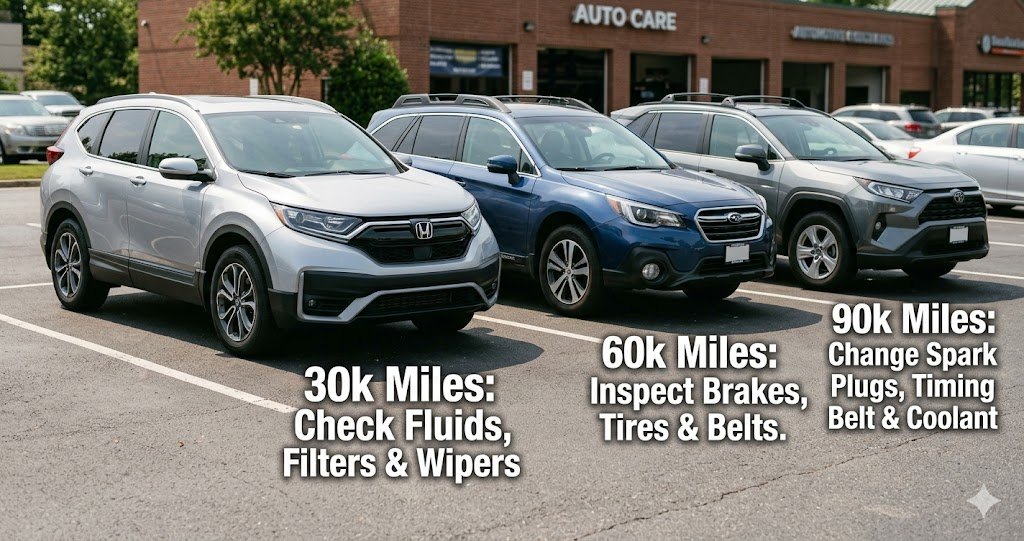
This rule is the golden secret of the car world. Every 30,000 miles, you need to perform specific checks.
At 30,000 miles: Change your air filters and fuel filters. Check your coolant.
At 60,000 miles: It is time for new spark plugs and a battery test. Check your brake pads.
At 90,000 miles: This is the big one. Replace your timing belt and all fluids. Doing this ensures your car lasts way past 200,000 miles.
How Much Do 4 New Tires Cost?
One of the biggest maintenance costs drivers face is tire replacement. On average, 4 new tires cost between $400 and $1,500 depending on tire size, vehicle type, and brand.
A set of four tires usually costs between $400 and $1,200. If you drive a small sedan, you might pay on the lower end. For a large truck or an SUV, expect to pay closer to $800 or $1,000. Experts at Consumer Reports state that good tires last about six years. Do not forget to add $100 for mounting and balancing.
| Vehicle Type | Average Cost for 4 Tires |
|---|---|
| Compact Car | $400 to $700 |
| Sedan | $500 to $900 |
| SUV | $800 to $1,200 |
| Luxury Vehicle | $1,000 to $1,500 |
What Is the 8% Rule for a Car?
The 8% rule suggests your total monthly car expenses should stay below 8% of your monthly income. That includes:
- Loan payments
- Fuel
- Insurance
- Maintenance
- Registration
If your income is $5,000 monthly, your total car expenses should ideally stay below $400. This rule helps drivers avoid financial stress caused by expensive vehicles.
Many families focus only on monthly payments and forget maintenance costs. A luxury SUV with expensive tires and high repair costs can quietly drain your budget.
What is the 1% rule for maintenance?
This is a smart way to save. Put aside 1% of your car’s original price every year for repairs. If your car cost $30,000, save $300 a year. This small fund means you will never be stressed when a mechanic tells you that you need new brakes.
What Is the 10 Rule in Maintenance?
The 10 rule is a simple reminder many drivers use: spend 10 minutes every week checking your car Maintenance.
In those 10 minutes, inspect:
- Tire pressure
- Fluid levels
- Dashboard warning lights
- Windshield wipers
- Exterior lights
This habit catches small issues early. A slow tire leak or low coolant level is easy to fix now but expensive later.
Car Maintenance Checklist for Beginners: What to Check and When
You do not need to be a mechanic to care for your car. Use this simple list:
- Every Month: Check your oil level and tire pressure.
- Every 6 Months: Replace your windshield wipers and wax your car.
- Every Year: Get a professional inspection and change your cabin air filter.
- Every 2 Years: Flush your brake fluid.
Seasonal Car Maintenance Essentials
Weather changes can punish your vehicle. Hot summers and freezing winters create different problems.
Summer Car Maintenance Tips
During summer:
Check coolant levels often
Inspect AC performance
Monitor tire pressure
Keep battery terminals clean
Heat increases tire pressure and battery strain. Long road trips also stress your cooling system.
Winter Car Maintenance Tips
Before winter:
Test battery strength
Replace worn wiper blades
Check heater operation
Keep emergency supplies inside the car
Cold weather thickens engine oil and weakens batteries. That’s why winter breakdowns are common.
Tata Car Service Schedule
If you own a Tata vehicle, following the correct service schedule helps maintain performance and warranty coverage.
| Tata Service Type | Recommended Interval |
|---|---|
| First Service | 15,000 km or 12 months |
| Second Service | 30,000 km |
| Third Service | 45,000 km |
| Major Inspection | 60,000 km |
Popular Tata models like the Tata Nexon and Tata Punch require regular oil changes, brake checks, and tire inspections for best performance.
The Role of Tyres in Vehicle Maintenance
Tires are your car’s only contact with the road. Yet many drivers ignore them until a flat happens.
Experts recommend checking tire tread monthly. Uneven wear may signal alignment issues or suspension problems.
Here’s a quick tire care table:
| Tire Issue | Why It Happens | Solution |
|---|---|---|
| Uneven wear | Poor alignment | Wheel alignment |
| Low pressure | Air leak | Inflate and inspect |
| Vibrations | Unbalanced tires | Tire balancing |
| Cracks | Old rubber | Tire replacement |
Easy DIY car maintenance – tips every driver should know
- You can do many things at home with zero tools.
- Air Filters: These just snap into place. You save $40 in labor.
- Wiper Blades: Most slide right off. No tools needed.
- Checking Fluids: Use the dipsticks. If it is low, add more.
- Cleaning Battery Terminals: Use baking soda and water to remove crusty white buildup.
Basic Car Maintenance Tips & Services Checklist
| Service | What It Does | Recommended Timing |
|---|---|---|
| Oil Change | Lubricates engine | Every 5,000 to 7,500 miles |
| Tire Rotation | Extends tire life | Every 5,000 miles |
| Brake Inspection | Improves safety | Twice yearly |
| Battery Test | Prevents no-start issues | Every 6 months |
| Fluid Check | Protects engine systems | Monthly |
Final Verdict
Taking care of your car is the best way to keep your family safe and your wallet full. If you follow the 30 60 90 rule and check your fluids once a month, you will avoid almost all major breakdowns. Start small. Check your tires today. You will feel much better knowing your car is ready for the road ahead. Professional mechanics say that 70% of car problems are preventable. Be the driver who stays ahead of the game.
FAQs
What is the 30-60-90 rule for cars?
The 30-60-90 rule refers to major maintenance checks at 30,000, 60,000, and 90,000 miles. These inspections include fluids, brakes, filters, and engine components.
How to best maintain your car?
Follow the service schedule, check fluids regularly, inspect tires monthly, and fix small issues before they become expensive repairs.
What are the 5 basic maintenance skills?
The five basic skills include checking oil, inspecting tire pressure, replacing wiper blades, checking coolant levels, and monitoring battery condition.
What are the 7 basic fluids of car care?
The seven important fluids include engine oil, coolant, brake fluid, transmission fluid, power steering fluid, windshield washer fluid, and differential fluid.
What are the 9 fluids in a car?
The nine common vehicle fluids include engine oil, coolant, brake fluid, transmission fluid, power steering fluid, washer fluid, differential fluid, refrigerant oil, and fuel system fluid.
Can I use water instead of coolant?
Water can be used temporarily during emergencies, but coolant is necessary because it prevents overheating, corrosion, and freezing damage.
About The Author