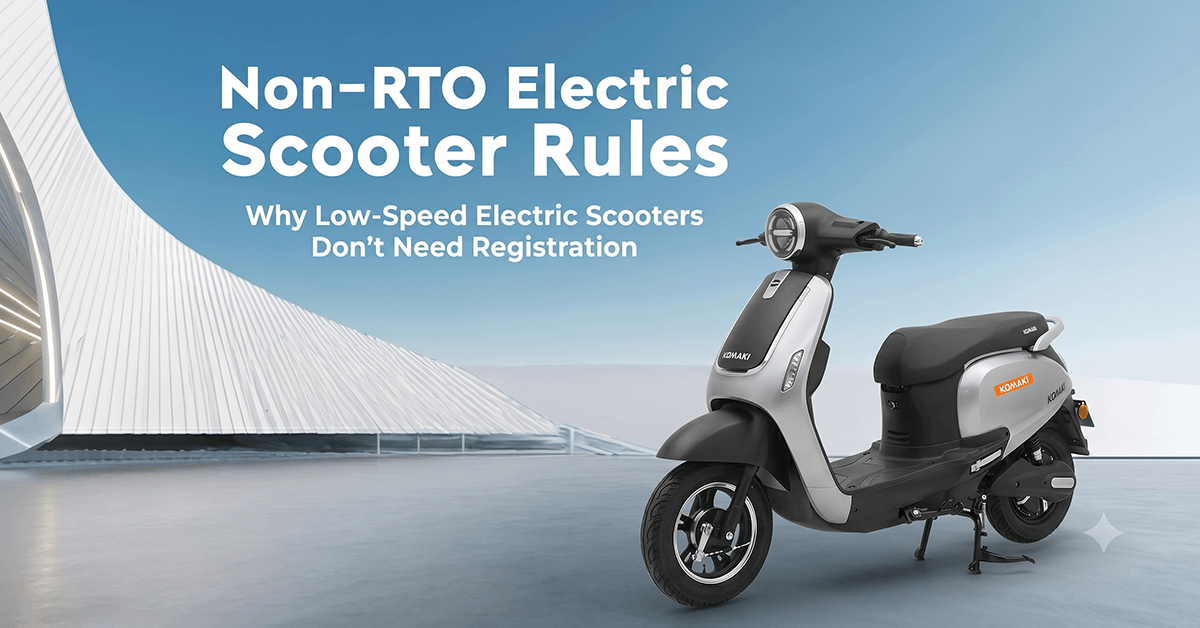
A Non-RTO electric scooter can save you time, paperwork, and registration costs. If you mainly ride short distances in your neighbourhood, this category may be a practical choice for daily travel.
Key Highlights:

- Low-speed electric scooters with a maximum speed of up to 25 km/h
- Limited motor power qualifies for registration exemption
- Buyers should always verify the latest specifications before purchase.
“Many first-time EV buyers choose low-speed scooters because of their lower ownership requirements, but understanding the legal limits is essential before riding on public roads.”
Source: EV Industry Consultant, 12+ Years Experience
What Does “Non RTO” Actually Mean for You?
RTO stands for Regional Transport Office. This is the government office where you get licenses and vehicle plates. When we talk about a non-RTO electric scooter, we mean the government does not count it as a regular motor vehicle.

You get to skip the long lines at the transport office entirely. You walk into the showroom, buy the scooter, charge the battery, and ride it home. It is exactly like buying a standard bicycle. You own it completely without the government needing to track it with a special number plate. This keeps things incredibly easy and cheap for your family.
According to the Ministry of Road Transport and Highways (MoRTH), an electric two-wheeler qualifies as a Non-Motorised Vehicle (NMV) only if it meets two conditions. First, its motor power must be below 250 watts. Second, its top speed must not exceed 25 km/h.
A Non-RTO Electric Scooter’s Exact Rule, In One Sentence
As a result, these vehicles are treated like bicycles under the Central Motor Vehicles Rules. Therefore, they do not require registration, a driving licence, or mandatory insurance.

This is the legal foundation of the non-RTO electric scooter category. For example, a scooter with a 1,000 W motor limited to 25 km/h still falls under the high-speed category because its motor power exceeds the 250 W limit.
What This Exemption Actually Frees You From
- No RTO registration is required, so you do not need Form 20, a number plate, or a fitness certificate.
- Likewise, no driving licence is needed. You can legally ride a non-licensed electric scooter from age 16 instead of 18.
- In addition, third-party insurance is optional, not mandatory. However, it is still a smart choice for extra protection.
- Since these scooters fall under the NMV category, road tax does not apply.
- Finally, no PUC certificate is required because these vehicles produce zero tailpipe emissions.
Limits and Risk Planning for Non-RTO Electric Scooter Ownership
The registration exemption does not mean unlimited freedom. You should understand the practical limitations.
Common Limits:
- Lower top speed.
- Not ideal for highways.
- Longer travel times.
- Limited performance on steep roads.
- Battery range varies by model.
From my experience reviewing electric mobility products, many buyers underestimate speed limitations. A scooter capped at 25 km/h works well for neighbourhood travel but may feel slow during longer city rides.
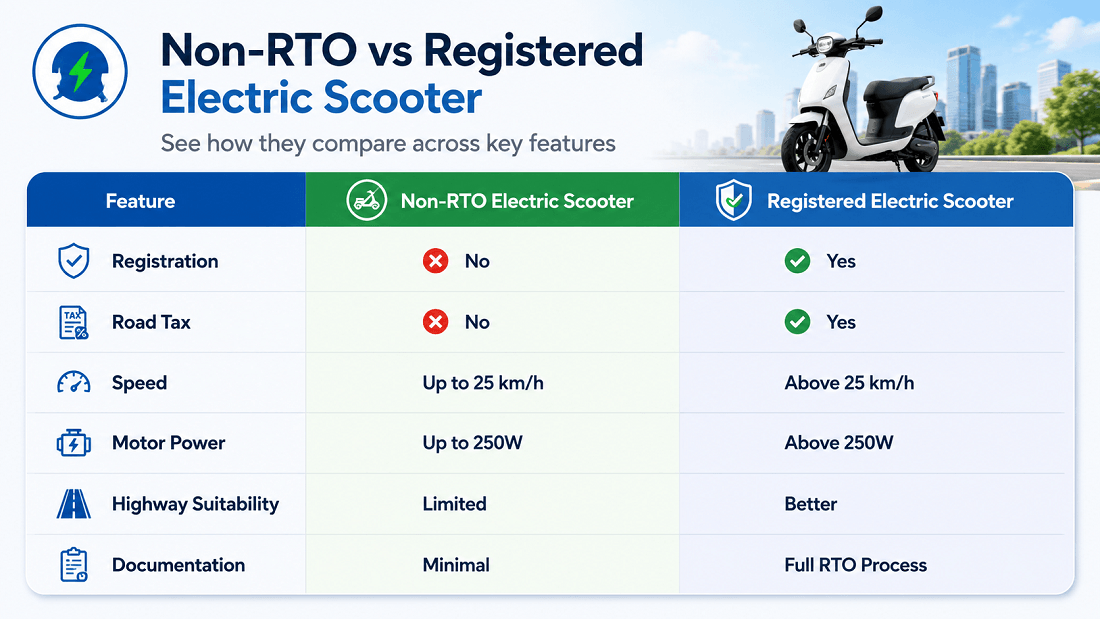
How This Category Compares with Registered Electric Scooters
| Feature | Non-RTO Electric Scooter | Registered Electric Scooter |
|---|---|---|
| Registration | No | Yes |
| Road Tax | No | Yes |
| Speed | Up to 25 km/h | Above 25 km/h |
| Motor Power | Up to 250W | Above 250W |
| Highway Suitability | Limited | Better |
| Documentation | Minimal | Full RTO Process |
Common Myths About A Low-speed Non-RTO Electric Scooter
Myth 1: “You Can’t Carry a Pillion”
False. A low-speed electric scooter is designed and certified for two riders. In fact, it follows the same rules as a regular scooter. The 25 km/h speed limit remains the same whether you ride alone or with a pillion passenger.
Myth 2: “It’s Illegal to Ride After 6 PM”
Also False. There are no restrictions on riding a low-speed electric scooter at night. However, your scooter must have a working headlamp and taillamp. As a result, riding after dark is completely legal.
Myth 3: “Cops Fine You Anyway”
Mostly a myth. Sometimes, a traffic officer may mistake a low-speed electric scooter for a regular electric vehicle. In that case, simply show your purchase invoice and the manufacturer’s speed and motor power certificate. Since most dealers provide these documents at delivery, verification is usually quick. As a result, any incorrect challan is often cancelled within minutes.
Buyer and Legal Checklist Before You Pay for a Non-RTO Electric Scooter
Before making payment, verify the following:
Buyer Checklist
- Confirm top speed is 25 km/h or below.
- Confirm motor rating is 250W or below.
- Ask for manufacturer specifications.
- Verify battery warranty.
- Check local dealer support.
- Understand replacement battery costs.
- Request invoice and ownership documents.
- Confirm service centre availability.
What To Ask Your Dealer
Use these questions before finalising your purchase.
- Is this model officially classified as a non-RTO electric scooter?
- The certified top speed
- What is the motor power rating?
- What battery warranty is included?
- The expected battery replacement cost
- Are spare parts readily available?
- What range can I realistically expect?
A trustworthy dealer should answer these questions clearly and provide written specifications.
What is the difference between an RTO and a non-RTO electric scooter?
The absolute main difference is the government paperwork and the motor size. RTO models have big, powerful motors of over 250 watts and drive very fast. They are legally motor vehicles. Non-RTO models keep the electric motor very small and the speed very low. Because they are slow, the law treats them like simple motorised bicycles.
FAQs About Non-RTO Electric Scooter
What is non RTO electric scooter rules in India?
The rule states that any battery-operated vehicle with a small motor power up to 250 watts and a maximum speed limit of 25 kilometres per hour is fully exempt from registration.
Is a non-RTO electric scooter good?
Yes, they are excellent for local city travel. They are extremely cheap to run, costing only about 15 rupees to fully charge. They are also very safe for teenagers or older adults because they cannot speed.
Is insurance required for non-RTO electric scooters?
No, the law does not force you to buy motor insurance. However, buying a basic fire and theft policy is a very smart move to protect your money.
Is a helmet required for a non-RTO electric scooter?
The law does not strictly demand a helmet for these super slow vehicles. I strongly tell all my clients to wear a good helmet anyway to protect their heads from bad drivers on the road.
What happens if I get caught on my electric scooter?
If your scooter meets the 250-watt and 25 kmph rule, police cannot fine you for lacking a license or registration. Keep your original dealer receipt and the brand exemption certificate locked under the seat, just in case they stop you.
Which electric scooter doesn’t require registration?
Many top brands offer excellent slow options. You can easily find a safe Komaki electric scooter, an amazing Ampere electric scooter, a reliable Hero electric scooter, or a stylish yakuza electric scooter that perfectly falls in the low-speed category.
Final Verdict
Buying a non-RTO electric scooter is a brilliant financial decision for local daily tasks. You save thousands of rupees upfront, and you skip endless annoying trips to crowded government transport offices. You get a reliable machine that costs pennies to charge at home. Remember to stay safe on the roads, always wear a good helmet, and enjoy your new peaceful freedom.
About The Author