

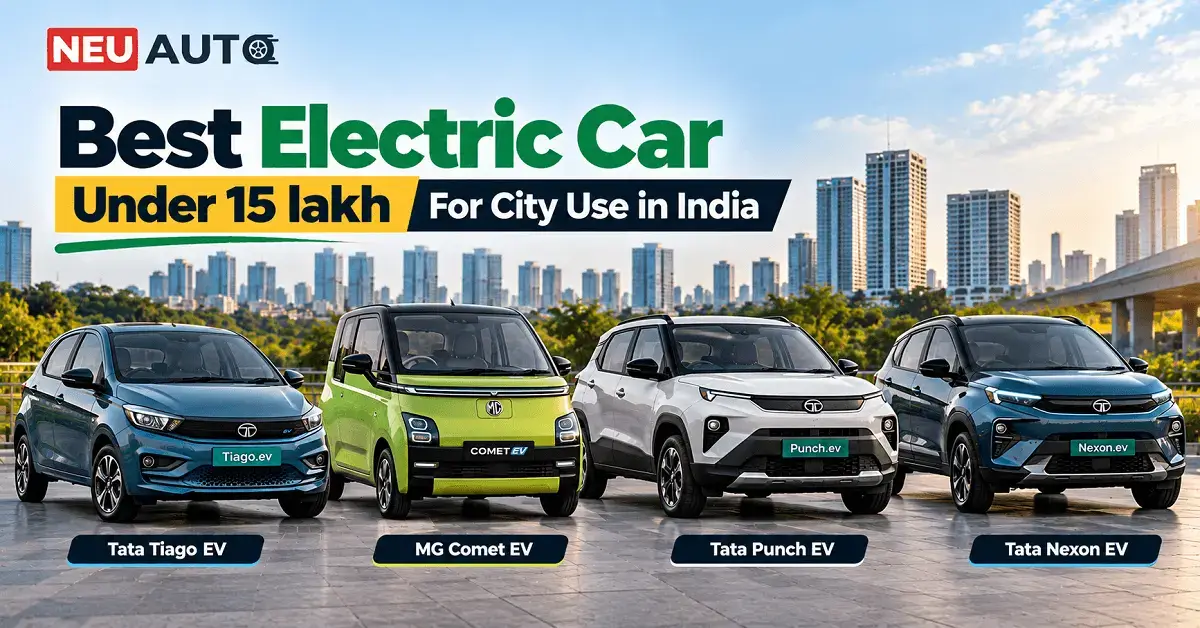
Choosing the Best Electric Car Under 15 lakh For City Use depends on how far you drive, how many passengers you carry, and whether you can charge at home. In 2026, options such as the Tata Tiago EV, MG Comet EV, Tata Punch EV, Mahindra XUV 3XO EV and selected variants of the Tata Nexon EV offer different combinations of affordability, practicality and driving range. Compare the ex-showroom price with the on-road quotation, and check real-world range figures before deciding which electric car fits your daily commute.
Price and range note: Prices below are indicative ex-showroom prices sourced from manufacturer websites or current automotive listings reviewed in October 2026. They may change by location, variant and offer. Independently tested range figures are identified separately from manufacturer-claimed figures.
Best Electric Cars Under ₹15 Lakh for City Driving
| Electric car | Indicative ex-showroom price | Range information | Best suited for |
|---|---|---|---|
| Tata Tiago EV | ₹6.99–₹10.09 lakh | Claimed: 226–285 km; older 24 kWh version tested at 187 km on a combined cycle | Daily commuting and small families |
| MG Comet EV | ₹7.80–₹10.07 lakh | Claimed: 230 km; independently tested: 193 km | Short commutes and tight parking |
| Tata Punch EV | ₹9.69–₹12.59 lakh | 40 kWh version: 468 km certified; manufacturer C75 real-world estimate: approximately 355 km | Families wanting a compact electric SUV |
| Citroën ë-C3 / ë-C3X | Approximately ₹11.99–₹13.26 lakh for listed versions | Updated ë-C3X: approximately 325–330 km claimed; older ë-C3 tested at 228 km | Buyers who prioritise ride comfort |
| Mahindra XUV 3XO EV | From ₹13.89 lakh | Manufacturer-stated real-world range: up to 285 km | Buyers wanting an SUV with modern features |
| Tata Nexon EV | From ₹12.49 lakh | 45 kWh version: 489 km certified; independently tested at 350 km | Buyers considering a larger electric SUV |
| Kia Syros EV | From ₹13.49 lakh | Up to 526 km certified; independent real-world figure not verified in the sources reviewed | Buyers seeking a feature-rich compact EV |
| MG Windsor EV | BaaS offer: ₹11.29 lakh + ₹3.99/km; battery-inclusive price starts at ₹15.99 lakh | 38 kWh version: 332 km certified and 308 km in an independent combined-cycle test | Buyers prioritising cabin space who understand BaaS costs |
Important: The tested range figures above are not all from the latest 2026 versions. For the Tiago EV, Citroën ë-C3 and MG Windsor EV, the independent test results refer to specific battery versions or earlier specifications. The Punch EV’s approximately 355 km figure is Tata’s C75 real-world estimate, not an independently measured result. The XUV 3XO EV’s 285 km figure is Mahindra’s stated real-world range.
Sources: Tata Tiago EV, Tata Punch EV, MG Comet EV, Mahindra XUV 3XO EV, Kia Syros EV, MG Windsor EV
1. Tata Tiago EV: A Sensible Choice for Daily Commuting
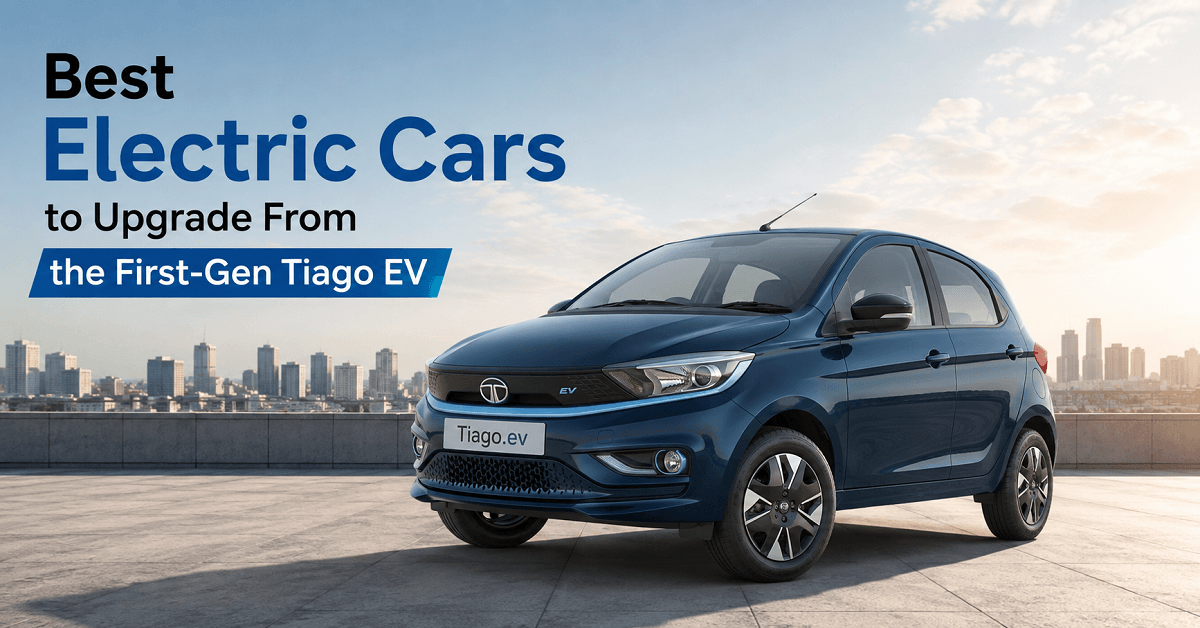
The Tata Tiago EV is worth considering if you need an affordable electric hatchback for office travel, school runs and everyday errands. Its compact dimensions make it easier to manoeuvre through busy streets and park in smaller spaces. Tata lists the 2026 Tiago EV from ₹6.99 lakh ex-showroom, with 19.2 kWh and 24 kWh battery options and a claimed range of 226–285 km, depending on the version.
For a realistic comparison, Autocar India’s earlier test of the 24 kWh Tiago EV recorded 187 km over a combined city-and-highway cycle. This is a useful reference, but it should not be presented as a test of every 2026 variant. Your actual range will depend on traffic, air-conditioning use, driving style and battery condition.
Best for: First-time EV buyers, small families and commuters who can charge at home.
Before buying: Compare the battery options, charging times, safety equipment, and warranty. Request a written on-road quotation rather than relying on the starting price alone.
2. MG Comet EV: Best for Short City Trips and Easy Parking
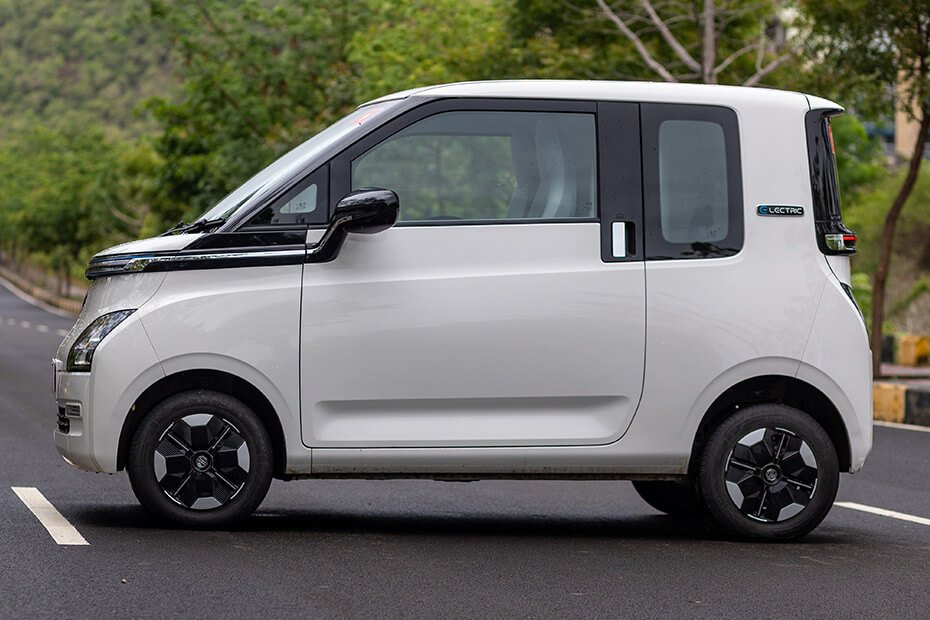
The MG Comet EV is designed around urban convenience. Its small footprint is helpful when navigating narrow streets, congested areas and crowded parking spaces. The current MG listing shows prices from approximately ₹7.80 lakh to ₹10.07 lakh ex-showroom, with BaaS options also advertised separately.
MG lists a 230 km certified range. In Autocar India’s combined-cycle test, the Comet EV achieved 193 km. That independent result makes it a useful reference for buyers who want to estimate how often they might need to recharge, although individual results will vary. The main compromise is practicality. The Comet is a four-seater with limited luggage space compared with conventional five-seat hatchbacks. It can work well for one or two regular occupants, but families who frequently travel with several passengers should assess rear-seat access and comfort in person.
Best for: Solo commuters, couples and households needing a compact second car.
Before buying: Check which variant includes AC fast-charging capability. Do not assume that every version supports DC fast charging.
3. Tata Punch EV: A Strong All-Rounder for Urban Families
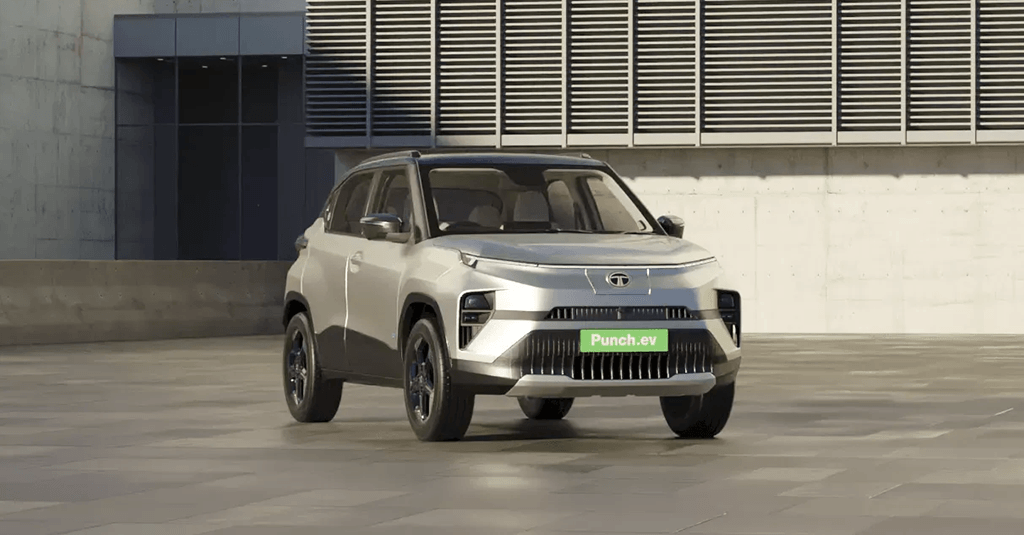
The Tata Punch EV is a compelling option if you want an electric car with SUV styling, higher ground clearance and space for family use. Tata’s official pricing lists the new Punch EV from ₹9.69 lakh to ₹12.59 lakh ex-showroom, depending on the variant. The 40 kWh version has a certified range of up to 468 km. Tata also quotes an estimated real-world C75 range of approximately 355 km. These are different measures: the certified figure comes from a controlled test cycle, while C75 is the manufacturer’s real-world estimate rather than an independent road-test result.
For city driving, the Punch EV offers a more upright driving position than a small hatchback and can be a useful compromise between size and practicality. However, check the exact variant before comparing equipment, because battery capacity, features and charging specifications can differ.
Best for: Small families, buyers who prefer SUV styling and people who need a practical everyday EV.
Before buying: Test the car on your regular roads, check home-charging access and compare the on-road price of the 30 kWh and 40 kWh versions.
4. Citroën ë-C3 / ë-C3X: Worth Considering for Ride Comfort
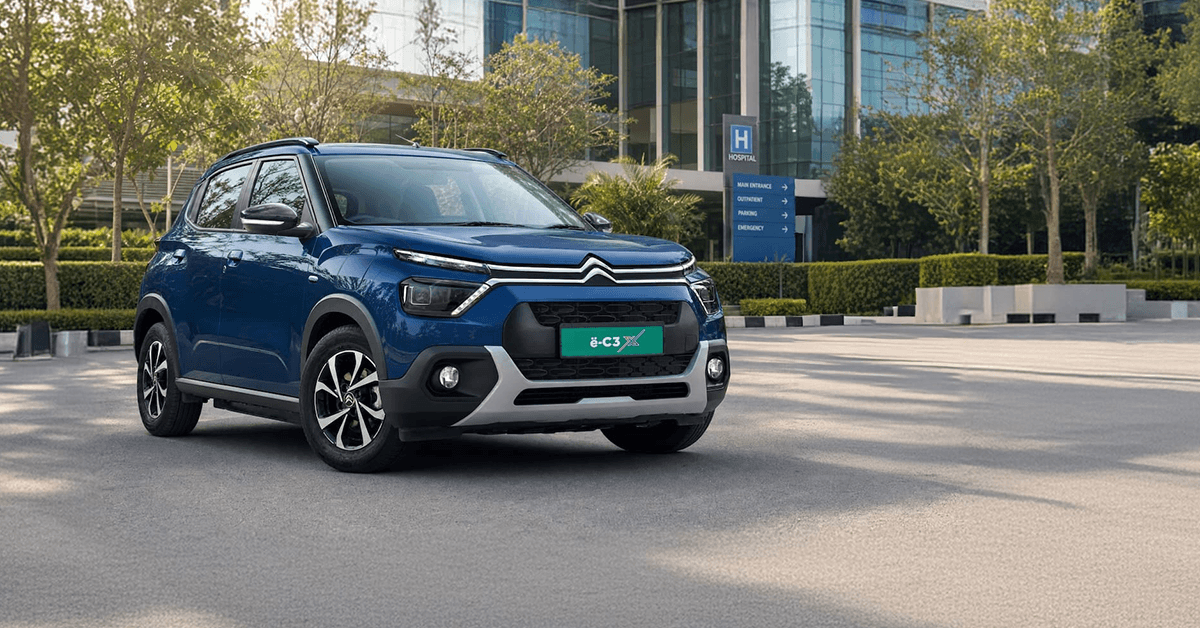
The Citroën ë-C3 and updated ë-C3X are worth considering if you prefer a straightforward electric hatchback with a raised stance. The ë-C3 has a 29.2 kWh battery, while the updated ë-C3X is listed with a higher claimed range of approximately 325–330 km, depending on the specification and source. Autocar India’s earlier test of the ë-C3 recorded 228 km over a combined city-and-highway cycle. Treat that result as a reference for the tested version, not a guaranteed range for the updated ë-C3X.
The ë-C3’s appeal is its uncomplicated driving experience and comfortable ride character. However, compare the safety and convenience equipment with the Tata Punch EV and Tiago EV before making a decision.
Best for: Buyers who value ride comfort and want an alternative to mainstream electric hatchbacks.
Before buying: Verify the exact model name, battery specification, warranty, service availability and current price. If considering a BaaS offer, include the recurring battery fee in your ownership-cost calculation.
5. Mahindra XUV 3XO EV: A Feature-Focused Compact SUV
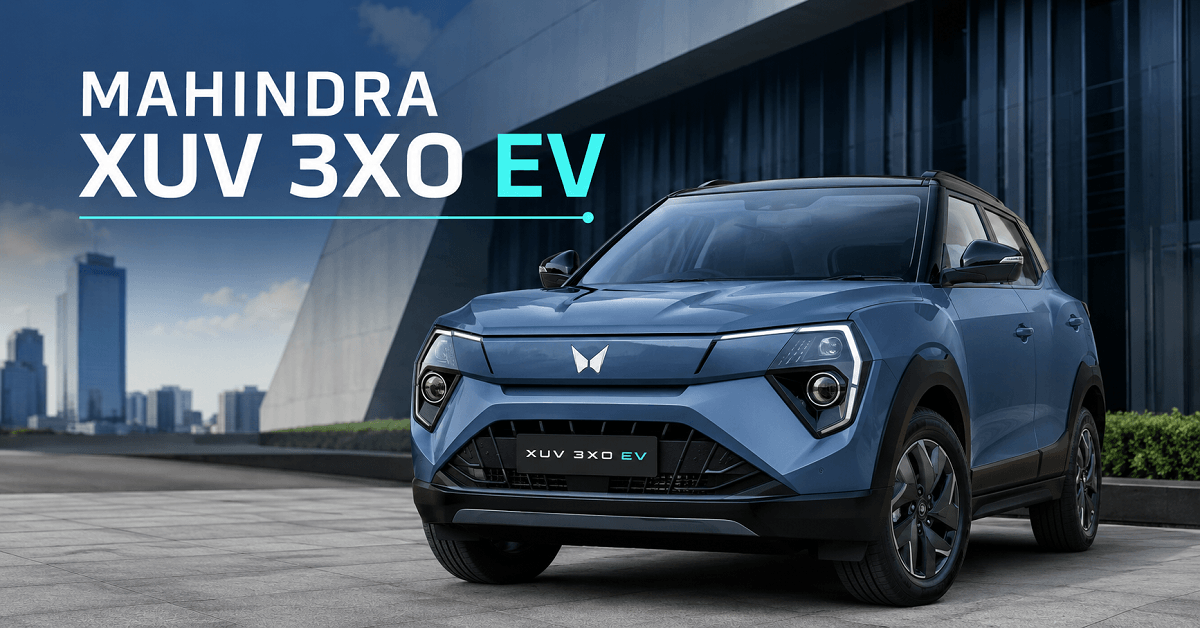
The Mahindra XUV 3XO EV adds another option for buyers seeking a compact electric SUV. Mahindra announced the model with a starting price of ₹13.89 lakh ex-showroom and a 39.4 kWh battery. The company states a real-world range of up to 285 km. Mahindra also lists features such as Level 2 ADAS on relevant variants, a 360-degree camera and connected-car technology. Equipment availability depends on the selected trim, so do not assume every feature is standard on the entry variant.
For urban use, consider whether the higher seating position, cabin features and driving range suit your commute. Compare it directly with the Punch EV and entry-level Nexon EV, particularly if your budget is close to ₹15 lakh.
Best for: Buyers who want a compact SUV format and modern driver-assistance features.
Before buying: Confirm the current variant price, actual delivery availability, battery warranty and charging compatibility. Treat 285 km as the manufacturer’s stated real-world range, not a range figure independently verified in this guide.
6. Tata Nexon EV: Consider the Entry Variant Carefully
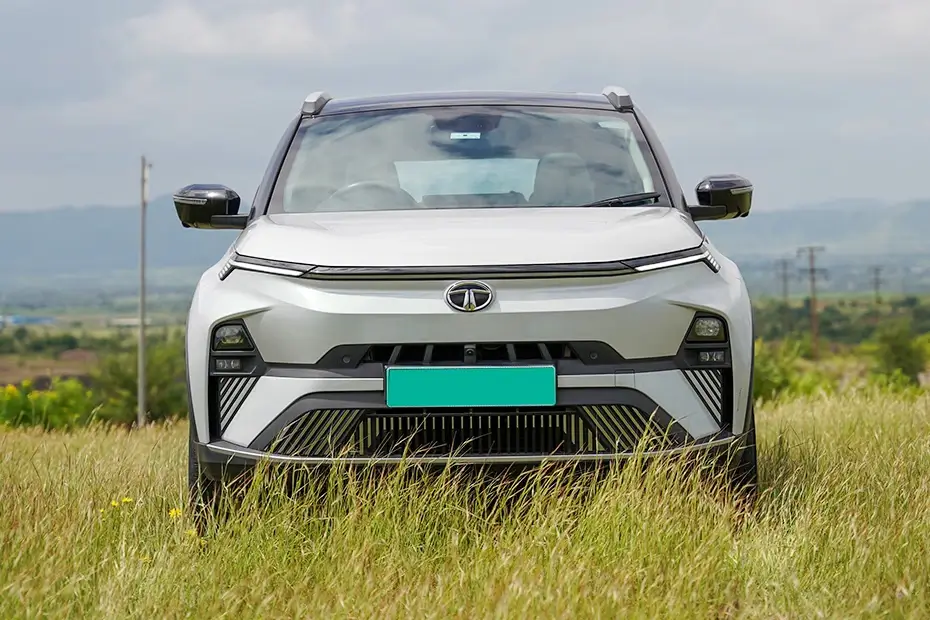
The Tata Nexon EV is worth evaluating if you want a larger electric SUV and can find a variant that fits your budget. Tata lists the Nexon EV from ₹12.49 lakh ex-showroom, but the full range extends well above ₹15 lakh. The entry price should therefore not be mistaken for the price of every variant. The 45 kWh version has a certified range of up to 489 km. Autocar India’s independent testing recorded 350 km for this battery version on a single charge. This is a combined-cycle result, not a guarantee of the distance you will achieve in city traffic.
The Nexon EV makes sense for buyers who want more flexibility for family travel and occasional longer trips. However, once registration, insurance and other on-road charges are added, the entry variant may exceed a strict ₹15 lakh on-road budget in some locations.
Best for: Buyers who want a roomier electric SUV and have some flexibility in their budget.
Before buying: Ask for a complete on-road quotation for the exact variant and confirm whether it stays within your budget.
7. Kia Syros EV: A New Option to Compare
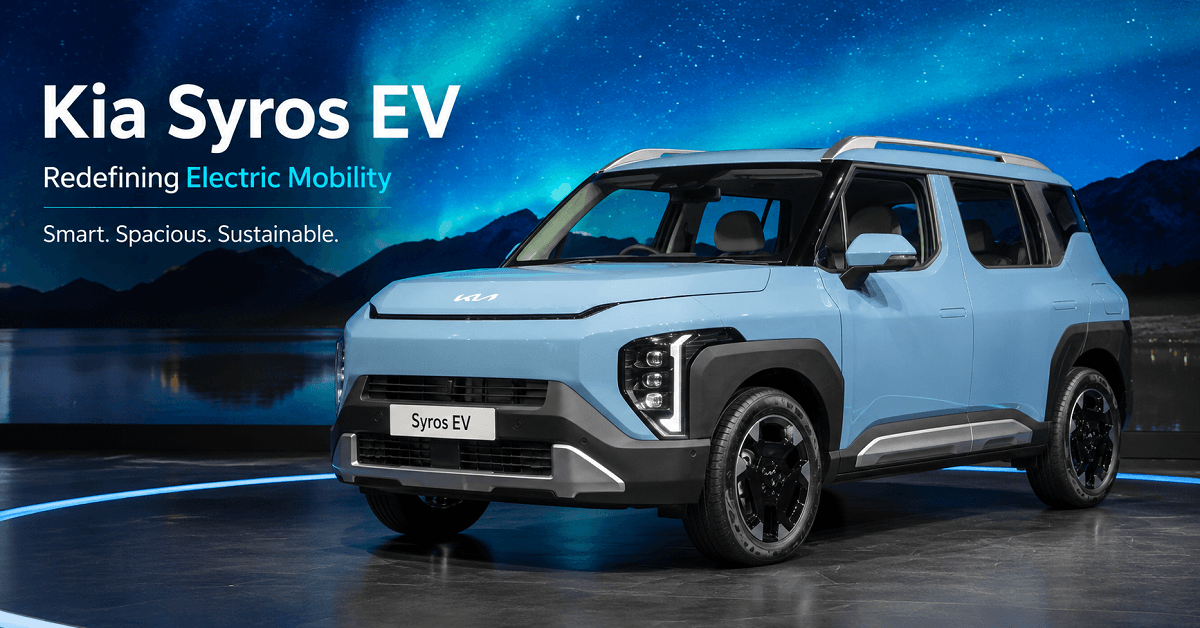
The Kia Syros EV is another model to consider if you are looking for a feature-rich compact electric vehicle. Kia’s official variant comparison lists the 42 kWh variants at ₹13.49 lakh, ₹14.99 lakh and ₹15.99 lakh. The 51.4 kWh extended-range variants start at ₹16.99 lakh, with the 526 km certified claim applying to that larger battery. Kia also advertises DC fast charging from 10% to 80% in approximately 39 minutes under specified conditions. Actual charging time depends on charger output, battery temperature, battery condition and other factors.
An independently verified real-world range figure was not available in the sources reviewed for this guide. For that reason, the 526 km figure should be described as a certified claim rather than an expected everyday distance.
Best for: Buyers who want to compare a technology-focused compact EV with the Punch EV and Nexon EV.
Before buying: Confirm which battery and features are included in the ₹13.49 lakh variant. Obtain a current written quotation and ask for realistic range expectations under local driving conditions.
8. MG Windsor EV: Consider Only After Calculating BaaS Costs
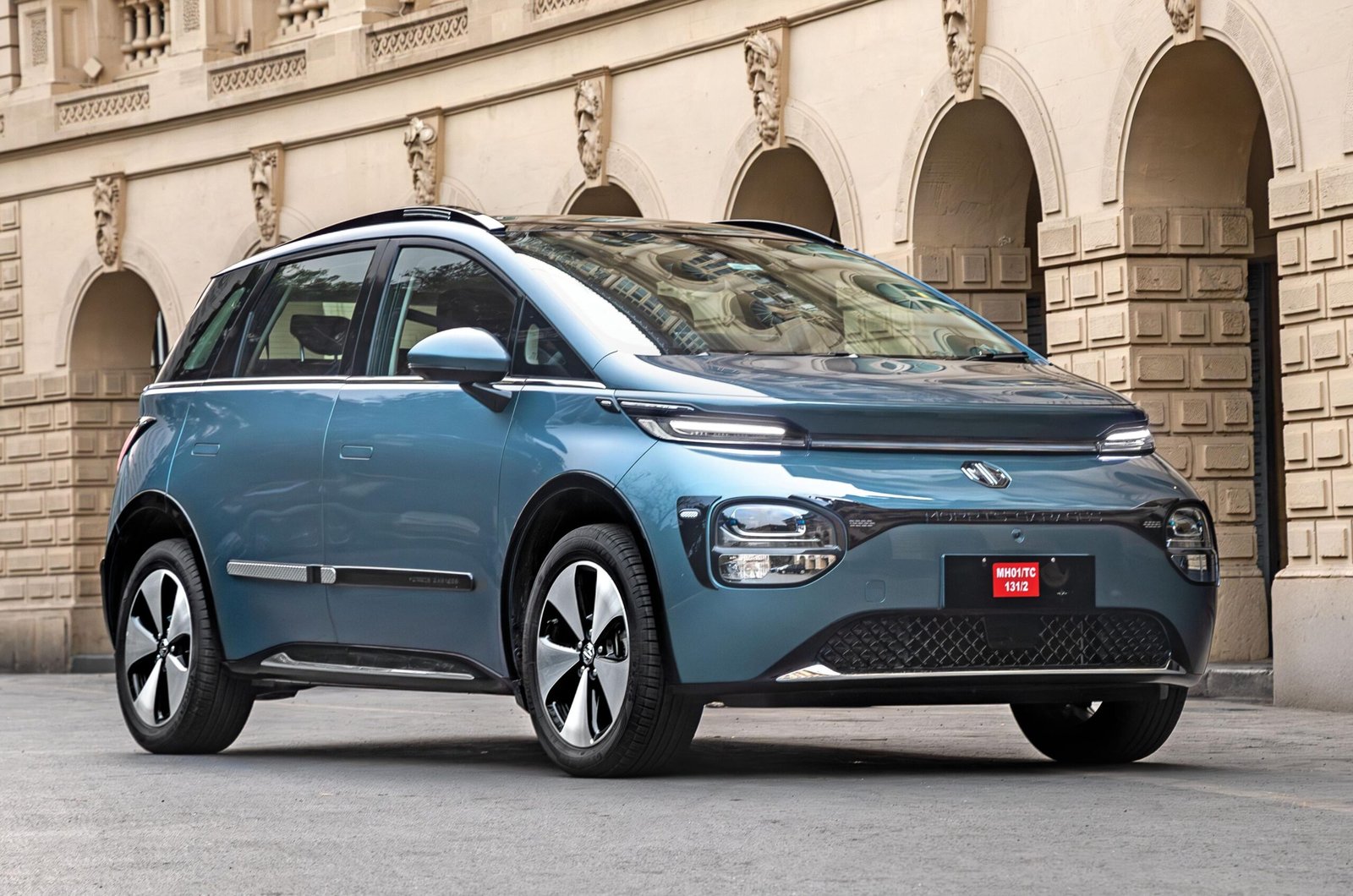
The MG Windsor EV is designed for buyers who prioritise cabin space and comfort. However, its battery-inclusive starting price is listed at ₹15.99 lakh, putting it above a strict ₹15 lakh ex-showroom budget. MG also advertises a Battery-as-a-Service option from ₹11.29 lakh plus ₹3.99 per kilometre for the relevant version. The lower advertised entry price excludes the battery purchase cost, so the recurring battery fee must be included when comparing ownership costs.
The 38 kWh Windsor EV has a certified range of 332 km. Autocar India’s combined-cycle test recorded 308 km for this version. The larger 52.9 kWh Pro battery has a certified range of up to 449 km, but do not apply the 308 km test result to the larger-battery model.
Best for: Buyers who need a spacious cabin and are comfortable evaluating a battery subscription model.
Before buying: Calculate the total cost over your expected ownership period, including the initial vehicle price, per-kilometre battery fee, charging expenses and contract conditions.
What Should You Check Before Buying an EV for City Use?
Before choosing the best electric car under ₹15 lakh for city use, consider these practical factors:
- Daily distance: Estimate your typical weekday travel and occasional longer journeys.
- Home charging: Check whether your parking space can accommodate a safe, suitable charging setup.
- Battery warranty: Read the coverage period, kilometre limits and exclusions.
- Charging compatibility: Compare AC charging time and DC fast-charging support for the exact variant.
- Passenger space: Check rear-seat comfort, child-seat access and luggage capacity.
- Service support: Confirm that authorised service and roadside assistance are accessible in your area.
- Total ownership cost: Include insurance, electricity, servicing, tyres, battery-related charges and resale considerations.
- Safety equipment: Compare airbags, electronic stability control and available crash-test information.
How Much Does It Cost to Run an Electric Car in the City?
Running costs depend on the vehicle’s energy consumption and the electricity tariff you pay. For example, if an EV uses 15 kWh per 100 km and your electricity rate is ₹8 per unit, the energy cost is approximately ₹120 per 100 km before charging losses or other fees. For comparison, a petrol car returning 15 km per litre would use about 6.67 litres over the same distance. At ₹100 per litre, the petrol cost would be approximately ₹667 per 100 km. This is an illustrative comparison, not a guarantee of savings for every vehicle or driver.
Your actual savings will depend on the EV’s efficiency, local electricity prices, charging losses, fuel prices, driving habits and any battery subscription fees. Public fast charging may also cost more than home charging. Use the EV Charging Cost Per KM Calculator to estimate your electricity cost, and compare it with the EV vs Petrol Cost Calculator before making a purchase decision.
What Is the EMI for an Electric Car Under ₹15 Lakh?
Your monthly EMI depends on the on-road price, down payment, interest rate, loan tenure and lender fees. As an illustration, an ₹8 lakh loan over five years at 9% annual interest would have an EMI of approximately ₹16,600, excluding processing fees and other charges.
For an accurate estimate, use the actual loan amount rather than the car’s advertised starting price. If you choose a BaaS plan, add the recurring battery fee and charging expenses to your monthly budget. A lower initial payment does not necessarily mean a lower total cost of ownership.
Is There a Government Subsidy for Electric Cars in 2026?
Do not assume that every privately purchased electric passenger car qualifies for a central purchase subsidy. Eligibility depends on the applicable scheme, vehicle category and current rules. State-level tax or registration benefits may also vary.
Check the latest information from the official PM E-DRIVE portal and your state transport department before including an incentive in your budget. Ask the dealer to confirm any applicable benefit in writing.
Neu Auto’s Verdict: Which EV Should You Choose?
For buyers looking for the best electric car under ₹15 lakh for city use, the Tata Tiago EV is a sensible starting point for affordable daily commuting, while the MG Comet EV is worth considering for short trips and tight parking spaces. The Tata Punch EV is a strong option for families who prefer an SUV-style body, while the Mahindra XUV 3XO EV and entry-level Tata Nexon EV deserve a closer look if you want more space and features. The Kia Syros EV is also worth comparing, but verify the range, price and equipment of the exact variant. Consider the MG Windsor EV only after calculating the full cost of its BaaS plan.
At Neu Auto, our recommendation is to compare at least two suitable models, take test drives and request written on-road quotations. The best electric car is not necessarily the one with the longest certified range or lowest advertised price. It is the one that fits your daily driving needs, charging access and overall budget.
Frequently Asked Questions
Which is the best electric car under ₹15 lakh for city use in India?
The Tata Tiago EV is a sensible choice for affordable daily commuting, while the MG Comet EV is ideal for short trips and tight parking spaces. Families may prefer the Tata Punch EV, whereas the Mahindra XUV 3XO EV and entry-level Tata Nexon EV are worth comparing for buyers who want an electric SUV. The best choice depends on your budget, daily travel distance, charging access and space requirements.
Which is the most affordable electric car for city driving?
The Tata Tiago EV is one of the most affordable options in this comparison, with an indicative starting ex-showroom price of ₹6.99 lakh. The MG Comet EV starts at approximately ₹7.80 lakh. Prices vary by variant, location and applicable offers, so check the latest price and on-road quotation before buying.
What is the real-world range of electric cars used in city traffic?
Real-world range depends on the battery size, traffic, air-conditioning use, driving style, temperature and battery condition. Earlier independent combined-cycle tests recorded approximately 193 km for the MG Comet EV and 187 km for a 24 kWh Tata Tiago EV. These figures include city and highway driving and should not be treated as guaranteed city-only ranges.
Is the Tata Punch EV a good choice for city driving?
Yes. The Tata Punch EV is worth considering if you want SUV styling, higher ground clearance and practical space for family use. Its 40 kWh version has a certified range of up to 468 km, while Tata quotes an estimated real-world C75 range of approximately 355 km. Check the exact variant, on-road price and charging specifications before making a decision.
Can I buy the Tata Nexon EV under ₹15 lakh?
The Tata Nexon EV has an indicative starting ex-showroom price of ₹12.49 lakh, making selected variants worth considering within this budget. However, registration, insurance and other charges can push the on-road price above ₹15 lakh, depending on your location and chosen variant. Request a written on-road quotation before finalising your purchase.
Is home charging necessary for an electric car?
Home charging is not essential, but having access to a suitable home charger can make daily EV ownership more convenient. Before buying, check your parking arrangements, electrical installation requirements and the availability of public charging stations near your home, workplace and regular routes.
Is the MG Windsor EV available under ₹15 lakh?
The MG Windsor EV has been advertised with a Battery-as-a-Service (BaaS) option starting at ₹11.29 lakh plus ₹3.99 per kilometre for the relevant version. Its battery-inclusive starting price is listed at ₹15.99 lakh in this article. Buyers considering BaaS should calculate the complete ownership cost, including the per-kilometre battery fee and charging expenses.

Rate This Article
Be the first to rate this article
Thanks for rating!
All Car Brands
View all brands →
















More Updates


Handpicked Accessories for Every and Journey
PRIVON 60W H4 LED Headlight for Bike – 7000L, 6000K White LED Light for Night Ride
Ceat Zoom Rad 140/60 R17 63P Tubeless Bike Tyre

ShineXPro Helmet Cleaner & Microfiber Cloth – Anti Bacterial Foaming Helmet Cleaning Spray
Universal Front Fender Mudguard Extender Extension Fits for Motorcycle

Boldfit Full Face Helmet Mask for Bikers in Riding UV Protected

Neodrift JungleMax Bike Cover for Harley-Davidson X440
Wisely Pack 2 Screen Guard for Harley Davidson X440T Bike – Instrument Cluster Accessories
PHANTOM Premium Adjustable Footrest for Harley – Motorcycle Accessory for Touring & City Riding
L3 MODZ Ladies Foot Rest for KTM Duke (BS6 Gen2) Models
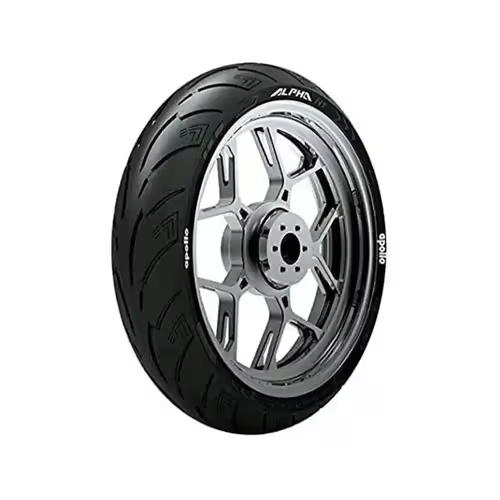
Apollo Alpha S1 130/70 R17 62H Radial Tubeless Bike Tyre
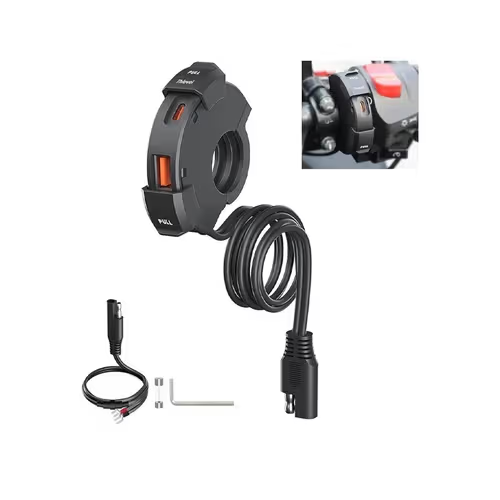
30W Motorcycle Type-C USB Phone Charger with PD & Quick Charge
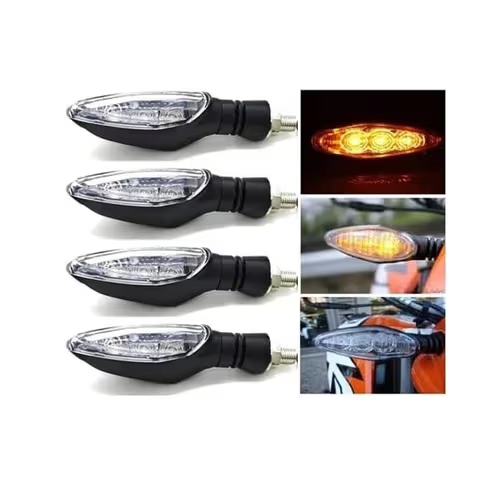
ELTRON TURBO Turn Signal Indicator Lights Compatible for KTM
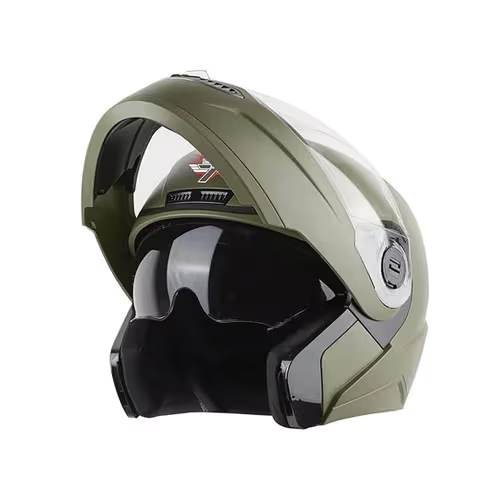
Steelbird SBA 7 7Wings Flip-Up Helmet for Men with Skull Cap
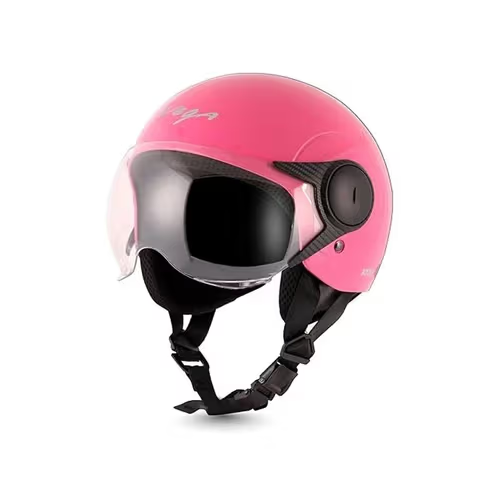
Vega Atom Open Face Helmet with Clear Visor, Black
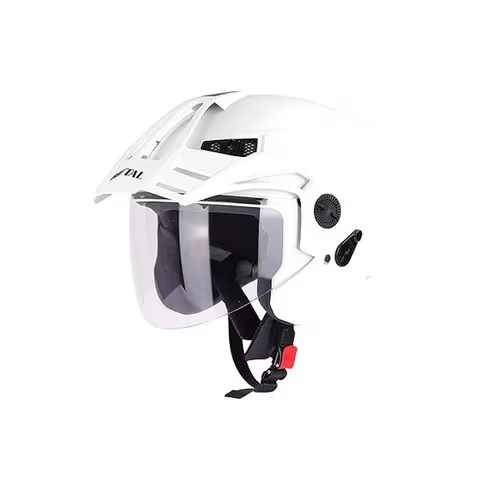
Steelbird SBH-23 Brutal Open Face Helmet with Skull Cap
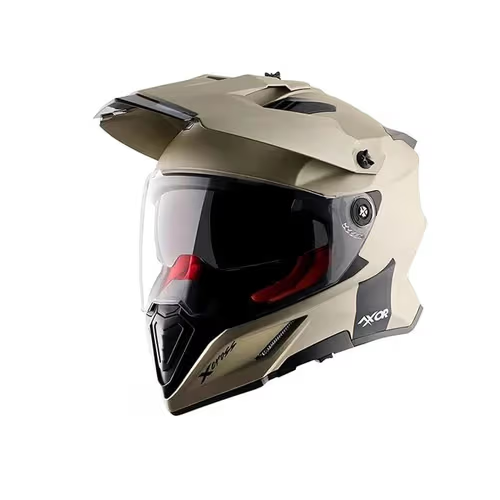
Axor X Cross Dual Visor Full Face Off-Road Helmet – Dull Black Orange
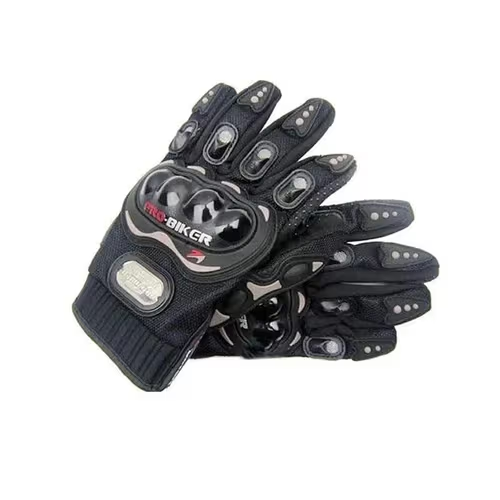
Probiker Protective Full Finger Bike Riding Gloves – Motorcycle, Cycling, and Hiking
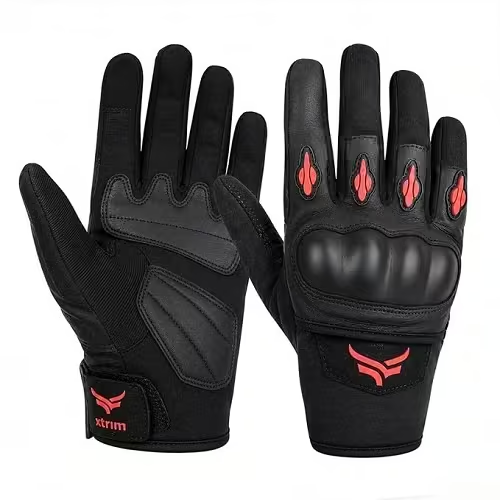
XTRIM Protekt Universal Bike Riding Gloves for Men – Black, Red
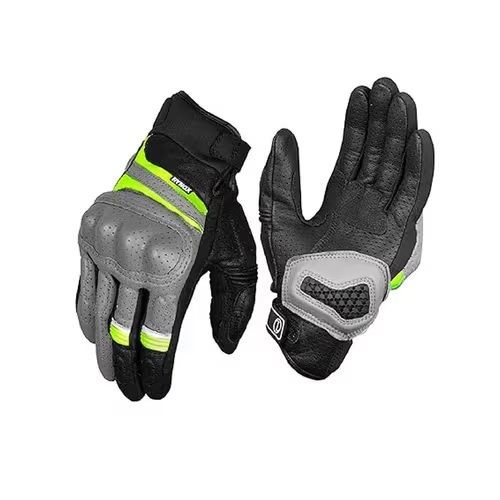
Rynox Air GT Leather Motorcycle Riding Gloves – Cuff Length | Grey Red
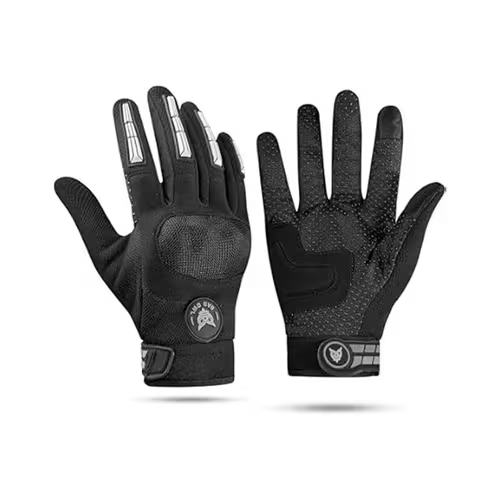
BADOWL RYDON Knuckle Protection Riding Gloves – Touchscreen Sports Gloves

Microfiber Car Duster with Long Handle Cleaning Brush

Robustt Car Interior Cleaning Brush Combo – Scratch Free Car Duster

ORJILO 5-Piece Microfiber Car Duster Kit – Extendable Long Handle Duster for Car

ShineXPro Microfiber Car Cleaning Cloth (500 GSM, Extra Large (35×75 CM))

Wavex Tyre Polish for Car & Bike (1L) – With Applicator and Microfiber Cloth

ShineXPro Glass Cleaner Spray (300 ml) – Streak Free Car Glass Cleaner Liquid
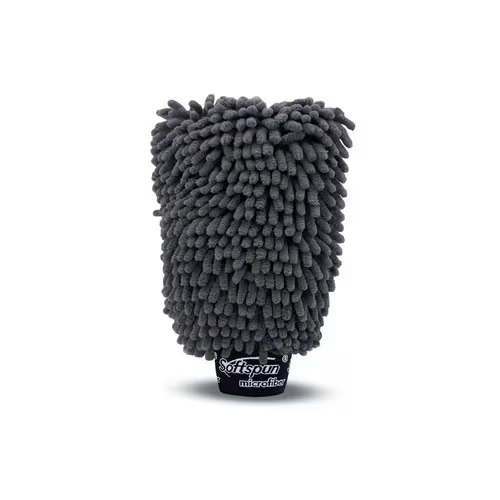
SOFTSPUN Microfiber Chenille Wash Mitt (1700 GSM)
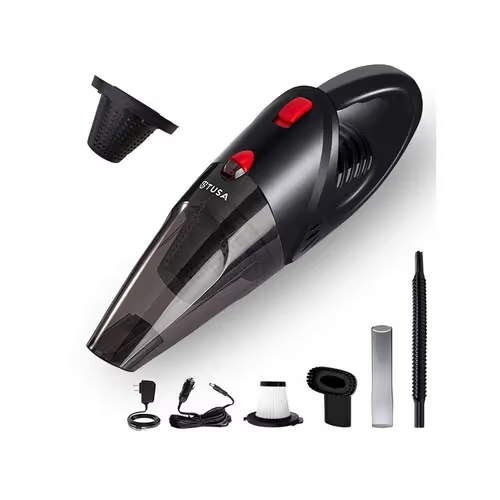
Tusa V1 Cordless Vacuum Cleaner for Car – High Power Portable Lightweight Wireless Vacuum

SOFTSPUN Microfiber Cloth (40×40 cm, 340 GSM) – Automotive Microfibre Towels for Car
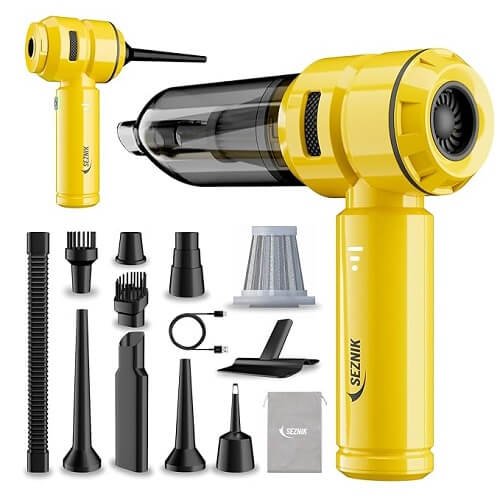
SEZNIK 4-in-1 Cordless Vacuum Cleaner & Blower

GOODAIR Royal Premium Non-Electric Car Air Purifier
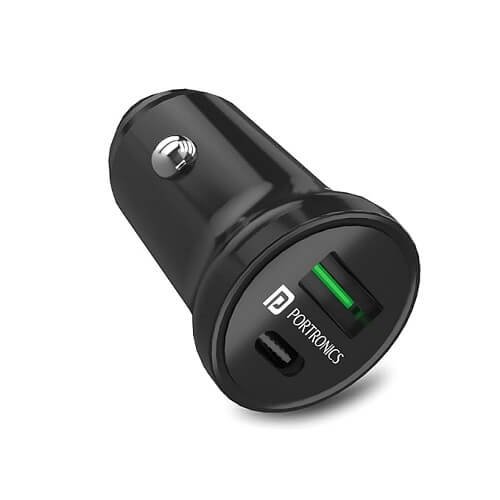
Portronics 38W Dual Output Fast Car Charger with 20W Type-C PD & 18W USB with Cars for iPhone
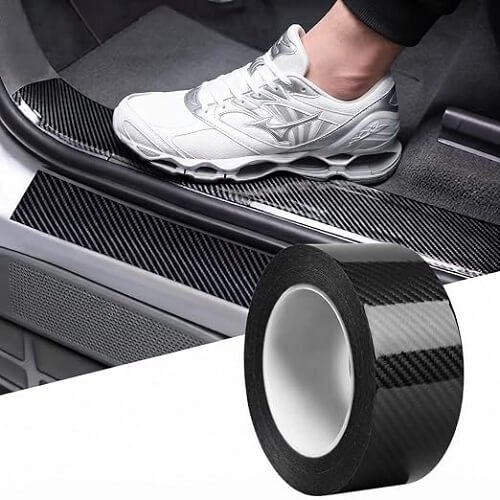
AutoBizarre High Gloss Carbon Fibre Paint Protection For Car

APPUCOCO Mini Car Trash Bin – Black
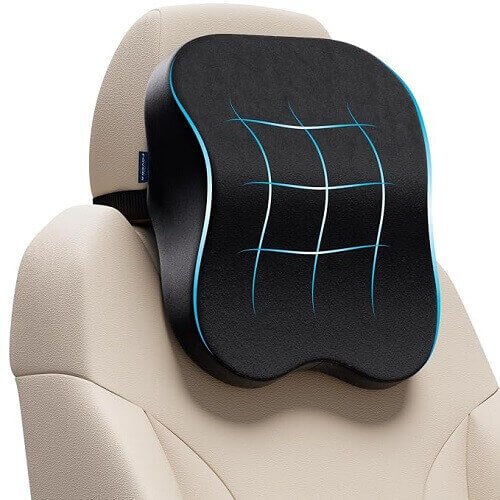
FOVERA Memory Foam Car Neck Rest Pillow – Medium, Black
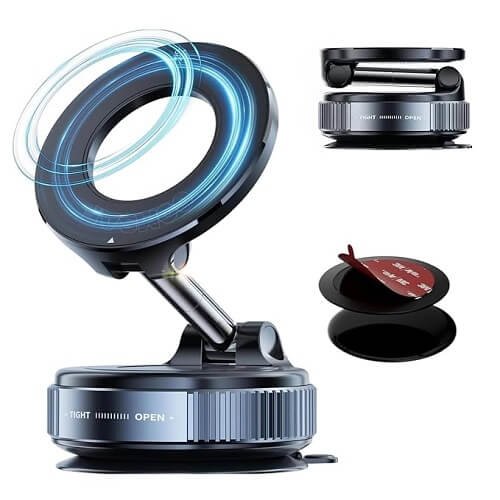
360° Vacuum Magnetic Car Phone Mount – Strong Suction Cup Phone Holder for Car
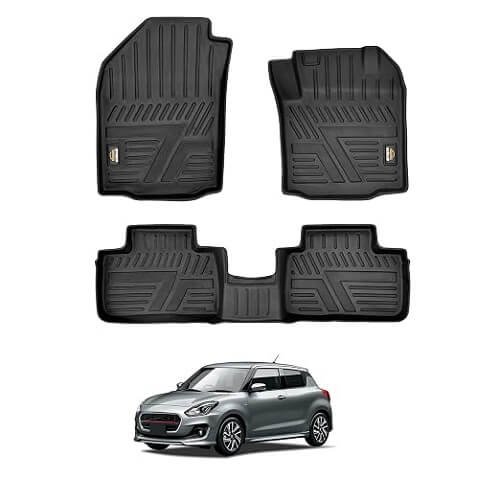
Amazon Basics 5D Custom Fit Car Floor Mats for Swift Facelift
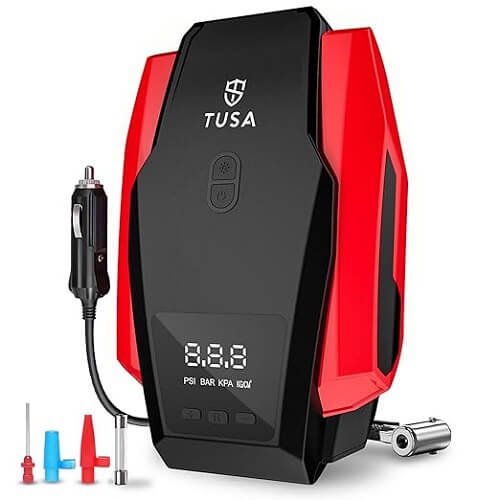
TUSA Drive X 12V DC Portable Tyre Inflator – 150 PSI, Air Compressor
![Qubo Dashcam Pro 4K [2026 Edition] – Dual Channel | ADAS | Ultra-Wide 8MP UHD+ Front, 2MP FHD Rear](https://neudeals.co/wp-content/uploads/2026/09/Qubo-Dashcam-Pro-4K-Sensor.jpg)
Qubo Dashcam Pro 4K [2026 Edition] – Dual Channel | ADAS | Ultra-Wide 8MP UHD+ Front, 2MP FHD Rear
Oowah EX Electric Scooter – Removable Lithium-ion Battery , Laguna Blue
BG C12i EX Gen 2 Electric Scooter – Removable 2.0 kWh LFP Battery, 60 km/h Top Speed
EOX OKO Electric Scooter – Removable Lithium Battery, 40-50 km Long-Range
EOX OLO Low Speed Electric Scooter – 45Km Mileage, Pastel Yellow & Black
EOX E2 Low Speed Electric Scooter – 60-70Km Range, Portable Lithium Battery
Okinawa Praise PRO Electric Scooter – Li-Ion Battery
EOX® ROX Electric Scooter – 48V Removable Lithium Battery, 50-60 km Long-Range
MIOOX Electric Scooter – 51.8V 28AH Range 55-65km Front Disc
AMO Low Speed Electric Scooter – 60-70 Km Range in Grey
AMO Jaunty 3W Low-Speed Electric Scooter – Blue and Black
Bajaj Chetak C2501 Electric Scooter – Glossy Active Black
Bajaj Chetak C3501 Electric Scooter – Brooklyn Black
Royal Enfield Classic 350 with Disc & Alloy Wheels Motorcycle – Stealth Black
Royal Enfield Bullet 350 Disc & Spoke Wheel Motorcycle – Battalion Black
Royal Enfield Hunter 350 with Disc & Alloy Wheels Motorcycle – Dapper Grey
Hero MotoCorp Passion+ i3S Drum – Black Heavy Grey
Hero MotoCorp XTREME 125R Bike(ABS) – Stallion Black
Hero MotoCorp HF Deluxe Drum – Black Grey
Hero MotoCorp XTREME 125R FI ABS SEAT DS (OBD2B) Motorcycles – Black
Bajaj Avenger 220 Cruise Motorcycle – Moon White
Bajaj Pulsar N 160 Ug Motorcycle – Brooklyn Black
Bajaj Platina 110 Es Drum Motorcycle – Black Red
Bajaj Pulsar N 250 Ug Motorcycle – Brooklyn Black
Harley Davidson X440 T 440cc Motorcycle – Pearl Blue
Harley Davidson X440 S 440cc Motorcycle – Matte Black
Harley Davidson X440 Vivid 440cc Motorcycle – Metallic Thick Red
Harley Davidson X440 T 440 CC Motorcycle – Pearl Red
KTM Duke 200 PRO Bike – Dark Galvano Black
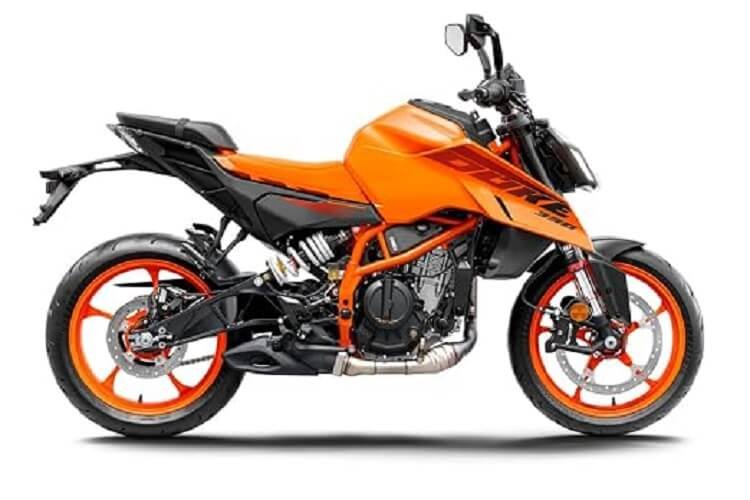
KTM Duke 390 R Bike – Electronic Orange
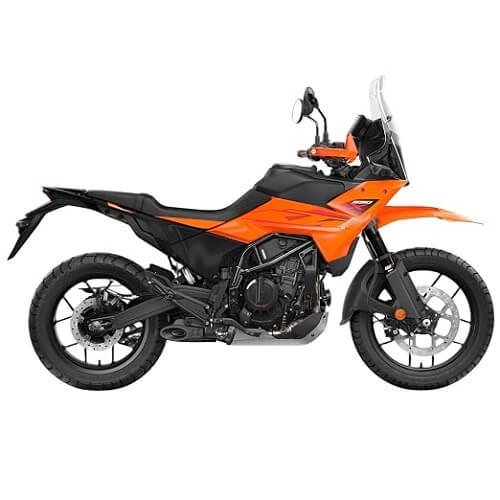
KTM Adventure X 390 Bike – Orange
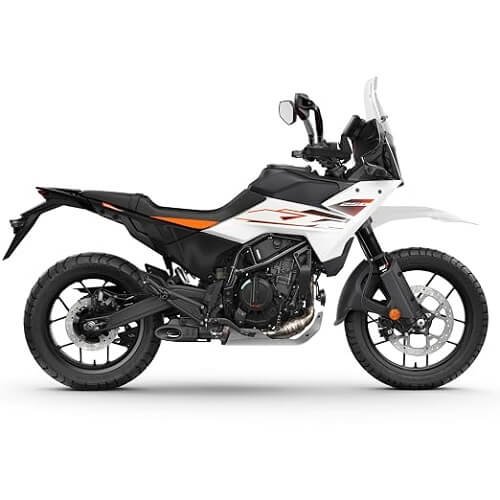
KTM Adventure 250 Bike – White
As an Amazon Associate, Neu Auto earns from qualifying purchases. When you purchase through one of the Amazon links above, Neu Auto may receive a commission at no additional cost to you.