

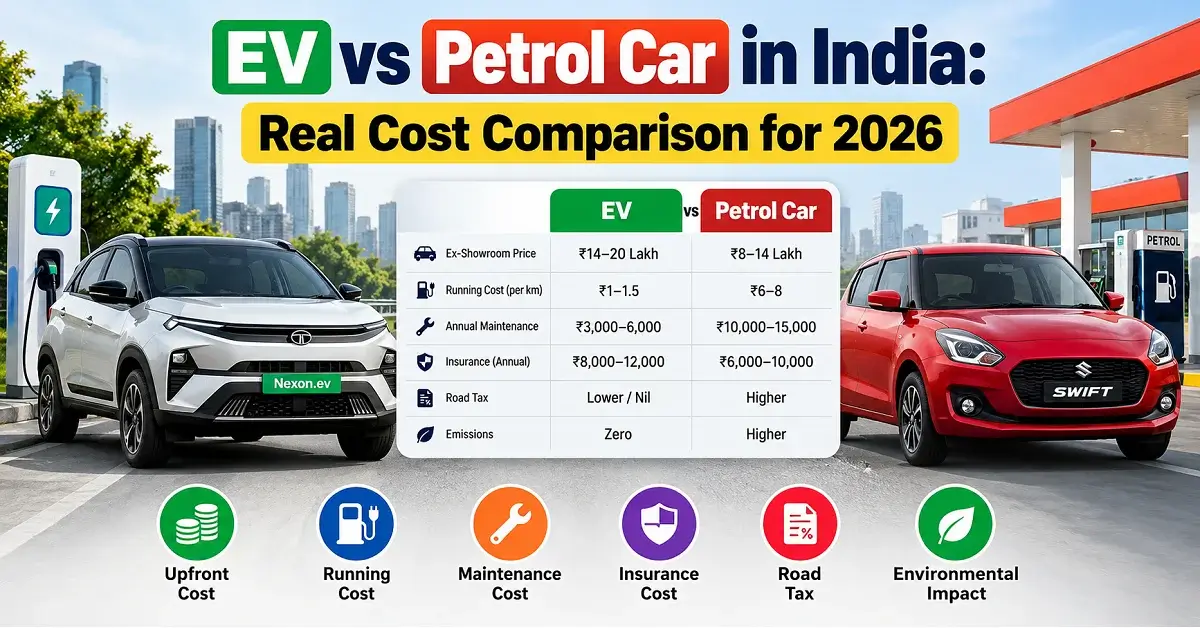
If you’re choosing between an EV and petrol car in India, the purchase price is only half the story. Your yearly driving distance can make a big difference to your overall ownership cost. Charging access, insurance and maintenance can also change what you actually spend. Even resale value matters when you calculate the true cost of owning your car.
Key Highlights
- EV running cost: Around ₹1.33/km in the example using ₹8/kWh home charging and 6 km/kWh efficiency.
- Petrol running cost: Around ₹6.67/km at ₹100/litre and 15 km/l.
- Annual fuel saving: About ₹80,000 at 15,000 km per year using these assumptions.
- Home charging: Usually gives an EV its biggest running-cost advantage.
- Public charging: Can push EV running costs much higher than home charging.
- Battery health: Modern EV battery data shows degradation varies by model, climate and charging behaviour. Geotab’s 2026 analysis of more than 22,700 EVs found average degradation of 2.3% per year.
- Petrol advantage: Lower entry price, familiar refuelling and easier long-distance travel.
- EV advantage: Lower energy and potentially lower maintenance costs over years of ownership.
- Important: Your actual cost will depend on the car, electricity tariff, petrol price, insurance, driving style and local taxes.
Petrol prices in India crossed the ₹100 mark in most major cities this year. Higher petrol prices can make EV running costs more attractive, especially for drivers who can charge at home. But is an EV actually cheaper in the long run? I ran the numbers and the answer surprised me.
Understanding The Difference Between Electric And Petrol Cars
An electric car uses a battery and electric motor to move the wheels. A petrol car uses an internal combustion engine that burns fuel to create power.
That difference changes much more than what you see under the bonnet.
| Aspect | Petrol Car (ICE) | Electric Car (EV) |
|---|---|---|
| How It Works | Uses petrol combustion inside an internal combustion engine to generate power. | Uses electricity stored in a battery to power an electric motor. |
| Power Delivery | Engine power passes through a transmission before reaching the wheels. | Electric motors deliver power directly to the wheels with quick, responsive acceleration. |
| Driving Experience | Offers engine sound, gear changes and a more traditional driving feel. | Provides smooth, quiet acceleration with no conventional gear shifting. |
| Energy Source | Petrol is filled at fuel stations, usually within a few minutes. | Battery is recharged at home, at work or through public charging stations. |
| Maintenance | Requires regular servicing of engine oil, filters, spark plugs and other mechanical components. | Generally has fewer moving parts and requires less routine mechanical maintenance. |
| Emissions | Produces exhaust emissions from the combustion of petrol. | Produces no tailpipe emissions while driving, although electricity generation can have upstream emissions. |
| Everyday Convenience | Best suited to drivers who value quick refuelling and widespread fuel-station access. | Works well for drivers who can plan charging around their daily travel and have convenient charging access. |
Real Cost Per Kilometer Comparison: EV ₹1.33/km vs Petrol ₹6.67/km
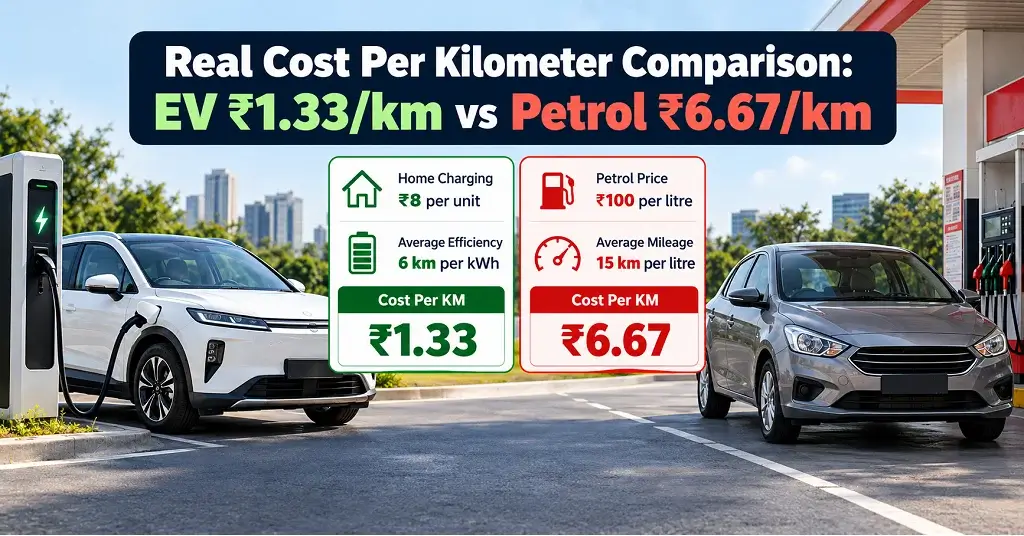
Here is the simple calculation behind the numbers.
Petrol Car
At ₹100 per litre and an average mileage of 15 km per litre: ₹100 ÷ 15 = ₹6.67 per km
Electric Car
With home charging at ₹8 per unit and average efficiency of 6 km per kWh: ₹8 ÷ 6 = ₹1.33 per km
That creates a difference of about: ₹6.67 – ₹1.33 = ₹5.34 per km
At 15,000 km per year:
| Cost | Petrol | EV |
|---|---|---|
| Energy cost/km | ₹6.67 | ₹1.33 |
| Annual distance | 15,000 km | 15,000 km |
| Annual energy cost | ₹1,00,050 | ₹19,950 |
| Approx. annual saving | ₹80,100 |
Under these assumptions, the EV reduces energy spending by about 80%. Remember, this is a calculation based on fixed assumptions, not a universal figure for every EV and petrol car.
Petrol Vs EV Running Cost: Which Is Cheaper?
If you can charge at home and your EV delivers around 6 km/kWh, the EV can be dramatically cheaper to run.
The difference becomes even more noticeable when you drive frequently.
For example:
1,000 km per month
- Petrol: about ₹6,670
- EV: about ₹1,330
- Difference: about ₹5,340
1,500 km per month
- Petrol: about ₹10,005
- EV: about ₹1,995
- Difference: about ₹8,010
Monthly and Annual Running Cost Breakdown
| Monthly Driving | Petrol at ₹6.67/km | EV at ₹1.33/km | Approx. Monthly Saving |
|---|---|---|---|
| 500 km | ₹3,335 | ₹665 | ₹2,670 |
| 1,000 km | ₹6,670 | ₹1,330 | ₹5,340 |
| 1,500 km | ₹10,005 | ₹1,995 | ₹8,010 |
| 2,000 km | ₹13,340 | ₹2,660 | ₹10,680 |
At 15,000 km annually, the example produces around ₹80,000 in yearly energy savings.
What If Petrol Reaches ₹120 Per Litre?
This is where the calculation gets interesting.
At ₹120 per litre and 15 km/l: ₹120 ÷ 15 = ₹8 per km
At 15,000 km per year: 15,000 × ₹8 = ₹1,20,000
The same EV assumption remains around ₹19,950 per year.
That increases the theoretical annual energy-cost difference to approximately: ₹1,20,000 – ₹19,950 = ₹1,00,050
Of course, petrol prices change by city and over time, so use your local price when calculating your own break-even point.
Purchase Price Gap Analysis
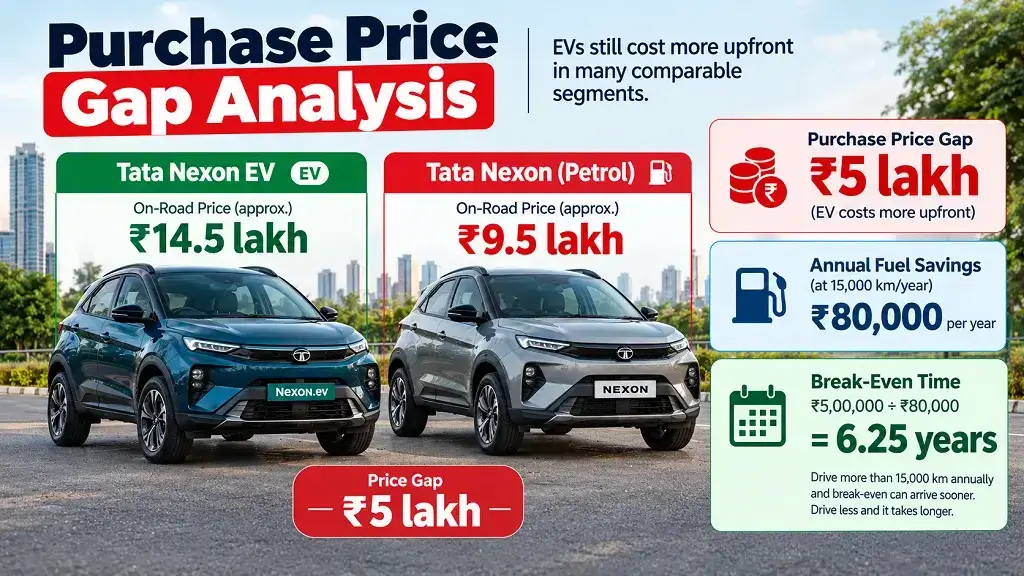
EVs still cost more upfront in many comparable segments.
For example, your supplied comparison uses a Tata Nexon EV at around ₹14.5 lakh on-road versus roughly ₹9.5 lakh for a petrol counterpart, creating a ₹5 lakh gap.
This comparison also considers current EV prices from Tata, Mahindra, and MG to give you a clearer picture of the upfront price difference across popular electric car options in India.
Current Tata pricing varies by version and location. Tata’s official Nexon.ev page currently lists the model from ₹12.49 lakh, while its specification page shows pricing based on Mumbai and different configurations.
Mahindra’s BE 6 shows how quickly this segment is changing. In August 2026, Mahindra listed the BE 6 SPORTEQ at ₹19.45 lakh for the 59 kWh version, while its Battery-as-a-Service option starts at ₹11.45 lakh plus a battery usage charge of ₹3.75/km.
The question is simple:
How long will your fuel savings take to recover the extra purchase cost?
At ₹80,000 saved per year on fuel, a ₹5 lakh price gap takes about: ₹5,00,000 ÷ ₹80,000 = 6.25 years
Drive more than 15,000 km annually and your break-even can arrive sooner. Drive less and it takes longer.
Purchase Price: Petrol Cars Have the Advantage
For buyers working with a strict upfront budget, petrol still has a clear benefit. You can often buy the petrol version for several lakh rupees less, depending on the model and variant. That lower initial price also means a smaller loan amount in many cases.
Before buying, compare:
- Ex-showroom price
- On-road price
- Registration and road tax
- Insurance
- Home charger and installation
- Loan interest
- Available EV incentives
- Expected resale value
Don’t compare only the showroom sticker price.
Service and Maintenance Differences
A petrol car has an engine, transmission components, exhaust system, fuel system and many engine-related service items.
An EV has a much simpler electric drivetrain. This doesn’t mean an EV has zero maintenance. You still have tyres, brakes, suspension, air conditioning, fluids, electronics and other components to maintain.
Your supplied comparison uses approximately ₹12,000 to ₹18,000 per year for petrol-car servicing and around ₹7,500 for an EV. Actual bills vary widely by model, service schedule and dealership.
Typical petrol-car expenses can include:
- Engine oil
- Oil filter
- Air filter
- Spark plugs
- Fuel-system components
- Belts
- Engine-related inspections
- Transmission service
EV owners don’t need routine engine oil or spark plug replacement. Regenerative braking can also reduce friction-brake usage in many EVs, although tyre and brake wear still depend on how and where you drive.
Insurance Cost Comparison
Insurance premiums vary by vehicle, location, IDV, driver profile, insurer, add-ons and repair costs. EV premiums should be compared using actual quotes for the specific EV and petrol models rather than applying a fixed percentage.
Actual premiums depend on: Insured Declared Value, Vehicle price, Location, Driver profile, Claim history, Add-on covers, Battery coverage, Repair costs, Insurer pricing
Battery and electronic components can be expensive, which can influence repair costs and insurance pricing. So when calculating total ownership cost, don’t simply assume that every EV will have exactly a 20% higher premium.
Get actual insurance quotes for both cars before making your final calculation.
| Insurance Cost | Petrol Car | Electric Car (EV) |
|---|---|---|
| Vehicle Price | ₹15 lakh | ₹15 lakh |
| Annual Premium | ₹28,000–₹32,000 | ₹35,000–₹40,000 |
| Premium Difference | — | 15–20% higher |
| 6-Year Insurance Cost | ₹1.68–₹1.92 lakh | ₹2.10–₹2.40 lakh |
| Extra Cost Over 6 Years | — | ~₹50,000–₹60,000 |
Charging Reality in India: Home vs Public
This is one of the biggest practical differences between owning an EV in India and owning a petrol car.
Home charging is usually where the EV economics look strongest.
| Charging Option | Example Cost | Efficiency | Approx. Cost per km |
|---|---|---|---|
| Home Charging | ₹8/kWh | 6 km/kWh | ₹1.33/km |
| Public Charging | ₹18/kWh | 6 km/kWh | ₹3/km |
| Petrol Car | ₹100/litre* | 15 km/litre* | ₹6.67/km |
Using your ₹8/kWh example: ₹8 ÷ 6 km/kWh = ₹1.33/km
Public charging can cost considerably more. If you pay ₹18 per kWh:
₹18 ÷ 6 = ₹3/km
That’s still below the ₹6.67/km petrol example, but the advantage becomes much smaller.
Battery Life and Resale Value
Battery life is one of the biggest questions for used EV buyers. The older idea that an EV battery simply becomes unusable after a few years doesn’t match the latest large-scale battery data.
Geotab’s 2026 analysis covered more than 22,700 EVs across 21 models. It reported average degradation of 2.3% per year, while also finding that charging behaviour, climate and vehicle usage affect battery health. High-power DC charging was associated with higher degradation rates.
That doesn’t mean every EV will lose exactly 2.3% every year. Your battery’s health depends on the model, battery chemistry, thermal management, climate and charging pattern.
For example, Geotab’s research found vehicles using high-power DC fast charging more heavily had higher degradation than vehicles relying more on lower-power charging.
What About EV Resale Value?
Used-EV resale values are still developing in India.
Buyers may ask:
- What is the battery health?
- How much real range remains?
- Is the battery warranty still active?
- Has the car been fast charged heavily?
- What will a replacement battery cost?
- Does the manufacturer provide a battery health report?
That uncertainty can affect resale pricing. Instead of relying on a generic resale percentage, check current used-car listings for the exact model, year and battery version.
The numbers are clear for most Indian buyers. If you drive regularly and can charge at home, an EV can save you significant money over 5 to 6 years of ownership. The technology is mature enough, the charging network is expanding, and the fuel savings are real.
The upfront cost still stings. But with petrol at ₹100 and climbing, waiting might cost you more than switching.
6-Year Running Cost: EV vs Petrol in India
Here is how the estimated running costs add up for someone driving 15,000 km per year, or 90,000 km over six years:
| Cost Category | Petrol Car — 6 Years | Electric Car — 6 Years |
|---|---|---|
| Fuel / Electricity | ₹6,00,000 | ₹1,20,000 |
| Service & Maintenance | ₹90,000 | ₹45,000 |
| Insurance | ₹1,80,000 | ₹2,20,000 |
| Total Running Cost | ₹8,70,000 | ₹3,85,000 |
| EV Savings | — | ₹4,85,000 |
The EV saves approximately ₹4.85 lakh in running costs over six years under these assumptions. That saving can offset a significant portion of the higher upfront purchase price. After the initial six-year period, the lower ongoing energy and maintenance costs can continue to widen the running-cost difference.
When an EV May Fit Your Driving Pattern
An EV may be worth considering if several of these conditions apply:
- You drive a moderate or high number of kilometres each year.
- You have convenient home or workplace charging.
- You plan to keep the car for several years.
- Your usual routes fit the vehicle’s practical range.
- The EV’s upfront cost fits your budget.
- You are comfortable planning longer trips around charging.
If you drive relatively few kilometres each year and do not have convenient home or workplace charging, a petrol car may have a lower upfront and simpler refuelling setup. Compare the actual purchase and ownership costs for the models you are considering.
How Much Can You Save With An EV?
Using the example in this article:
Petrol: ₹6.67/km
EV: ₹1.33/km
Difference: ₹5.34/km
At 15,000 km per year:
15,000 × ₹5.34 = approximately ₹80,100
At 20,000 km:
20,000 × ₹5.34 = approximately ₹1,06,800
This is why annual mileage matters so much. The more kilometres you drive, the more opportunities you have to recover the EV’s higher upfront price through lower energy costs.
EV vs Petrol Car: What Should You Consider?
There is no single answer for every car buyer. An EV can offer much lower energy costs when you have convenient home charging and drive enough kilometres to make those savings meaningful. A petrol car can offer a lower upfront price, quick refuelling and fewer charging-planning requirements.
Before choosing, compare the actual on-road price, annual driving distance, home charging cost, public charging needs, insurance, maintenance, financing, warranty and expected resale value of the specific cars you are considering.
The best choice depends on how you drive, where you live and how long you plan to keep the car.
FAQs
Is an EV cheaper than a petrol car in India?
For running costs, an EV can be much cheaper when charged at home. In the example used here, the EV costs about ₹1.33/km compared with ₹6.67/km for petrol. Your actual result depends on electricity tariff, vehicle efficiency and petrol price.
How many kilometres should I drive before buying an EV?
There is no universal number, but higher annual mileage generally makes it easier to recover a higher upfront EV price through lower running costs. If you drive 12,000 to 15,000 km or more each year, it’s worth doing a detailed break-even calculation.
Is EV charging cheaper than petrol?
Home charging is generally much cheaper per kilometre in the example used here. At ₹8/kWh and 6 km/kWh, charging costs around ₹1.33/km. At ₹18/kWh, public charging would cost around ₹3/km.
Do EV batteries need replacement after 8 years?
Not automatically. Battery degradation happens gradually, and real-world data shows considerable variation. Geotab’s 2026 analysis of more than 22,700 EVs found average annual degradation of 2.3%, with charging behaviour and climate affecting the rate.
Is a petrol car better for long-distance travel?
A petrol or diesel car can be more convenient for some long-distance users because refuelling is quick and the fuel network is extensive. EVs can also handle long trips, but you need to plan around charging stops and charger availability.
Should you buy an EV or petrol car in 2026?
Look at your own driving pattern before deciding. Compare the purchase price, annual kilometres, home charging cost, insurance, service expenses, financing and expected resale value. The right answer changes significantly between a 5,000 km-per-year driver and a 20,000 km-per-year driver.

Rate This Article
5 ★ 2 ratings
Thanks for rating!
All Car Brands
View all brands →
















More Updates
Handpicked Accessories for Every Journey
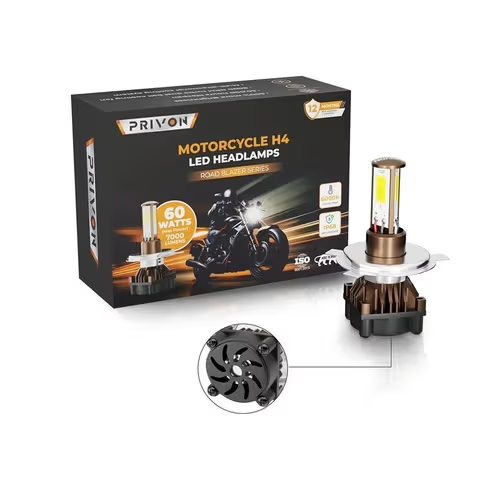
PRIVON 60W H4 LED Headlight for Bike – 7000L, 6000K White LED Light for Night Ride
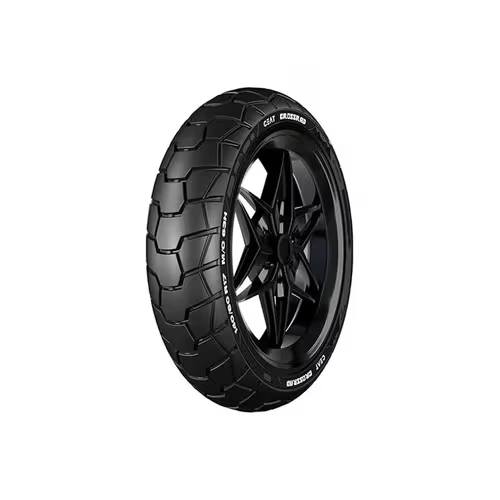
Ceat Zoom Rad 140/60 R17 63P Tubeless Bike Tyre

ShineXPro Helmet Cleaner & Microfiber Cloth – Anti Bacterial Foaming Helmet Cleaning Spray
Universal Front Fender Mudguard Extender Extension Fits for Motorcycle

Boldfit Full Face Helmet Mask for Bikers in Riding UV Protected

Neodrift JungleMax Bike Cover for Harley-Davidson X440
Wisely Pack 2 Screen Guard for Harley Davidson X440T Bike – Instrument Cluster Accessories
PHANTOM Premium Adjustable Footrest for Harley – Motorcycle Accessory for Touring & City Riding
L3 MODZ Ladies Foot Rest for KTM Duke (BS6 Gen2) Models
Apollo Alpha S1 130/70 R17 62H Radial Tubeless Bike Tyre
30W Motorcycle Type-C USB Phone Charger with PD & Quick Charge
ELTRON TURBO Turn Signal Indicator Lights Compatible for KTM

Steelbird SBA 7 7Wings Flip-Up Helmet for Men with Skull Cap

Vega Atom Open Face Helmet with Clear Visor, Black
Steelbird SBH-23 Brutal Open Face Helmet with Skull Cap
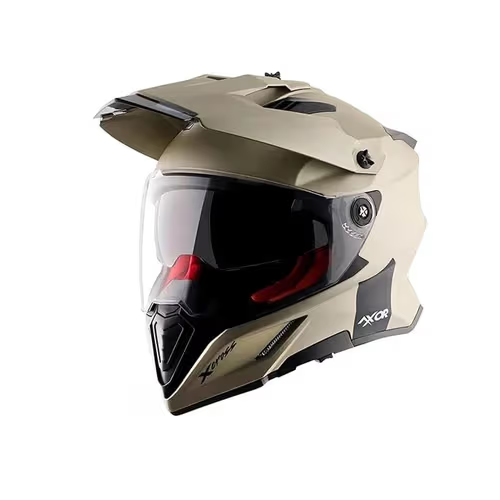
Axor X Cross Dual Visor Full Face Off-Road Helmet – Dull Black Orange

Probiker Protective Full Finger Bike Riding Gloves – Motorcycle, Cycling, and Hiking

XTRIM Protekt Universal Bike Riding Gloves for Men – Black, Red

Rynox Air GT Leather Motorcycle Riding Gloves – Cuff Length | Grey Red

BADOWL RYDON Knuckle Protection Riding Gloves – Touchscreen Sports Gloves

Microfiber Car Duster with Long Handle Cleaning Brush

Robustt Car Interior Cleaning Brush Combo – Scratch Free Car Duster

ORJILO 5-Piece Microfiber Car Duster Kit – Extendable Long Handle Duster for Car

ShineXPro Microfiber Car Cleaning Cloth (500 GSM, Extra Large (35×75 CM))

Wavex Tyre Polish for Car & Bike (1L) – With Applicator and Microfiber Cloth

ShineXPro Glass Cleaner Spray (300 ml) – Streak Free Car Glass Cleaner Liquid

SOFTSPUN Microfiber Chenille Wash Mitt (1700 GSM)

Tusa V1 Cordless Vacuum Cleaner for Car – High Power Portable Lightweight Wireless Vacuum

SOFTSPUN Microfiber Cloth (40×40 cm, 340 GSM) – Automotive Microfibre Towels for Car

SEZNIK 4-in-1 Cordless Vacuum Cleaner & Blower

GOODAIR Royal Premium Non-Electric Car Air Purifier
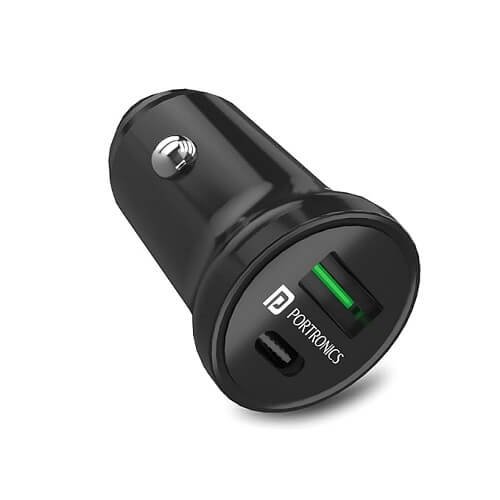
Portronics 38W Dual Output Fast Car Charger with 20W Type-C PD & 18W USB with Cars for iPhone
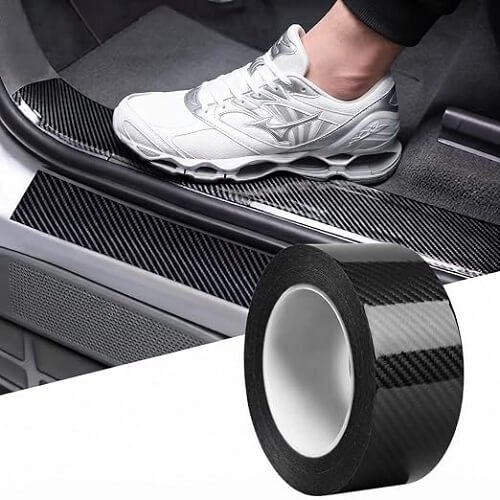
AutoBizarre High Gloss Carbon Fibre Paint Protection For Car

APPUCOCO Mini Car Trash Bin – Black
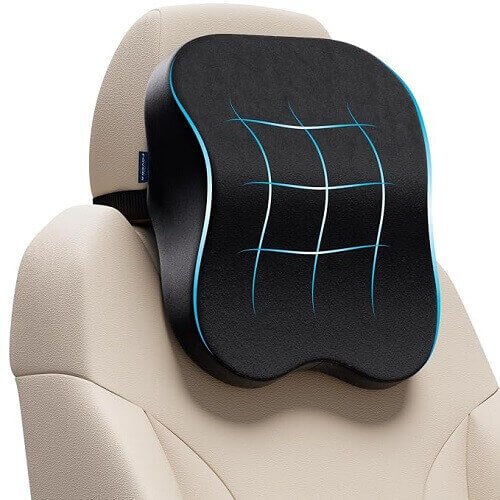
FOVERA Memory Foam Car Neck Rest Pillow – Medium, Black

360° Vacuum Magnetic Car Phone Mount – Strong Suction Cup Phone Holder for Car
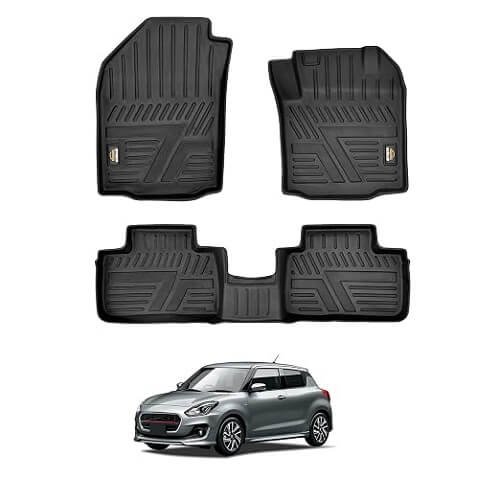
Amazon Basics 5D Custom Fit Car Floor Mats for Swift Facelift
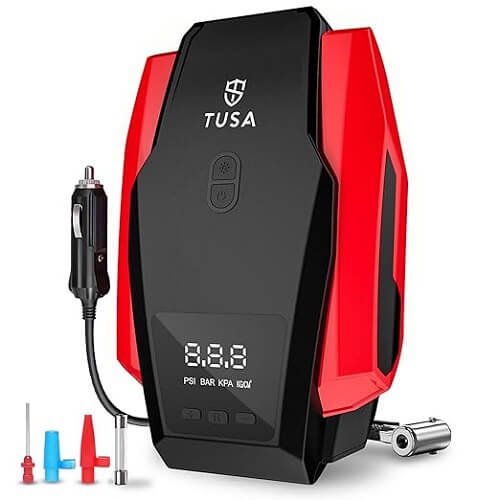
TUSA Drive X 12V DC Portable Tyre Inflator – 150 PSI, Air Compressor
![Qubo Dashcam Pro 4K [2026 Edition] – Dual Channel | ADAS | Ultra-Wide 8MP UHD+ Front, 2MP FHD Rear](https://neudeals.co/wp-content/uploads/2026/09/Qubo-Dashcam-Pro-4K-Sensor.jpg)
Qubo Dashcam Pro 4K [2026 Edition] – Dual Channel | ADAS | Ultra-Wide 8MP UHD+ Front, 2MP FHD Rear
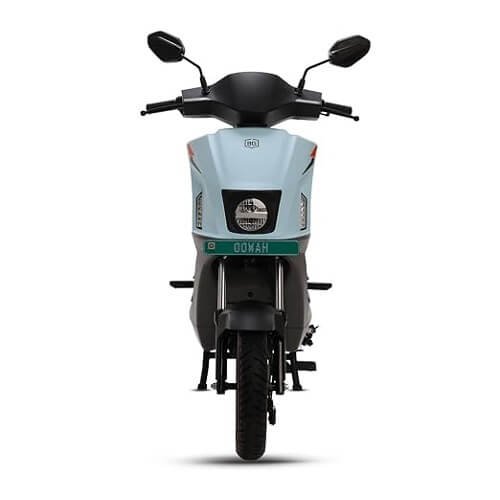
Oowah EX Electric Scooter – Removable Lithium-ion Battery , Laguna Blue
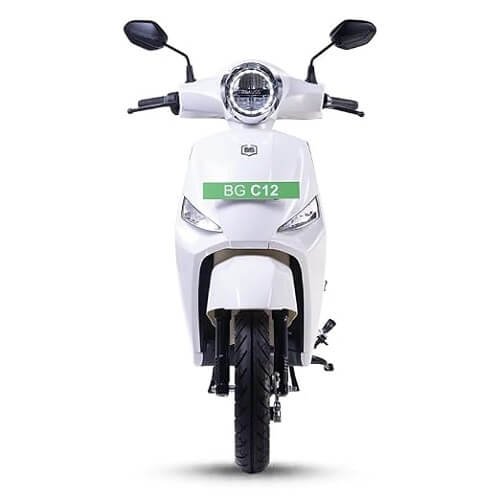
BG C12i EX Gen 2 Electric Scooter – Removable 2.0 kWh LFP Battery, 60 km/h Top Speed
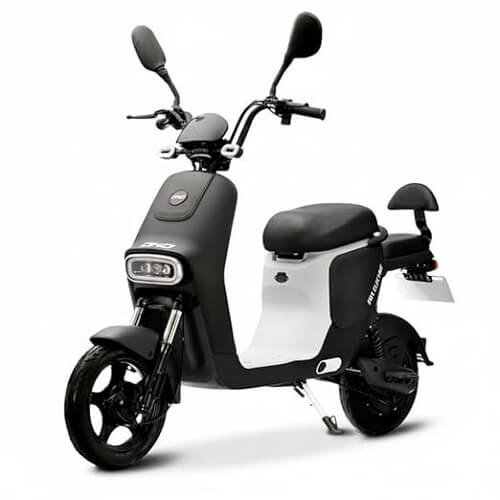
EOX OKO Electric Scooter – Removable Lithium Battery, 40-50 km Long-Range
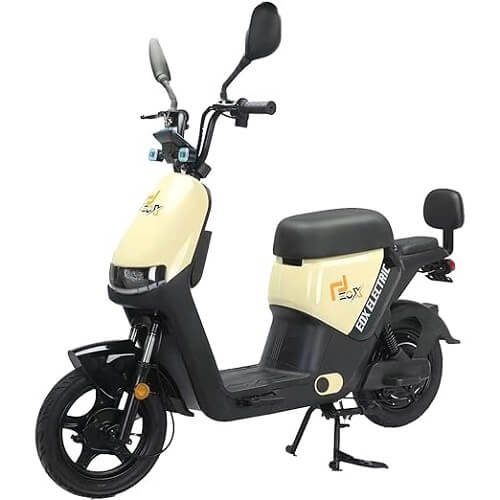
EOX OLO Low Speed Electric Scooter – 45Km Mileage, Pastel Yellow & Black
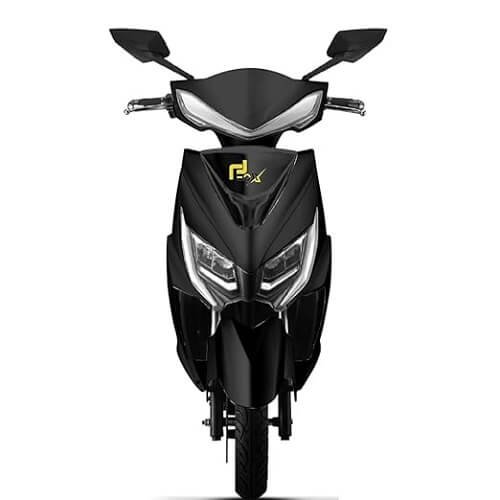
EOX E2 Low Speed Electric Scooter – 60-70Km Range, Portable Lithium Battery
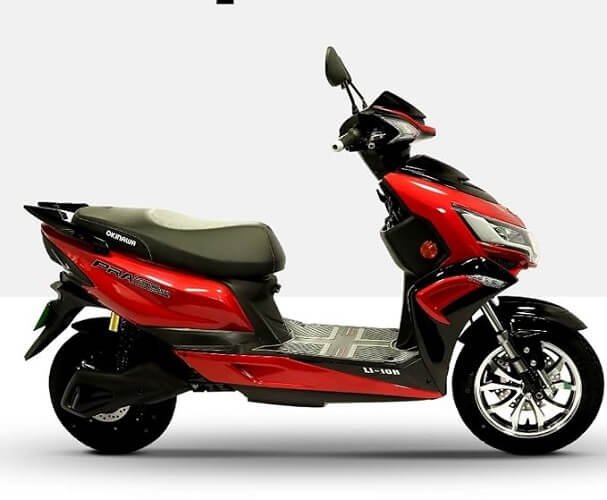
Okinawa Praise PRO Electric Scooter – Li-Ion Battery
EOX® ROX Electric Scooter – 48V Removable Lithium Battery, 50-60 km Long-Range
MIOOX Electric Scooter – 51.8V 28AH Range 55-65km Front Disc
AMO Low Speed Electric Scooter – 60-70 Km Range in Grey
AMO Jaunty 3W Low-Speed Electric Scooter – Blue and Black
Bajaj Chetak C2501 Electric Scooter – Glossy Active Black
Bajaj Chetak C3501 Electric Scooter – Brooklyn Black
Royal Enfield Classic 350 with Disc & Alloy Wheels Motorcycle – Stealth Black
Royal Enfield Bullet 350 Disc & Spoke Wheel Motorcycle – Battalion Black
Royal Enfield Hunter 350 with Disc & Alloy Wheels Motorcycle – Dapper Grey
Hero MotoCorp Passion+ i3S Drum – Black Heavy Grey
Hero MotoCorp XTREME 125R Bike(ABS) – Stallion Black
Hero MotoCorp HF Deluxe Drum – Black Grey
Hero MotoCorp XTREME 125R FI ABS SEAT DS (OBD2B) Motorcycles – Black
Bajaj Avenger 220 Cruise Motorcycle – Moon White
Bajaj Pulsar N 160 Ug Motorcycle – Brooklyn Black
Bajaj Platina 110 Es Drum Motorcycle – Black Red
Bajaj Pulsar N 250 Ug Motorcycle – Brooklyn Black
Harley Davidson X440 T 440cc Motorcycle – Pearl Blue
Harley Davidson X440 S 440cc Motorcycle – Matte Black
Harley Davidson X440 Vivid 440cc Motorcycle – Metallic Thick Red
Harley Davidson X440 T 440 CC Motorcycle – Pearl Red
KTM Duke 200 PRO Bike – Dark Galvano Black
KTM Duke 390 R Bike – Electronic Orange
KTM Adventure X 390 Bike – Orange
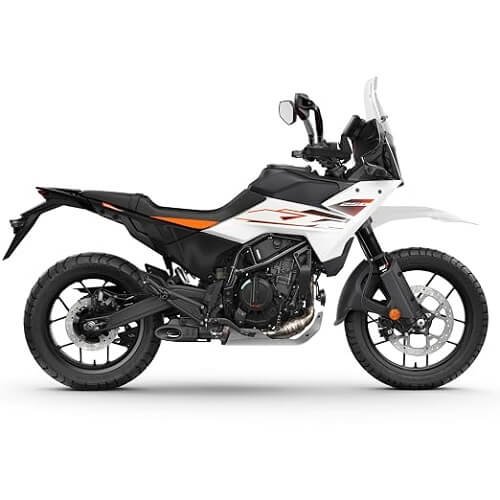
KTM Adventure 250 Bike – White
As an Amazon Associate, Neu Auto earns from qualifying purchases. When you purchase through one of the Amazon links above, Neu Auto may receive a commission at no additional cost to you.