

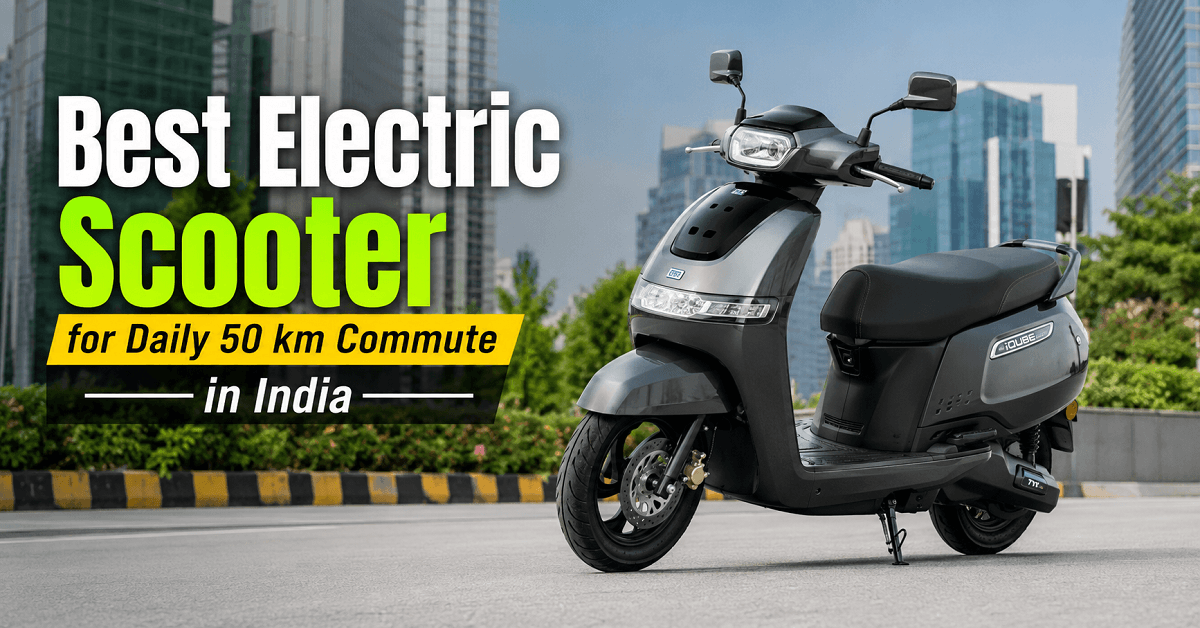
If you’re searching for the Best Electric Scooter for a daily 50 km Commute in India, choose a model that delivers reliable range, fast charging, low running costs, and advanced safety features. A powerful electric scooter helps you enjoy a smooth, budget-friendly, and eco-friendly commute while reducing fuel expenses every single day.
Key Highlights
- Covers the best electric scooters for a 50 km daily commute in India.
- Includes verified battery, range, charging time, and price details.
- Explains real monthly running costs based on 1,500 km of riding.
- Compares ownership costs instead of only purchase prices.
Why the Long-Commute Buyer Is Different
A 20 km city rider charges only twice a week. Also, they rarely drain the battery and ride around 6,000 km a year. As a result, battery cycles stay low, and parts last longer.
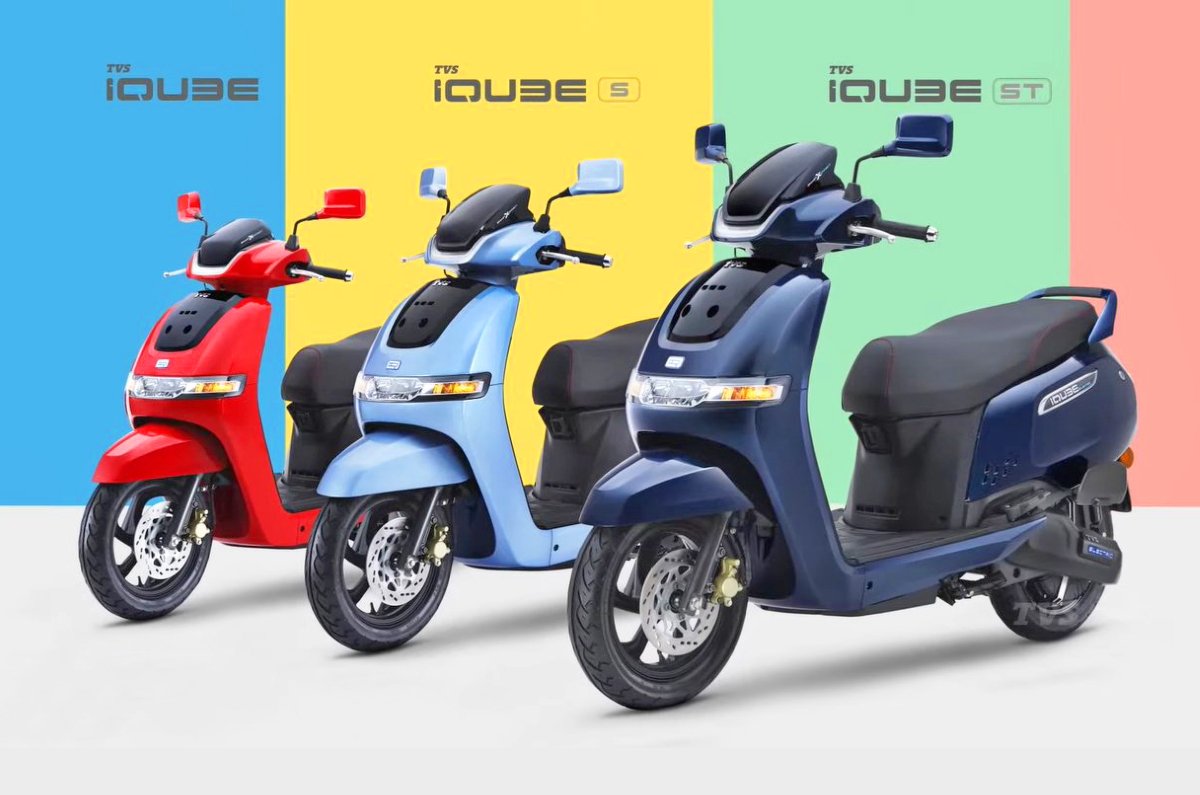
However, your usage is different. A 2.2 kWh scooter with a real range of 55 to 65 km needs almost a full charge every day for a 50 km commute. Therefore, the battery faces more stress. In contrast, a 5 kWh scooter uses only about one-third of its battery for the same trip. So, the battery stays under less strain and lasts longer.
Best Electric Scooter for Daily 50 km Commute in India Comparison
| Scooter | Claimed Range | Real World Range* | Battery | Charging Time | Approx. Ex-showroom Price |
|---|---|---|---|---|---|
| Ather Rizta Z | 159 km | 110 to 125 km | 3.7 kWh | 6 hr 10 min | ₹1.38 lakh |
| TVS iQube ST | 150 km | 105 to 120 km | 5.1 kWh | 4 hr 18 min | ₹1.59 lakh |
| Ola S1 Pro Gen 3 | 242 km | 150 to 170 km | 5.3 kWh | About 9 hr | ₹1.50 lakh |
| Bajaj Chetak 3501 | 153 km | 110 to 125 km | 3.5 kWh | About 3 hr | ₹1.35 lakh |
| Vida V2 Pro | 165 km | 115 to 130 km | 3.9 kWh | About 5 hr 55 min | ₹1.20 lakh |
| Ather 450X | 161 km | 115 to 130 km | 3.7 kWh | About 5 hr 45 min | ₹1.50 lakh |
| Simple One | 248 km | 160 to 180 km | 5.0 kWh | About 5 hr 54 min | ₹1.67 lakh |
*Real-world range depends on riding style, traffic, temperature, tyre pressure, passenger load, and speed.
Who should buy and who should genuinely avoid this
You should buy an electric scooter if your daily route falls strictly between forty and seventy kilometers. You need a dedicated parking spot at home with a standard three-pin wall socket. This setup lets you plug in overnight and wake up to a full tank every morning.
You should genuinely avoid buying an electric scooter if you live on the fourth floor without a lift or parking garage. Extension cords running from balconies create severe fire hazards. Furthermore, if your daily commute crosses one hundred kilometers without access to daytime midway charging points, petrol scooters or commuter motorcycles remain safer bets for now.
Budget-wise Recommendations
Under ₹1 Lakh
The honest answer: this budget is not ideal for your needs. Most scooters have a 2–3 kWh battery and a 30,000 km warranty, which you may finish within two years.
Pick: Ola S1 X 3 kWh – ₹91,381 (ex-showroom, Delhi). It offers a 176 km claimed IDC range and a 3-year/40,000 km warranty. Since your daily 50 km ride uses only part of the battery, it suits regular commuting. Moreover, Ola offers extended warranty options: 8 years/70,000 km for ₹11,799 + GST or 8 years/1,00,000 km for ₹14,499 + GST. Buy them within 12 months. However, prices vary, so confirm with your local dealer.
Runner-up: Vida VX2 Go 2.2 kWh – ₹99,490. Choose it only if you cannot charge at your parking spot. Its removable battery lets you charge at home or work. However, the 2.2 kWh battery needs daily full charging, while the 3-year/30,000 km warranty may end in about 20 months.
Avoid the TVS iQube 2.2 kWh at ₹94,434. Although it is well built, its 30,000 km warranty is too short for heavy daily use.
₹1 Lakh to ₹1.5 Lakh
This is the best price range for long-distance riders because of better warranty coverage.
Pick: Bajaj Chetak 3503 – ₹1,24,157 (ex-showroom, Bengaluru). It has a 3.5 kWh battery, 151 km claimed IDC range, 0–80% charging in 3 hours 25 minutes, and a 5-year/70,000 km battery warranty. Therefore, you get nearly four years of coverage without paying extra. Its metal body also handles daily wear well. However, the 70 km/h top speed is its main limitation.
Runner-up: TVS iQube S 4.7 kWh – ₹1,17,642. It delivers a 175 km claimed range and charges to 80% in about four hours. It also has one of India’s largest service networks. However, the 3-year/50,000 km warranty lasts only about 33 months. So, choose it for a shorter ownership period. Otherwise, the Chetak is a better long-term option.
Also consider the Ampere Nexus at around ₹1.15 lakh (ex-showroom, Delhi). It includes a 5-year/75,000 km warranty, the longest standard coverage in this segment. However, its 3 kWh battery offers less buffer for a 50 km daily ride.
Above ₹1.5 Lakh
Pick: Ola S1 Pro+ 5.2 kWh – ₹1,90,338 (ex-showroom, Delhi). It claims a 320 km IDC range and charges to 80% in about 4 hours 50 minutes. In real use, expect around 150–190 km. As a result, you may charge only every third day, which helps battery life.
The biggest advantage is its warranty. For ₹19,999 + GST, you get 8 years or 1,25,000 km, with battery replacement if health drops below 70%. Therefore, it is the best choice for high-mileage riders. Even at around ₹2.2 lakh total cost, it remains a low-risk long-term buy.
Runner-up: TVS iQube ST 5.3 kWh – ₹1,58,834. It offers a 212 km claimed range, about 4 hours 18 minutes to 80% charging, and excellent service support. It also costs around ₹30,000 less than the Ola. However, the 3-year/50,000 km warranty is its biggest drawback.
Third option: Ather Rizta Z 3.7 kWh – from ₹1,36,999. With the Eight70 plan, you get 8 years/80,000 km coverage and a 70% battery health guarantee for ₹4,999. It also includes Ather Grid charging access. However, Ather has not publicly confirmed the standard battery kilometre limit. Therefore, ask your dealer for the warranty details in writing.
Charging logistics: the part that actually decides this
Everyone talks about range. Almost nobody talks about where you will actually plug in. Most scooters charge fully in 4 to 6 hours on a normal 5 amp household socket, the same one you use for your iron or mixer. That means overnight charging works for almost everyone. The real question is simpler: do you have a socket within reach of where you park?
If you live in an apartment without a dedicated EV point, ask your society for one before you buy, not after. Workplace charging is a bonus, not a requirement, if your home charging is solid. For 50 km daily riders, one full overnight charge is enough for the entire next day, with some scooters leaving 20 to 30 km spare.
Running cost at 1,500 km a month
A commuter riding 1,500 km every month spends much less on electricity than petrol. Most electric scooters consume around 3.5 to 4.5 kWh per 100 km. At an average electricity tariff of ₹8 per kWh, monthly charging costs usually stay between ₹450 and ₹600. A petrol scooter delivering 45 km per litre would consume around 33 litres of fuel for the same distance. At petrol prices near ₹100 per litre, monthly fuel costs exceed ₹3,300. That means many riders can save more than ₹30,000 every year, depending on local electricity and fuel prices. Actual savings vary with riding style, charging habits, and electricity rates.
| Tariff (₹/unit) | Cost per km | 1,500 km/month | 18,000 km/year |
|---|---|---|---|
| ₹6 | ₹0.24 – ₹0.30 | ₹360 – ₹450 | ₹4,320 – ₹5,400 |
| ₹8 | ₹0.32 – ₹0.40 | ₹480 – ₹600 | ₹5,760 – ₹7,200 |
| ₹10 | ₹0.40 – ₹0.50 | ₹600 – ₹750 | ₹7,200 – ₹9,000 |
| Public fast charging | ₹0.60 – ₹1.00 | ₹900 – ₹1,500 | ₹10,800 – ₹18,000 |
Maintenance and Consumables at High Mileage
Electric scooters cost less to maintain, but they are not maintenance-free. If you ride 18,000 km a year, you will need servicing more often. Ather needs service every 5,000 km or one year, so expect about 3 to 4 services yearly. TVS iQube requires service every 4,000 km, which means about 4 to 5 visits. Ather Care plans cost ₹1,130, ₹2,400, and ₹5,900. Meanwhile, Ola Essential Care costs ₹649 to ₹799 plus GST for five service visits. Overall, expect annual maintenance costs of ₹2,000 to ₹5,000 or slightly more.
Consumables are similar to those of a petrol scooter. Usually, the rear tyre lasts 12,000 to 18,000 km, while the front tyre lasts 20,000 to 25,000 km. However, tyre life depends on road conditions, load, and riding style. Also, regenerative braking helps brake pads last longer in city traffic, but the benefit is lower on highways.
If you plan to earn with your scooter, check the warranty terms first. For example, Ather does not cover goods delivery use. Likewise, Ola’s extended battery plans are only for retail users. Similarly, TVS iQube battery-as-a-service does not allow commercial use.
Degradation Over a High Mileage Life
Battery health naturally drops over time, but modern lithium-ion batteries are built to last. Most electric scooter makers offer a battery warranty of 5 to 8 years, depending on the brand and plan. If you ride around 18,000 km each year, the battery should still retain good capacity for daily commuting after several years. Charging between 20 percent and 80 percent whenever possible and avoiding long periods at a full or empty charge can help extend battery life. Parking in shaded areas during hot summers also reduces heat stress. Even after some battery ageing, a scooter with over 100 km of real-world range will comfortably handle a 50 km daily commute.
Five-year Cost of Ownership
Buying price is only one part of the total cost. Fuel savings, maintenance, insurance, and resale value all affect your long-term expenses. A quality electric scooter can cost more upfront, but lower running costs often make up the difference over five years. For a rider covering about 90,000 km during that period, fuel savings alone can be significant compared to a petrol scooter. Maintenance expenses also remain lower because there are fewer mechanical components. Insurance costs are generally similar across both categories. Choosing a trusted brand with a strong service network can also improve resale value and reduce unexpected repair costs later.
| TVS iQube 2.2 kWh | Bajaj Chetak 3503 | Ola S1 Pro+ 5.2 kWh | 110cc petrol scooter | |
|---|---|---|---|---|
| Ex-showroom price | ₹94,434 | ₹1,24,157 | ₹1,90,338 | ~₹85,000 (indicative) |
| Extended battery warranty | Not offered at this cap | Not required (5 yr/70,000 km standard) | ₹19,999 + GST (8 yr/1,25,000 km) | Not applicable |
| Energy or fuel, 5 years | ₹28,800 – ₹36,000 | ₹28,800 – ₹36,000 | ₹28,800 – ₹36,000 | ₹1,83,816 – ₹2,04,240 |
| Service, 5 years (est.) | ₹25,000 – ₹35,000 | ₹25,000 – ₹35,000 | ₹25,000 – ₹35,000 | ₹35,000 – ₹50,000 |
| Tyres and brakes, 5 years (est.) | ₹18,000 – ₹28,000 | ₹18,000 – ₹28,000 | ₹18,000 – ₹28,000 | ₹18,000 – ₹28,000 |
| Battery covered to 90,000 km? | No — cover ends at 30,000 km | Partly — cover ends at 70,000 km | Yes | Not applicable |
| Indicative 5-year total (excluding battery risk) | ₹1,66,000 – ₹1,93,000 | ₹1,96,000 – ₹2,23,000 | ₹2,82,000 – ₹3,09,000 | ₹3,21,000 – ₹3,67,000 |
| Uncovered battery exposure | High — 60,000 km uncovered | Moderate — 20,000 km uncovered | None within cap | None |
PM E-Drive: why this specific week matters
The PM E-Drive subsidy for electric two-wheelers was extended to August 31, 2026, giving buyers a short extra window after the original March cutoff. The incentive itself was cut in half earlier this year, now standing at ₹2,500 per kWh, capped at ₹5,000 per vehicle, and it only applies to scooters priced up to ₹1.5 lakh ex-factory. The scheme is also fund-limited, meaning it can close before August 31 if the allocated ₹10,900 crore budget runs out first.
If you are planning to buy in this window, do not wait until the last week. Dealers report registration queues building up as the deadline nears, and a delayed registration could mean missing the subsidy entirely even if you already paid for the scooter.
Ownership Experience and Long-term Value
Owning an electric scooter feels different from owning a petrol scooter. You enjoy instant acceleration, quiet riding, and the convenience of charging at home. Daily commuting becomes easier because you spend less time visiting fuel stations. Reliable brands such as Ather, TVS, Bajaj, Hero Vida, and Ola Electric continue to improve software, service support, and charging networks. Before buying, visit the nearest service centre and ask about spare parts availability, average service turnaround time, and roadside assistance. A dependable after-sales network often has a bigger impact on ownership satisfaction than extra features or a slightly longer range.
Pros and Cons Of Electric Scooters
Pros
- Running cost roughly 70 to 80 percent lower than petrol at high mileage
- Minimal maintenance, no oil changes or clutch wear
- Quiet, smooth ride reduces daily commute fatigue
- PM E-Drive subsidy still active, lowering upfront price
- Home charging on a normal household socket
Cons
- Real-world range is always lower than the claimed figure
- Battery degradation reduces range noticeably after 3 to 4 years
- Charging access can be a genuine problem in older apartments
- Resale value is still less predictable than petrol scooters
- Hilly terrain and passenger load cut range significantly
Real Owner Reviews
“I switched to the TVS iQube six months ago for my daily fifty-kilometer office round trip. My monthly fuel bill dropped from four thousand rupees to just four hundred rupees. Charging it overnight in my garage is as easy as plugging in my smartphone.”
— Rajesh Sharma, Delhi
“The Ather 450X handles my long daily commute with zero issues. The acceleration is addictive, and I use the public Ather Grid fast charger near my office if I need a quick top-up during heavy traffic days.”
— Priya Nair, Bengaluru
Conclusion
Commuting fifty kilometers every day demands a reliable, efficient, and sturdy electric scooter. Models like the TVS iQube, Bajaj Chetak, and Ather 450X prove that electric mobility in India has moved past experimental stages into dependable daily transportation. By analyzing your charging access, leveraging government subsidies, and picking the right battery size, you slash your monthly transit expenses while enjoying a smoother ride.
FAQs
Which electric scooter is best for daily commute?
For most riders, the TVS iQube ST and Ola S1 Pro Gen 2 lead the pack, offering the strongest mix of real-world range, service network, and charging speed for daily use.
What electric scooter has a 50km range?
Almost every current model claims well above 50 km, but for a true 50 km real-world range after degradation and traffic, look at the Bajaj Chetak, Ather Rizta, or Hero Vida VX2.
Which scooter is best for commuting?
The TVS iQube ST stands out for commuting because of its wide dealer network, meaning quick service and parts access even outside major cities.
Which electric scooter is best for hilly areas in India?
The Ola S1 Pro Gen 2 handles inclines better due to its stronger motor output, though range on any scooter drops noticeably on continuous hill climbs.
Which scooter is best for daily long drive?
For daily long distances near or above 50 km, the Ola S1 Pro Gen 2 gives you the largest safety buffer thanks to its higher claimed and real-world range.
What are the best electric scooters for commuting?
The Ola S1 Pro Gen 2, TVS iQube ST, Ather Rizta, Bajaj Chetak, and Hero Vida VX2 together cover every budget and commute distance for Indian riders in 2026.

Rate This Article
Be the first to rate this article
Thanks for rating!
All Car Brands
View all brands →
















More Updates
Handpicked Accessories for Every Journey
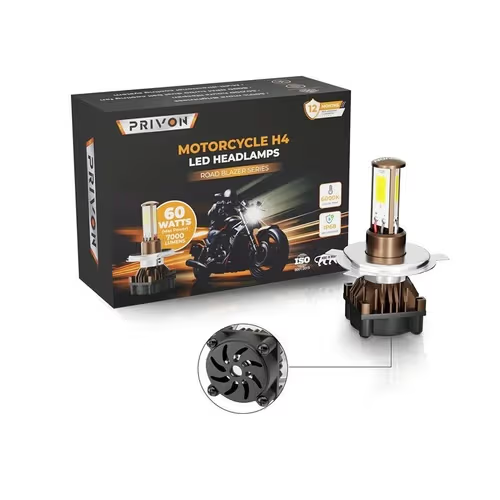
PRIVON 60W H4 LED Headlight for Bike – 7000L, 6000K White LED Light for Night Ride
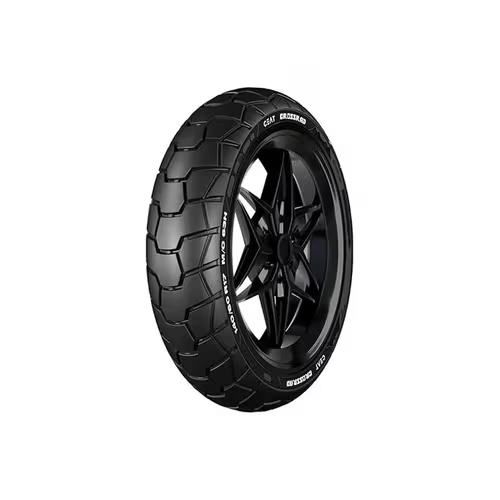
Ceat Zoom Rad 140/60 R17 63P Tubeless Bike Tyre

ShineXPro Helmet Cleaner & Microfiber Cloth – Anti Bacterial Foaming Helmet Cleaning Spray
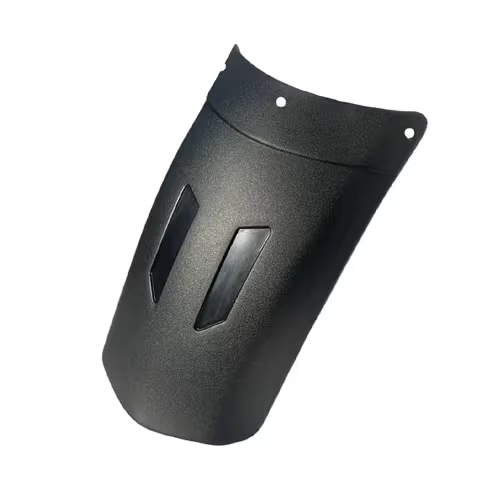
Universal Front Fender Mudguard Extender Extension Fits for Motorcycle

Boldfit Full Face Helmet Mask for Bikers in Riding UV Protected
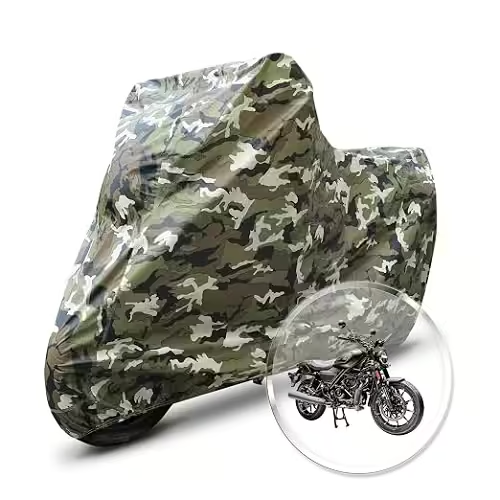
Neodrift JungleMax Bike Cover for Harley-Davidson X440
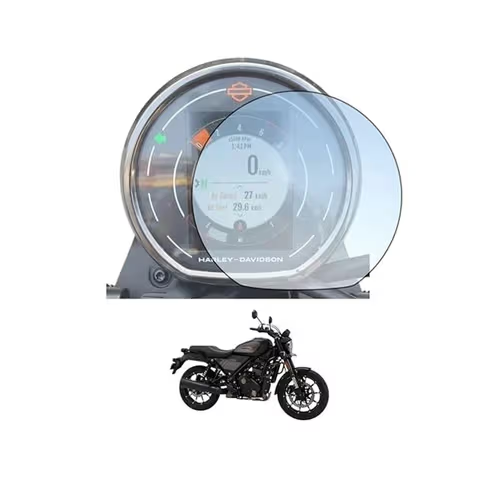
Wisely Pack 2 Screen Guard for Harley Davidson X440T Bike – Instrument Cluster Accessories
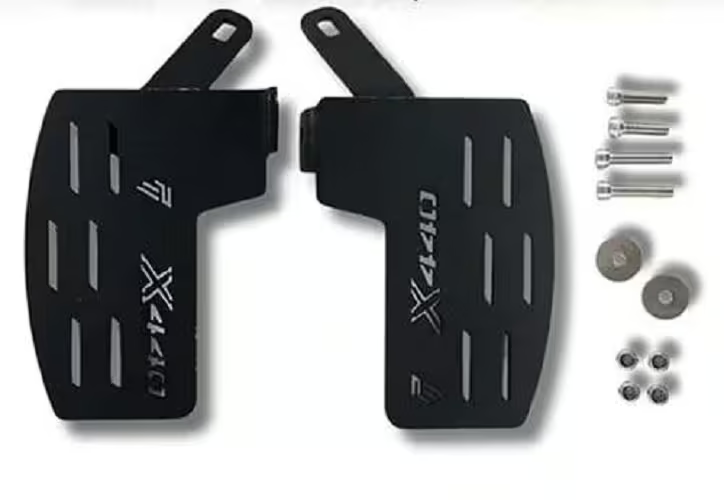
PHANTOM Premium Adjustable Footrest for Harley – Motorcycle Accessory for Touring & City Riding
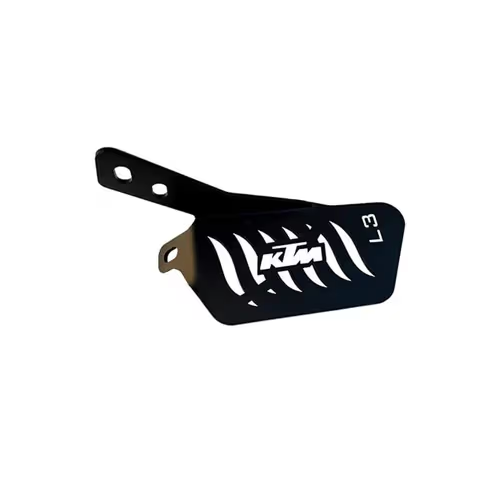
L3 MODZ Ladies Foot Rest for KTM Duke (BS6 Gen2) Models
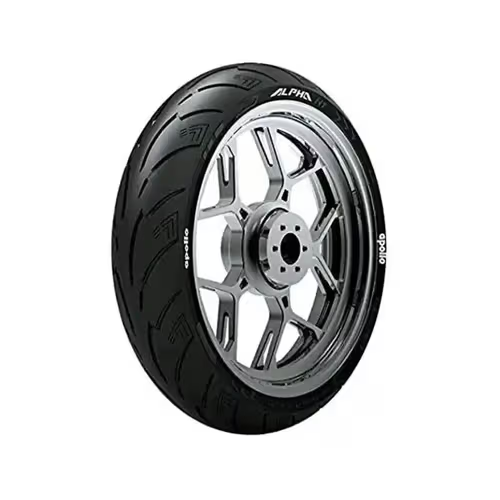
Apollo Alpha S1 130/70 R17 62H Radial Tubeless Bike Tyre
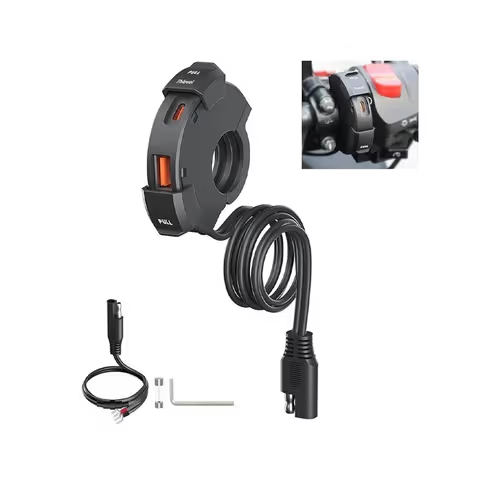
30W Motorcycle Type-C USB Phone Charger with PD & Quick Charge
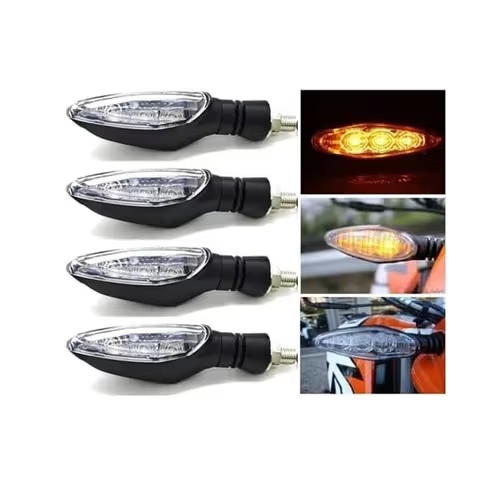
ELTRON TURBO Turn Signal Indicator Lights Compatible for KTM
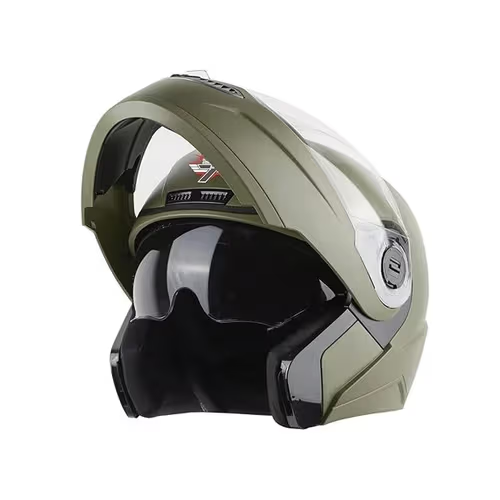
Steelbird SBA 7 7Wings Flip-Up Helmet for Men with Skull Cap
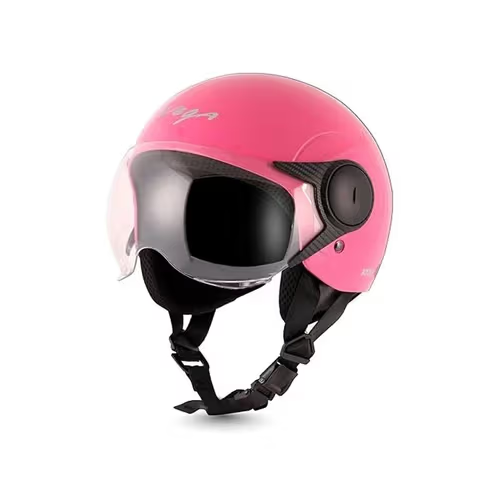
Vega Atom Open Face Helmet with Clear Visor, Black
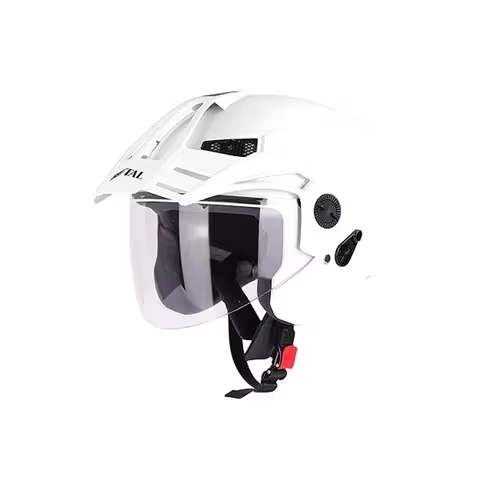
Steelbird SBH-23 Brutal Open Face Helmet with Skull Cap
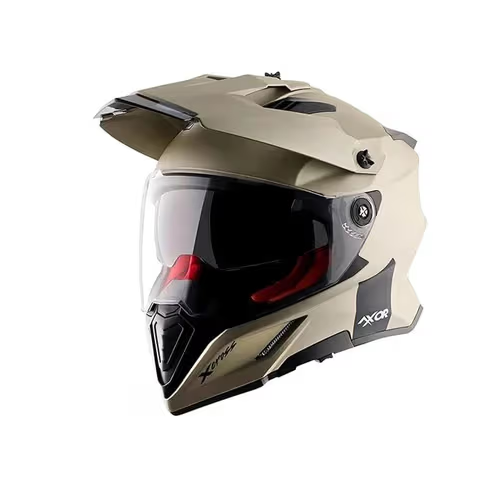
Axor X Cross Dual Visor Full Face Off-Road Helmet – Dull Black Orange
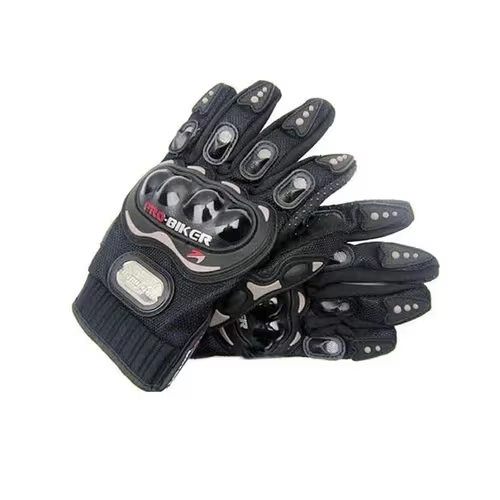
Probiker Protective Full Finger Bike Riding Gloves – Motorcycle, Cycling, and Hiking
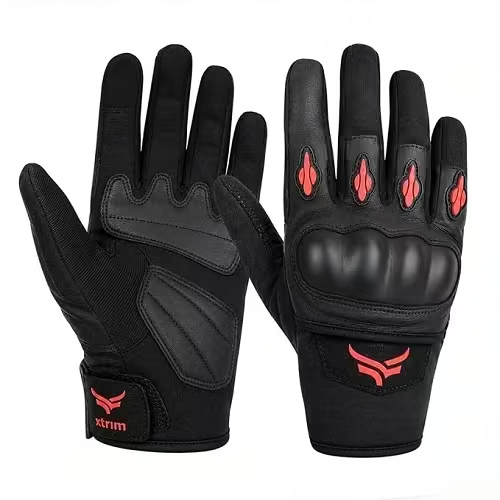
XTRIM Protekt Universal Bike Riding Gloves for Men – Black, Red
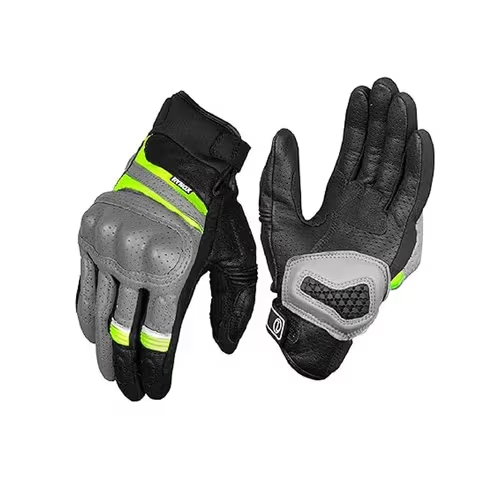
Rynox Air GT Leather Motorcycle Riding Gloves – Cuff Length | Grey Red
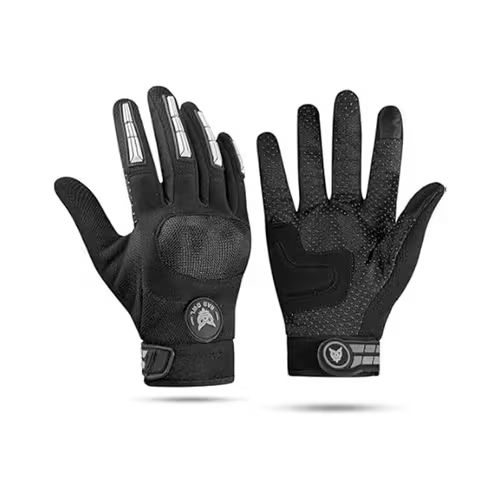
BADOWL RYDON Knuckle Protection Riding Gloves – Touchscreen Sports Gloves

Microfiber Car Duster with Long Handle Cleaning Brush

Robustt Car Interior Cleaning Brush Combo – Scratch Free Car Duster

ORJILO 5-Piece Microfiber Car Duster Kit – Extendable Long Handle Duster for Car
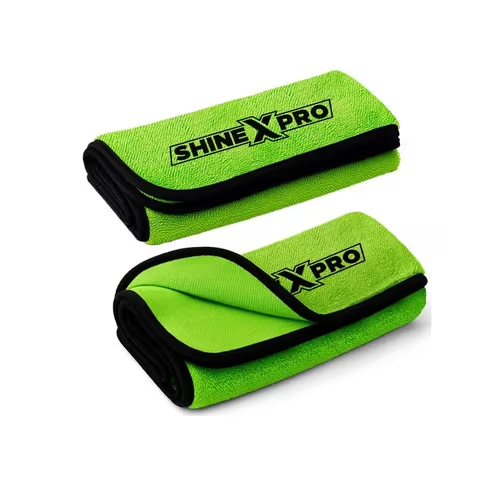
ShineXPro Microfiber Car Cleaning Cloth (500 GSM, Extra Large (35×75 CM))
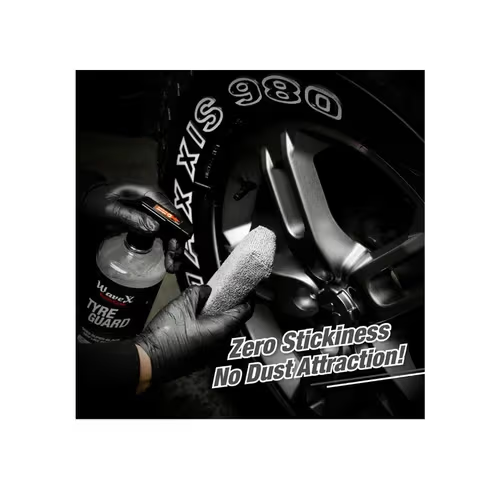
Wavex Tyre Polish for Car & Bike (1L) – With Applicator and Microfiber Cloth

ShineXPro Glass Cleaner Spray (300 ml) – Streak Free Car Glass Cleaner Liquid
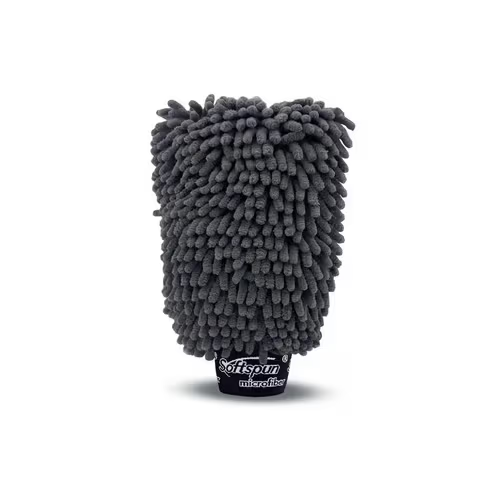
SOFTSPUN Microfiber Chenille Wash Mitt (1700 GSM)
Tusa V1 Cordless Vacuum Cleaner for Car – High Power Portable Lightweight Wireless Vacuum

SOFTSPUN Microfiber Cloth (40×40 cm, 340 GSM) – Automotive Microfibre Towels for Car
SEZNIK 4-in-1 Cordless Vacuum Cleaner & Blower

GOODAIR Royal Premium Non-Electric Car Air Purifier
Portronics 38W Dual Output Fast Car Charger with 20W Type-C PD & 18W USB with Cars for iPhone
AutoBizarre High Gloss Carbon Fibre Paint Protection For Car
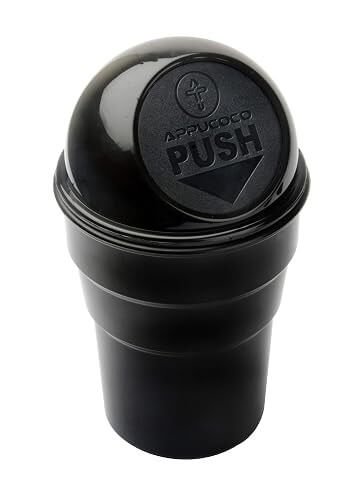
APPUCOCO Mini Car Trash Bin – Black
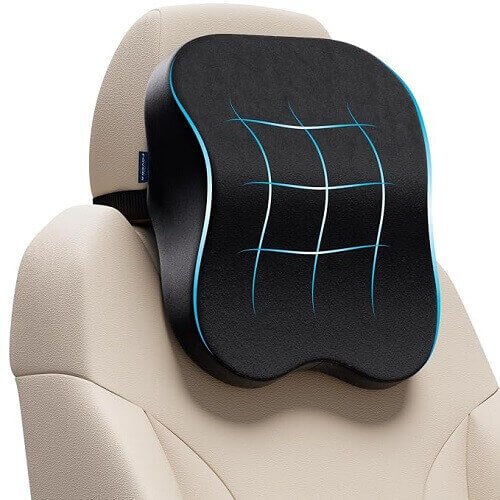
FOVERA Memory Foam Car Neck Rest Pillow – Medium, Black
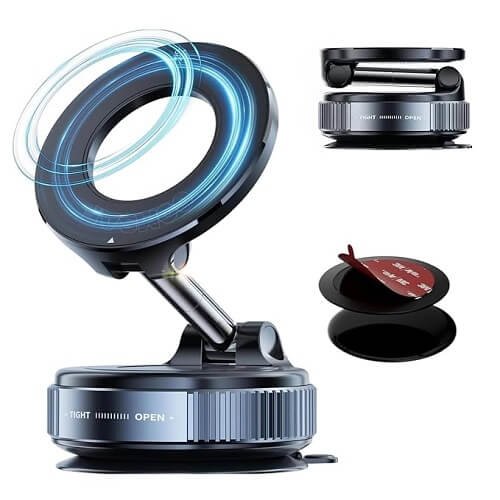
360° Vacuum Magnetic Car Phone Mount – Strong Suction Cup Phone Holder for Car
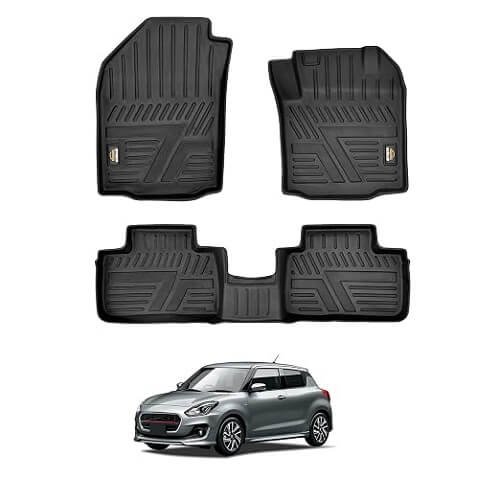
Amazon Basics 5D Custom Fit Car Floor Mats for Swift Facelift
TUSA Drive X 12V DC Portable Tyre Inflator – 150 PSI, Air Compressor
![Qubo Dashcam Pro 4K [2026 Edition] – Dual Channel | ADAS | Ultra-Wide 8MP UHD+ Front, 2MP FHD Rear](https://neudeals.co/wp-content/uploads/2026/09/Qubo-Dashcam-Pro-4K-Sensor.jpg)
Qubo Dashcam Pro 4K [2026 Edition] – Dual Channel | ADAS | Ultra-Wide 8MP UHD+ Front, 2MP FHD Rear
Oowah EX Electric Scooter – Removable Lithium-ion Battery , Laguna Blue
BG C12i EX Gen 2 Electric Scooter – Removable 2.0 kWh LFP Battery, 60 km/h Top Speed
EOX OKO Electric Scooter – Removable Lithium Battery, 40-50 km Long-Range
EOX OLO Low Speed Electric Scooter – 45Km Mileage, Pastel Yellow & Black
EOX E2 Low Speed Electric Scooter – 60-70Km Range, Portable Lithium Battery
Okinawa Praise PRO Electric Scooter – Li-Ion Battery
EOX® ROX Electric Scooter – 48V Removable Lithium Battery, 50-60 km Long-Range
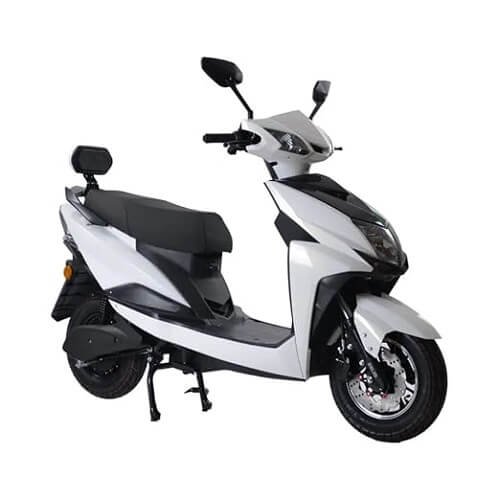
MIOOX Electric Scooter – 51.8V 28AH Range 55-65km Front Disc
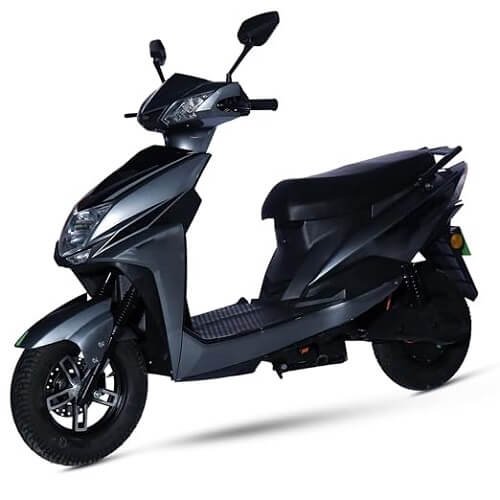
AMO Low Speed Electric Scooter – 60-70 Km Range in Grey
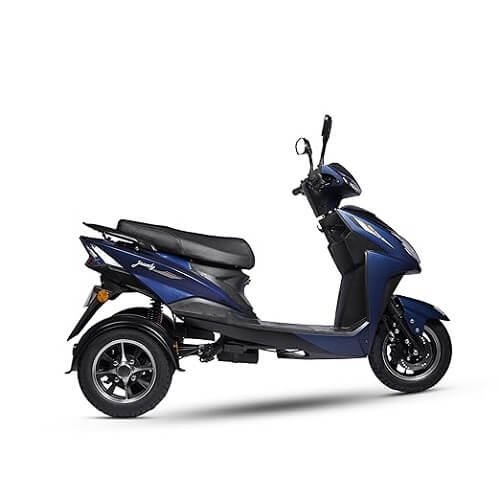
AMO Jaunty 3W Low-Speed Electric Scooter – Blue and Black
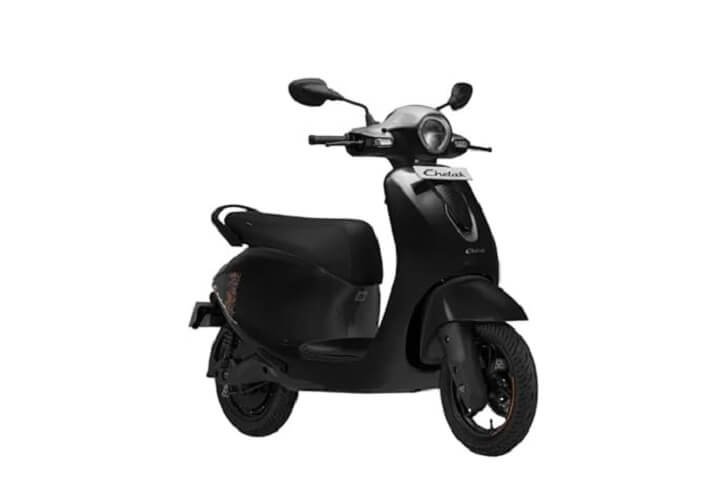
Bajaj Chetak C2501 Electric Scooter – Glossy Active Black
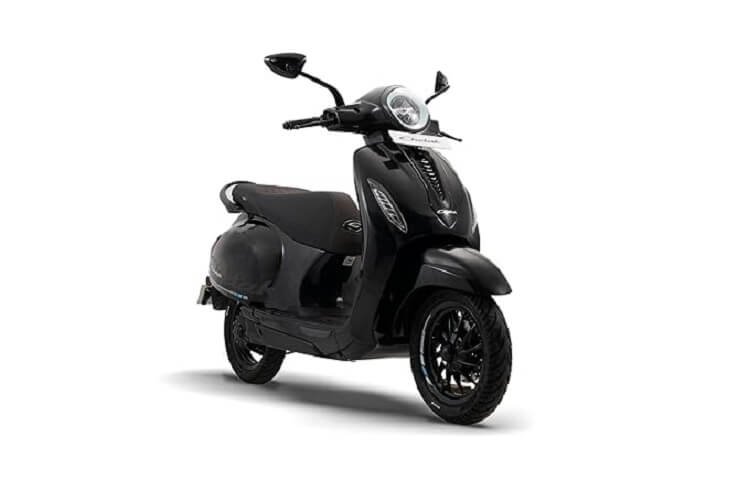
Bajaj Chetak C3501 Electric Scooter – Brooklyn Black
Royal Enfield Classic 350 with Disc & Alloy Wheels Motorcycle – Stealth Black
Royal Enfield Bullet 350 Disc & Spoke Wheel Motorcycle – Battalion Black
Royal Enfield Hunter 350 with Disc & Alloy Wheels Motorcycle – Dapper Grey
Hero MotoCorp Passion+ i3S Drum – Black Heavy Grey
Hero MotoCorp XTREME 125R Bike(ABS) – Stallion Black
Hero MotoCorp HF Deluxe Drum – Black Grey
Hero MotoCorp XTREME 125R FI ABS SEAT DS (OBD2B) Motorcycles – Black
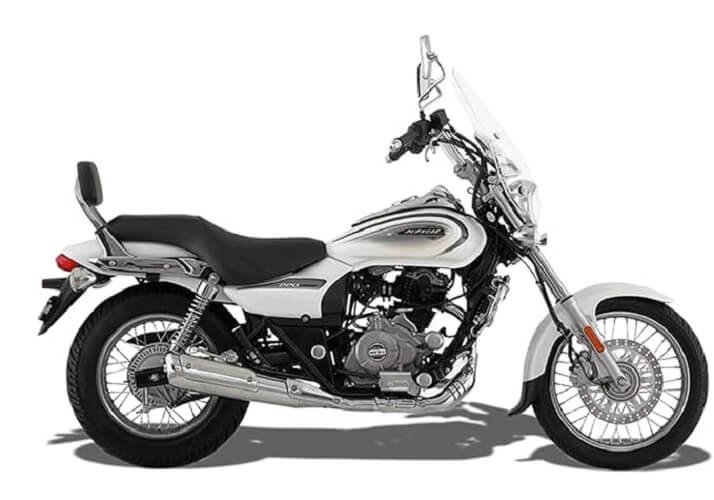
Bajaj Avenger 220 Cruise Motorcycle – Moon White
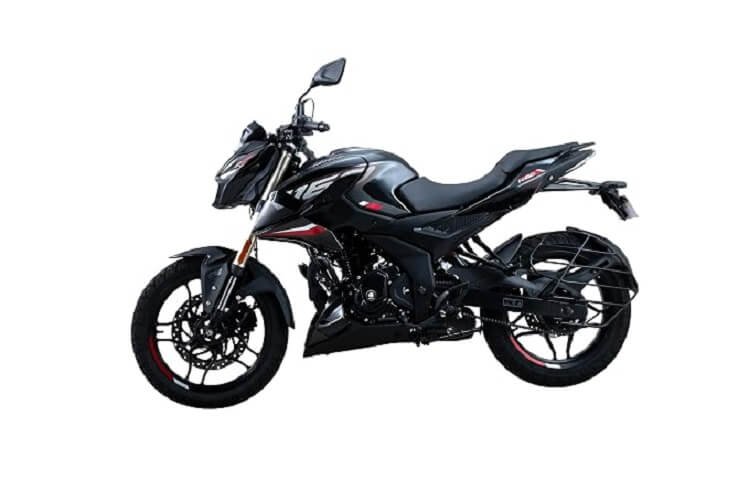
Bajaj Pulsar N 160 Ug Motorcycle – Brooklyn Black
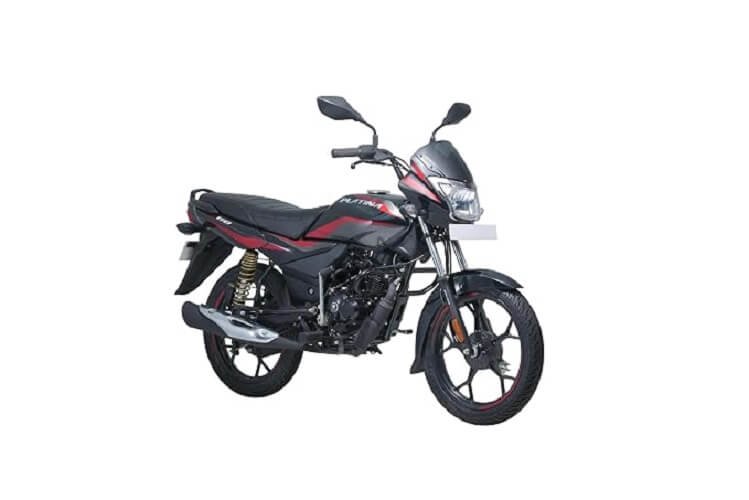
Bajaj Platina 110 Es Drum Motorcycle – Black Red
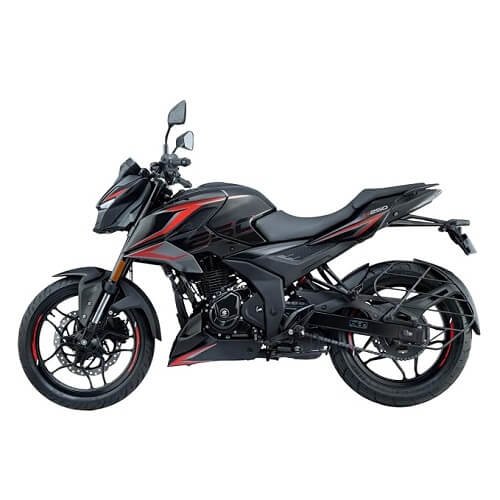
Bajaj Pulsar N 250 Ug Motorcycle – Brooklyn Black
Harley Davidson X440 T 440cc Motorcycle – Pearl Blue
Harley Davidson X440 S 440cc Motorcycle – Matte Black
Harley Davidson X440 Vivid 440cc Motorcycle – Metallic Thick Red
Harley Davidson X440 T 440 CC Motorcycle – Pearl Red
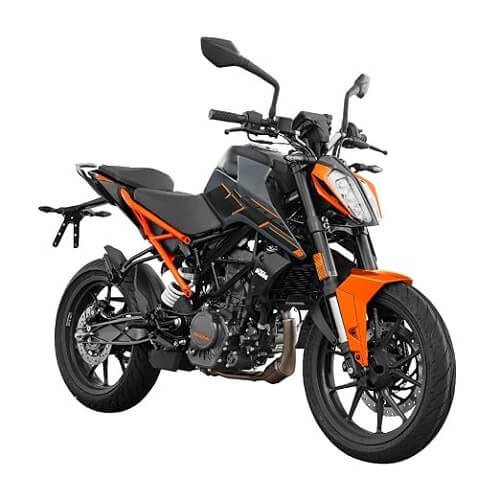
KTM Duke 200 PRO Bike – Dark Galvano Black
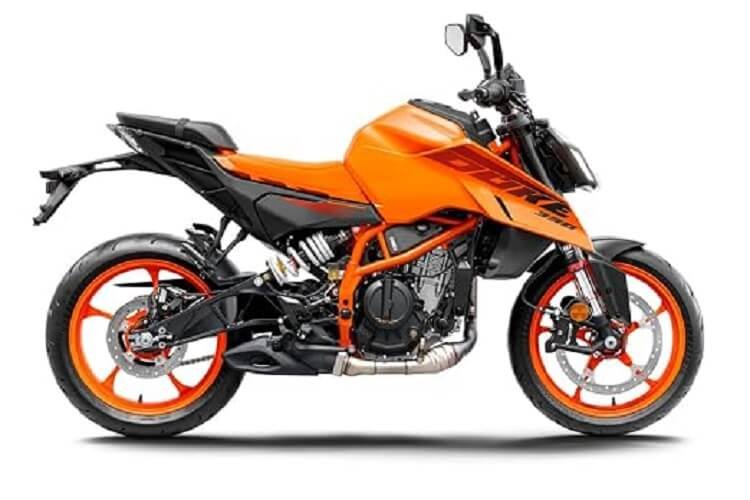
KTM Duke 390 R Bike – Electronic Orange
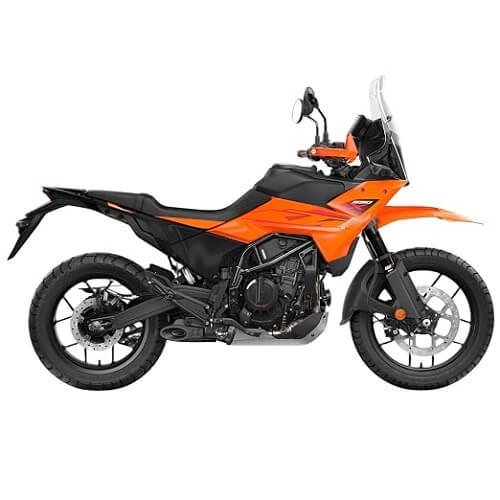
KTM Adventure X 390 Bike – Orange
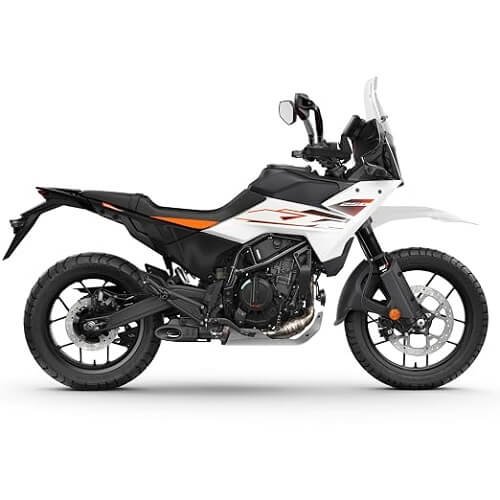
KTM Adventure 250 Bike – White
As an Amazon Associate, Neu Auto earns from qualifying purchases. When you purchase through one of the Amazon links above, Neu Auto may receive a commission at no additional cost to you.