

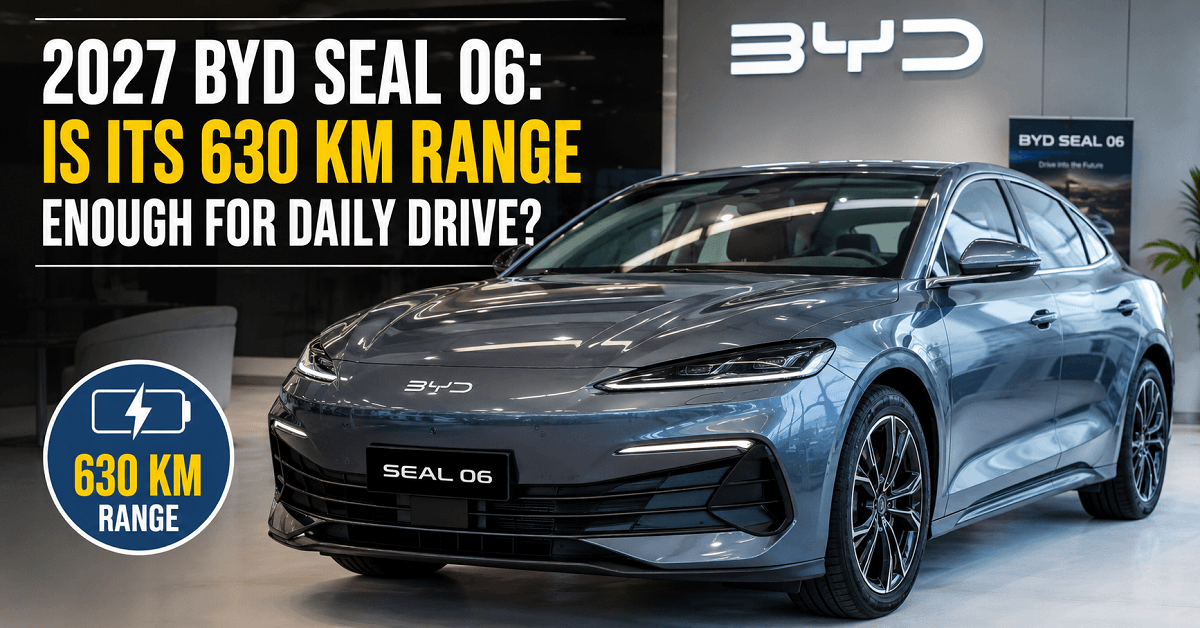
Buying your next family EV can feel overwhelming. The 2027 BYD Seal 06 is a new-generation electric and plug-in hybrid sedan built for drivers who want longer range, modern features, and lower running costs. But is the 630 km range real-world friendly? Here is what you need to know about its range, battery, features, and variants.
Key Highlights
- The 2027 BYD Seal 06 EV offers up to 630 km CLTC range, up from 545 km on the previous EV version.
- The EV uses BYD’s second-generation Blade Battery and Flash Charging technology.
- The new EV is available with 120 kW and 240 kW motor outputs, depending on the version.
- The DM-i plug-in hybrid version offers up to 320 km CLTC electric range and a claimed combined range of 2,370 km.
What Makes the 2027 BYD Seal 06 Different From Other EVs?
You want a car that keeps your family safe and keeps your wallet happy. The 2027 BYD Seal 06 stands out because it offers high-end technology at a fair price. Most electric cars force you to choose between high price tags and short range. This car bridges that gap.
Here are a few quick reasons it catches your attention:
- Fifth-Gen DM-i Tech: It uses updated hybrid technology that sips fuel slowly.
- Cell-to-Body Construction: The battery is built right into the frame, making the car safer and stiffer.
- Family-First Cabin: The interior uses soft materials, easy controls, and quiet glass to keep your kids comfortable.
What Is New About the Battery and Technology?
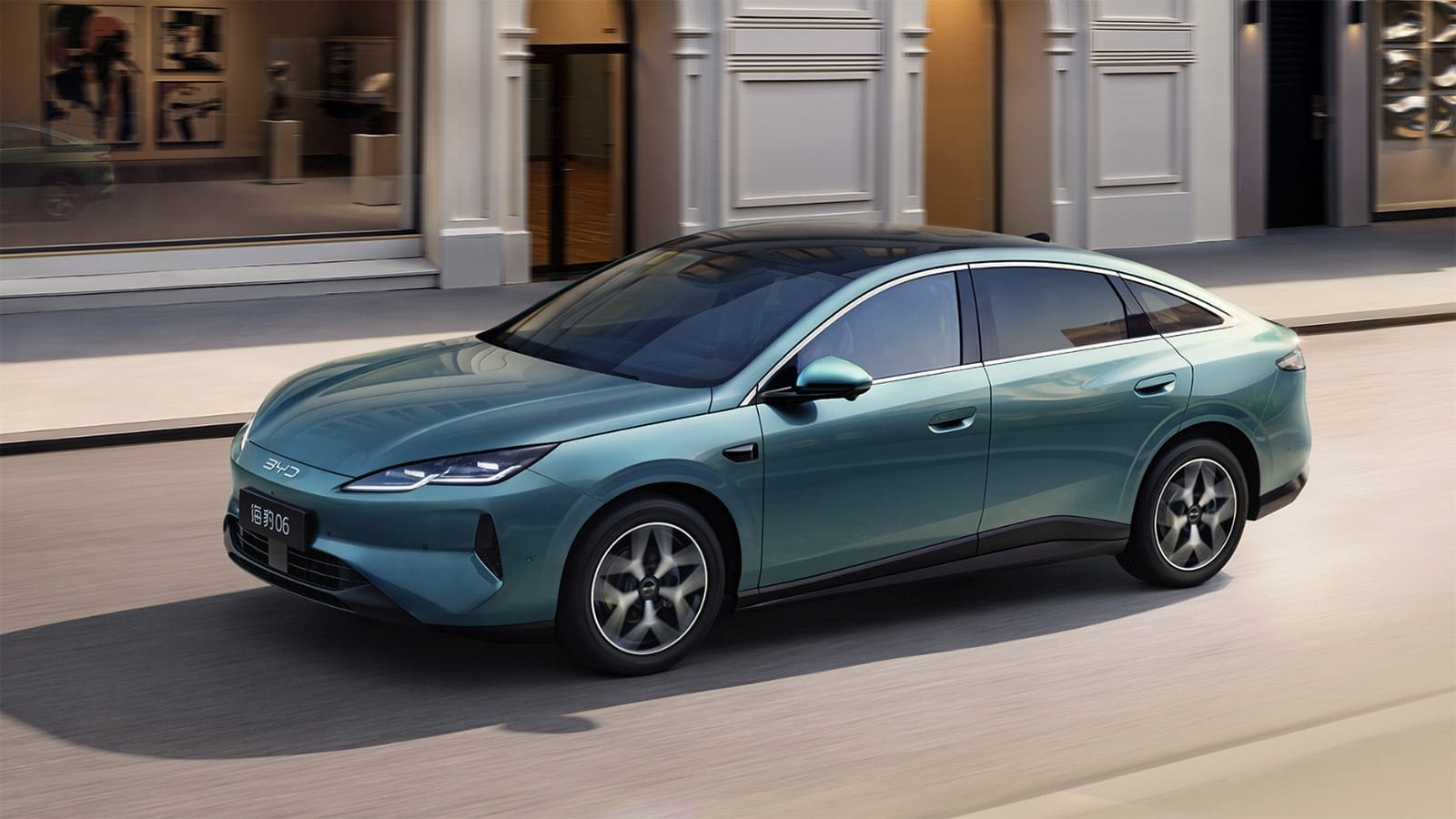
The battery story is especially interesting. BYD introduced its second-generation Blade Battery in March 2026, claiming charging from 10% to 70% in five minutes and up to 97% in nine minutes under its Flash Charging system. Reuters separately reported that the new battery can charge from 20% to 97% in under 12 minutes under specified conditions. Those figures are impressive, but you should check whether Flash Charging hardware is available where you live before treating charging speed as a daily benefit.
2027 BYD Seal 06 Range: Can It Really Travel 630 km?
Yes, 630 km is the official claimed CLTC range for the highest-range 2027 Seal 06 EV, but you should not read that number as a guaranteed highway distance. The previous Seal 06 EV was rated at 470 km or 545 km depending on battery and trim, so the new 630 km figure represents a meaningful increase. The upgraded version also uses a 64.315 kWh battery in the higher-range configuration according to industry data, with claimed energy consumption around 11.4 kWh per 100 km.
Why the CLTC Number Needs Context
Think of the 630 km number as a laboratory reference point, not your personal trip meter. CLTC testing is generally more favorable to EV range than harder real-world highway use, and owner discussions regularly point out this gap. At steady highway speeds, air conditioning, passengers, luggage, hills, and strong headwinds can all increase energy use. If your daily driving is mostly urban, the official figure becomes more useful because lower speeds and regenerative braking can help efficiency. For a long Indian highway trip, I would plan with a healthy charging buffer instead of assuming that 630 km is available from 100% to 0%.
How Far Can the 2027 BYD Seal 06 Go in Real-World Driving?
A sensible buyer should think in terms of a range window rather than one exact number. If the 630 km CLTC version delivered roughly 80% of its test figure in a demanding situation, that would be about 504 km. At 70%, it would be about 441 km. Those are planning examples, not official BYD real-world figures, but they show why charging stops still matter even when the headline number looks huge. Your own result will depend heavily on speed, temperature, traffic, and driving style.
What Affects the BYD Seal 06 Range?
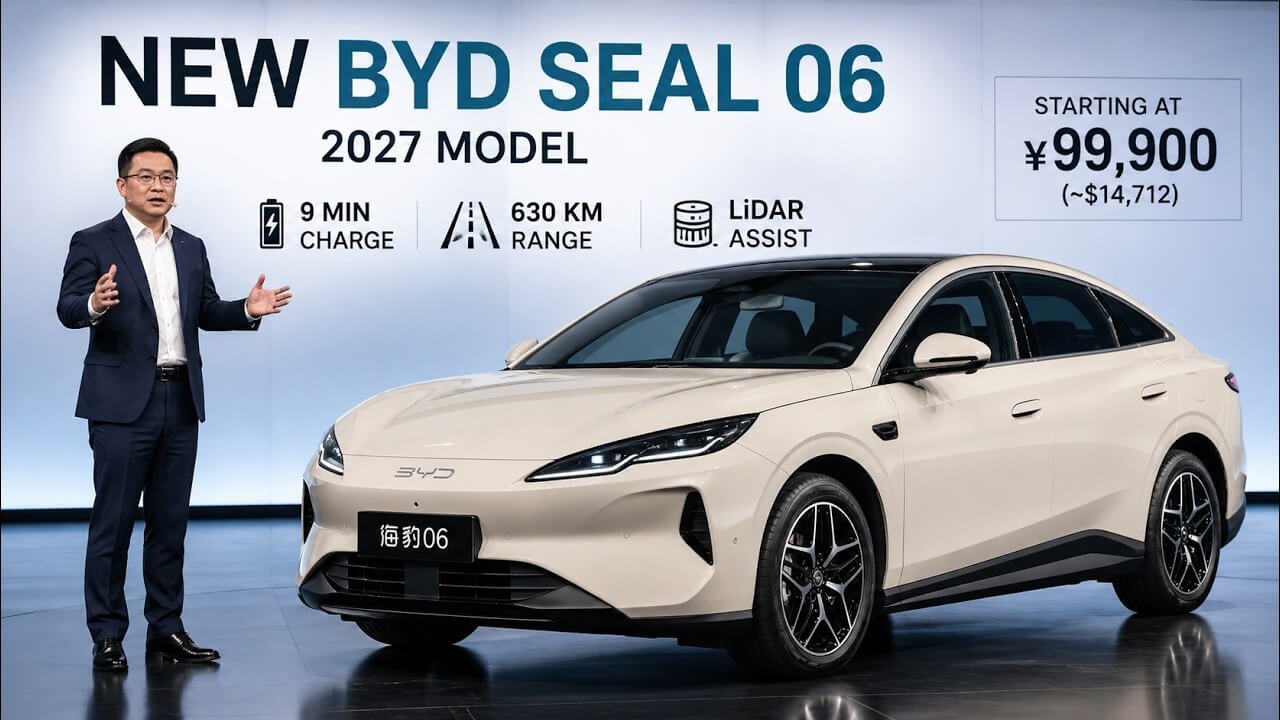
Speed is one of the biggest range killers. Air resistance rises quickly as speed increases, so a car that feels extremely efficient around town may use much more energy at highway speeds. A battery number on a spec sheet is only half the story. These things move the needle every single day:
- Your driving speed. Every EV loses efficiency fast above 100 km/h because wind resistance grows with the square of your speed.
- Cabin heating and AC. Running the heater in winter can cut range by 15 to 25 percent. Seat heaters cost far less energy than blasting the cabin heater.
- Tyre pressure. Underinflated tyres by even 20 percent can trim your range noticeably. Check them monthly.
- Payload and passengers. A full car with four adults and luggage will not match a solo commute number.
- Terrain. Hills and elevation gain eat into range on the way up and only partly return it on the way down.
- Battery age and charging habits. Charging to 100 percent every night and running the pack near empty regularly speeds up long-term degradation.
BYD Seal 06 DM-i vs BYD Seal 06 EV: Which One Should You Choose?
The choice becomes much easier when you look at your charging habits. The Seal 06 EV is the cleaner and simpler choice if you have dependable home charging and mostly want electric driving. The Seal 06 DM-i gives you a petrol engine as a backup, making it attractive if you regularly travel through places where public charging is limited. BYD’s 2027 DM-i version is reported to offer up to 320 km of CLTC electric range and a claimed total range of 2,370 km with a full battery and fuel tank.
| Feature | Seal 06 EV | Seal 06 DM-i |
|---|---|---|
| Powertrain | Fully electric | 1.5L petrol engine + electric motor |
| Battery | 52.868 kWh or 64.315 kWh | 25.287 kWh or 34.275 kWh |
| CLTC range | 530 km or 630 km | Up to 320 km electric-only, 2,370 km combined |
| 0-100 km/h | As fast as 5.9 seconds | Slower, tuned for efficiency |
| Fuel tank | None | 65-litre tank |
| Starting price (China) | 109,900 yuan (~$16,100) | 99,900 yuan (~$14,700) |
| Best for | City dwellers with home or workplace charging | Buyers who drive long distances or lack reliable charging |
Is the BYD Seal 06 DM-i Better for Long Trips?
For long trips, the DM-i has one huge advantage: you do not have to plan the entire journey around chargers. Once the battery charge gets low, the petrol engine can keep the car moving. BYD’s fifth-generation DM technology has already attracted attention for low fuel consumption, with Reuters reporting that the system used in earlier Seal 06 and Qin L models could achieve 2.9 litres per 100 km under specified depleted-battery test conditions.
That does not mean you should ignore charging. Plugging in regularly lets you use more electric driving, which is one of the main reasons to buy a plug-in hybrid. For a family that drives 30 to 60 km most weekdays but takes occasional 500 km road trips, the DM-i concept can be very practical.
Is the BYD Seal 06 EV Better for City Driving?
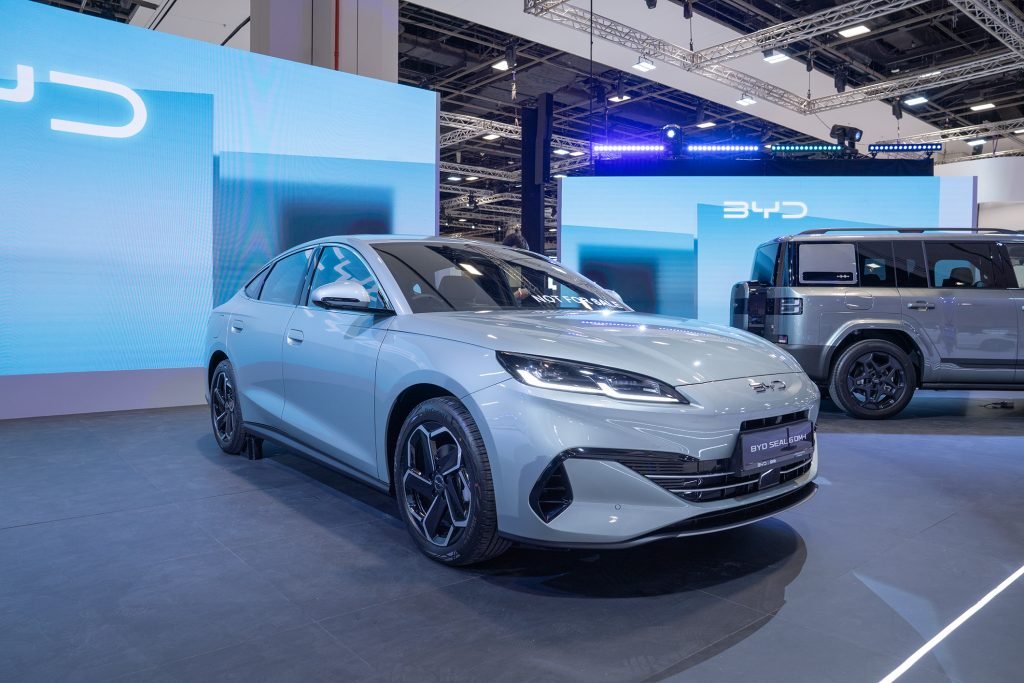
For daily commuting, school runs, and weekend errands, the EV version is the simpler and cheaper car to own. No oil changes, no exhaust system, no petrol stops. If you can charge overnight at home or top up at work, a 530 to 630 km CLTC range covers most drivers for four to six days between charges. The instant torque also makes it feel quicker off the line in stop-start traffic than the hybrid.
2027 BYD Seal 06 Features: What Do You Get for Your Money?
The 2027 model adds technology that would have looked expensive in a family sedan a few years ago. CnEVPost reports a 15.6-inch central display, DiLink 150 smart cockpit technology, and built-in DeepSeek AI. Higher trims can also get BYD’s DiSus-C intelligent damping system. The new car measures 4,870 mm long, 1,890 mm wide and 1,495 mm high, with a 2,820 mm wheelbase.
Another major addition is LiDAR-based God’s Eye B driver assistance. BYD says the system supports urban navigation-guided driving, highway navigation-guided driving, and all-scenario smart parking. That does not turn the car into a self-driving vehicle, and you remain responsible for driving. For me, the more important point is that advanced driver assistance is moving into much more affordable vehicles.
BYD Seal 06 GT: Is This the Sportier Version Worth Considering?
The Seal 06 GT is a different idea from the regular Seal 06 sedan. It is a five-door electric hatchback with a sportier shape, and previous versions have offered 505 km, 605 km, and 550 km CLTC configurations depending on battery and drivetrain. The top AWD version has been listed with 310 kW, 510 Nm and a 0 to 100 km/h time of 4.9 seconds.
If you want maximum practicality and a more conventional family sedan, the Seal 06 makes more sense. If you care about handling, design and stronger performance, the GT deserves attention. The important point is not to treat the GT as simply a faster Seal 06. It has its own body style, battery choices, and driving character, so your test drive should focus on how you actually intend to use the car.
What Do Real Owners Say About the Seal 6?
There are already real-world owner discussions around the current Seal 6 in international markets, although there cannot yet be long-term owner reviews of the newly launched 2027 version because it only launched in August 2026. One owner who had driven more than 200 km with a new Seal 6 EV described it as an impressive choice for regular work commutes and weekend trips. Another owner’s discussion praised the car as a practical EV while pointing out smaller equipment concerns. These are personal opinions, not controlled tests, so they should be treated as useful clues rather than final proof.
That is actually a good lesson when researching a new EV. Professional reviews tell you about performance, charging, and equipment, while owners reveal daily annoyances. Look for repeated comments about seat comfort, software, road noise, charging reliability, service quality, and battery efficiency. One isolated complaint does not tell you much. Ten owners making the same complaint is a different story.
Why Is BYD Adding LiDAR to the Seal 06 Now?
You might wonder why a sedan priced under $17,000 suddenly gets tech that used to belong to luxury cars. Simple reason: competition. Rivals like the Geely Galaxy A7 EM and Xpeng Mona M03 are fighting BYD in this exact price band, and driver assistance has become the new battleground, not just range or looks. BYD is using its scale to push expensive hardware down into cheaper cars faster than most competitors can match.
Should You Buy the 2027 BYD Seal 06 or Wait for More EV Options?
Right now, this is honestly the most important thing to know: the 2027 Seal 06 has only launched in China. BYD has not announced a launch date, price, or even a confirmed plan for India or most right-hand-drive markets. If you’re reading this from India, what you can actually walk into a showroom and buy today looks quite different, and that’s worth knowing before you get attached to a spec sheet.
Here’s how to think about your decision:
- If you’re in China and shopping in this price segment, the 2027 Seal 06 is a strong, well-equipped option worth test driving now.
- you’re outside China, especially in India, treat this as a preview of what BYD’s tech roadmap looks like, not a car you can order this month.
- If you need a car in the next few months, look at what BYD or rivals already sell in your market rather than waiting on an unconfirmed import.
What Are the Biggest Pros and Cons?
The strongest part of the 2027 Seal 06 is the amount of technology packed into a relatively affordable family car. The 630 km CLTC range is a major headline, and the second-generation Blade Battery gives the EV a more advanced charging story. The DM-i version also gives buyers an alternative when long-distance charging access is a concern. The LiDAR-based driver assistance system adds another layer of technology that is unusual at this price level.
The biggest weakness is that the headline specifications need local context. A 630 km CLTC rating is not the same as 630 km of Indian highway driving. Flash Charging is also only valuable if compatible high-power charging stations are available. Finally, Indian buyers should not assume that a China-market model will arrive here with the same battery, software, equipment, or price.
| Pros | Cons |
| Up to 630 km CLTC EV range | Real-world range will be lower |
| Second-generation Blade Battery | Flash Charging needs suitable infrastructure |
| Strong technology package | India launch is not confirmed |
| EV and DM-i choices | Local specifications may differ |
| LiDAR-based driver assistance | Advanced driver assistance still needs driver attention |
| Competitive Chinese pricing | Import and tax costs can change overseas pricing |
What Questions Should You Ask Before Buying?
Before you sign anything, ask the dealer questions that go beyond price. Find out which battery version you are getting, what charging equipment is included, how long a normal DC charge takes, and what warranty applies to the battery and vehicle. Ask whether software updates happen remotely or require a workshop visit. If you are in India, also ask about parts availability, service locations, and expected waiting times for body panels and electronic components.
Before you sign anything or put down a deposit, ask these:
- Is this car officially confirmed for sale in my country, or is it still China-only?
- What is the real, tested range in my climate, not the CLTC or WLTP number?
- Does my area have enough public charging, or should I lean toward the DM-i?
- What does the battery warranty actually cover, and for how many years or kilometers?
- How much does insurance cost for this model where I live?
- What’s the resale value trend for BYD models in my market so far?
- Are software updates free, and how often does BYD push them?
Why Does Charging Speed Matter as Much as Range?
Imagine two cars. One can drive 600 km but needs a long charging stop, while another can drive 500 km and recover most of its usable range during a short coffee break. On a road trip, the second car may feel easier to live with. That is why BYD’s move toward Flash Charging matters. The company says its second-generation Blade Battery can reach 97% charge in nine minutes under its Flash Charging setup, while it is building a much larger charging network in China.
For Indian buyers, the lesson is simple: look at the complete charging ecosystem, not just battery size. A huge battery with poor charging access can still create range anxiety. A moderately sized battery with reliable fast chargers can be easier to use.
What Could the 2027 BYD Seal 06 Mean for India?
The Indian market is an interesting question because BYD is expanding beyond its original premium EV position. As of July 2026, Autocar India listed the Atto 3, eMAX 7, Seal and Sealion 7 among BYD’s Indian models, with the Atto 2 reported as the next upcoming model. Indian reports have also pointed to the Seal U DM-i as BYD prepares to introduce plug-in hybrid technology locally.
That means the Seal 06 could make sense in India eventually, especially if BYD wants a more accessible sedan below the current Seal. But there is no reason to invent a launch date or price before BYD confirms it. Import duties, local assembly plans, homologation, charging support, and market positioning could all change the final product. If you are an Indian buyer, watch official BYD India announcements rather than relying on social media launch rumours.
Real Owner Reviews
“We picked up our Seal 06 three months ago. My daily drive to work is 45 km round trip. I charge it twice a month in my garage. The back seat has plenty of legroom for two child seats, and it drives so quietly.”
– Mark T. (Commuter & Father of Two)
“I chose the DM-i hybrid version because we love camping trips. We drove over 1,200 km on our last trip without stopping for gas once until the very end. It made traveling with kids painless.”
– Sarah L. (Weekend Traveler)
Final Verdict
The 2027 BYD Seal 06 shows how quickly EV technology is moving. A family sedan now offers up to 630 km CLTC range, a second-generation Blade Battery, fast charging technology and LiDAR-based driver assistance, while the DM-i version gives buyers a very different long-distance option.
The smart move is to look past the brochure. Check real-world range, charging access, service support, warranty, and local pricing before you buy. If BYD brings this model to India with competitive pricing and strong after-sales support, it could become a very interesting alternative to established sedans and EVs.
Frequently Asked Questions
What BYD cars are expected to be launched in India in 2027?
As of August 2026, there is no confirmed official list of BYD India launches specifically for 2027 that includes the Seal 06. Current Indian reports point toward models such as the Atto 2 and Seal U DM-i as nearer-term additions. The Atto 2 has been reported as an expected 2026 launch, while BYD has also been preparing its first plug-in hybrid offering for India.
When did the BYD Seal 6 come out?
The current BYD Seal 06 EV went on sale in China in June 2025. Its initial EV versions offered 470 km and 545 km CLTC range, depending on configuration. BYD then launched the new 2027 Seal 06 on August 11, 2026, with the top EV version reaching 630 km CLTC.
What is the next model of BYD to be released in 2026?
For India, the BYD Atto 2 has been widely reported as a 2026 upcoming model, while BYD has also confirmed plans around its first plug-in hybrid offering. Reports have identified the Seal U DM-i and Atto 2 DM-i as possibilities, although exact model timing and final specifications can vary until BYD India makes an official announcement.
Who is No. 1, BYD or Tesla?
It depends on the measurement. For full-year 2025 global battery-electric vehicle sales, BYD overtook Tesla, with about 2.26 million BEVs versus Tesla’s approximately 1.64 million deliveries. BYD also sells plug-in hybrids, so its total new energy vehicle volume is much larger. Tesla remains one of the world’s most important pure EV companies, but BYD held the 2025 BEV sales lead.
Is BYD better than Toyota?
Neither brand is automatically better for everyone. BYD is especially strong in EV batteries, electric powertrains, plug-in hybrids, and fast-moving vehicle technology. Toyota has a long track record with conventional hybrids, broad global service coverage, and a strong reputation for long-term ownership. If you have reliable home charging and want an EV, BYD may be the more interesting choice. If charging is difficult and proven hybrid ownership matters more, Toyota may fit your needs better.

Rate This Article
Be the first to rate this article
Thanks for rating!
All Car Brands
View all brands →













More Updates
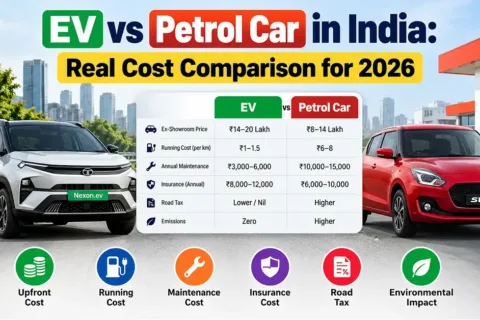


Handpicked Accessories for Every and Journey

Microfiber Car Duster with Long Handle Cleaning Brush

Robustt Car Interior Cleaning Brush Combo – Scratch Free Car Duster

ORJILO 5-Piece Microfiber Car Duster Kit – Extendable Long Handle Duster for Car
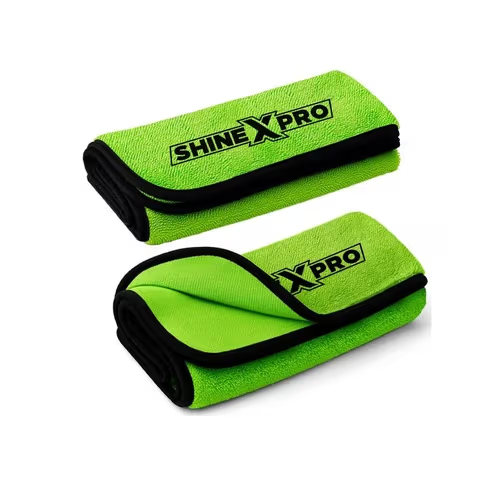
ShineXPro Microfiber Car Cleaning Cloth (500 GSM, Extra Large (35×75 CM))
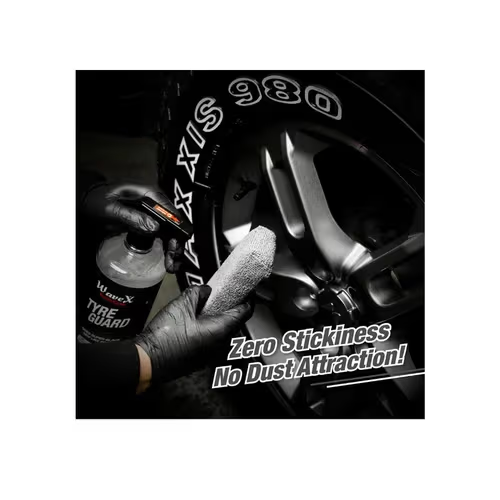
Wavex Tyre Polish for Car & Bike (1L) – With Applicator and Microfiber Cloth

ShineXPro Glass Cleaner Spray (300 ml) – Streak Free Car Glass Cleaner Liquid
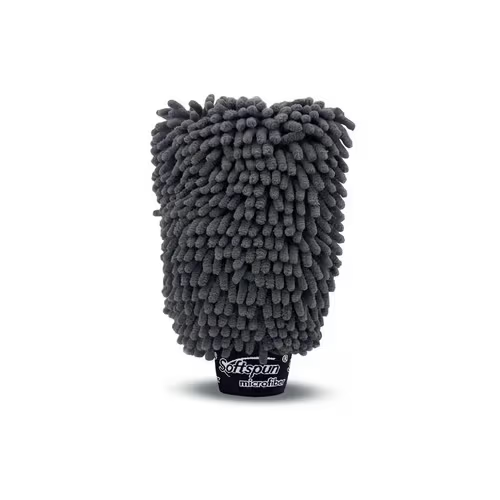
SOFTSPUN Microfiber Chenille Wash Mitt (1700 GSM)
Tusa V1 Cordless Vacuum Cleaner for Car – High Power Portable Lightweight Wireless Vacuum
As an Amazon Associate, Neu Auto earns from qualifying purchases. When you purchase through one of the Amazon links above, Neu Auto may receive a commission at no additional cost to you.