

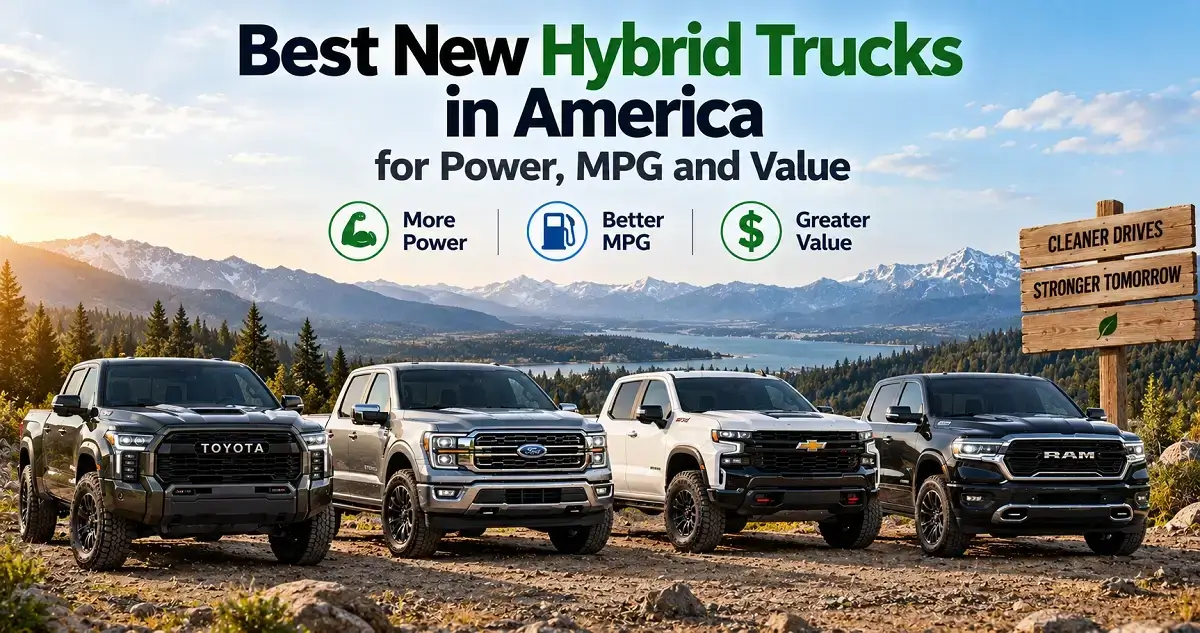
The best new hybrid trucks for 2026 combine strong towing power, practical truck beds, and improved fuel economy. You get the everyday capability of a traditional pickup with the added efficiency of hybrid power. For many drivers, they offer a smart middle ground between gas trucks and fully electric models. They also reduce range concerns while giving you the power and utility you expect from a modern truck.
Key Highlights
- Toyota Tundra i-FORCE MAX delivers 437 hp and up to 12,000 pounds of towing.
- Ford F-150 PowerBoost makes 430 hp and can tow up to 11,600 pounds in the 2026 lineup.
- Toyota Tacoma i-FORCE MAX combines hybrid power with off-road hardware and up to 6,000 pounds of towing capability depending on configuration.
- Ford Maverick Hybrid is the value pick for city drivers who still want a real truck bed.
- The Ram 1500 eTorque remains a mild-hybrid choice for buyers who want a familiar gas truck with electric assistance.
- The planned Jeep Gladiator 4xe is not a 2026 production truck, so it should not be treated as an available 2026 hybrid model.
- The Ram 1500 Ramcharger has shifted into the range-extended EV conversation, with current reporting pointing to a later launch and a 2027 Ram 1500 REV model year.
- The Silverado EV shows how quickly the electric truck market is changing, with up to 478 miles of GM-estimated range and 12,500 pounds of maximum towing.
What to Expect from 2026 Hybrid Trucks: Specs, Pricing & Release Dates
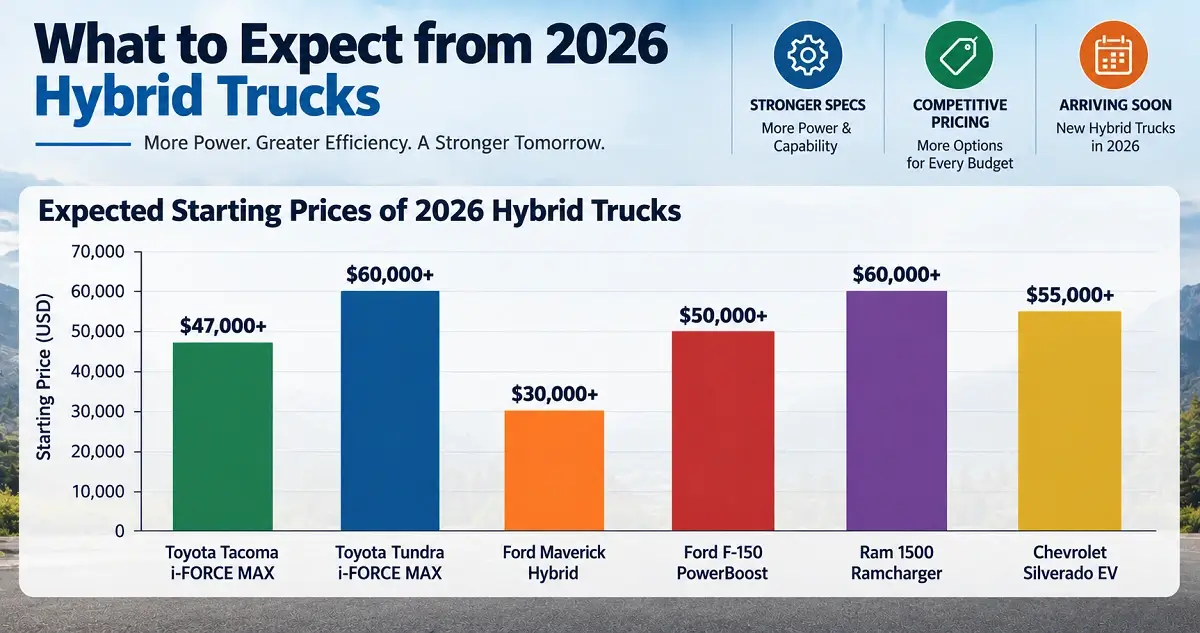
The new hybrid trucks market is no longer a small experiment. You can now choose between compact hybrids, midsize pickups, full-size hybrids, mild-hybrid systems, and range-extended designs. Toyota and Ford are the strongest choices if you want a conventional hybrid pickup that you can buy and use much like a gas truck. Ram is taking a different route with its range-extended electric technology, while fully electric trucks such as the Silverado EV push range and charging technology much further.
One important buying tip is to separate hybrid, plug-in hybrid, mild hybrid, and range-extended EV from one another. They do not work the same way. A traditional hybrid uses a small battery and electric motor to help the gasoline engine. A mild hybrid mainly assists the engine during starting and acceleration. A plug-in hybrid can travel farther on electricity but needs charging. A range-extended EV uses electric motors for propulsion while a gasoline engine acts as a generator. That difference matters when you tow, commute, or travel far from charging stations.
| 2026 Hybrid Truck / Powertrain | Starting Price* | Key Specs | Expected Release / Availability |
|---|---|---|---|
| Toyota Tacoma i-FORCE MAX | Around $47,000+ | 2.4L turbo hybrid, up to 326 hp, strong towing capability | Available for 2026 |
| Toyota Tundra i-FORCE MAX | Around $60,000+ | 3.4L twin-turbo V6 hybrid, up to 437 hp | Available for 2026 |
| Ford Maverick Hybrid | Around $30,000+ | 2.5L hybrid, up to 238 hp, compact pickup design | Available for 2026 |
| Ford F-150 PowerBoost | Around $50,000+ | 3.5L PowerBoost V6 hybrid, up to 430 hp | Available for 2026 |
| Ram 1500 Ramcharger | Expected $60,000+ | Range-extended EV system, electric drive with gasoline generator | 2026 availability expected |
| Chevrolet Silverado EV | Around $55,000+ | Fully electric, long-range configurations, high towing potential | Available for 2026 |
Top 8 Best New Hybrid & Green Trucks in America (2026 Ranked)
This ranking focuses on trucks you can actually research for the 2026 American market, while separating confirmed production trucks from future or unconfirmed models. The order considers fuel economy, usable power, towing, price, everyday comfort, and how well the electrified system fits the truck’s job. That’s important because a truck that saves fuel but cannot handle your trailer isn’t really saving you money. The best New Hybrid Trucks are the ones that match your real driving.
1. Toyota Tundra i-FORCE MAX: Power Meets Efficiency
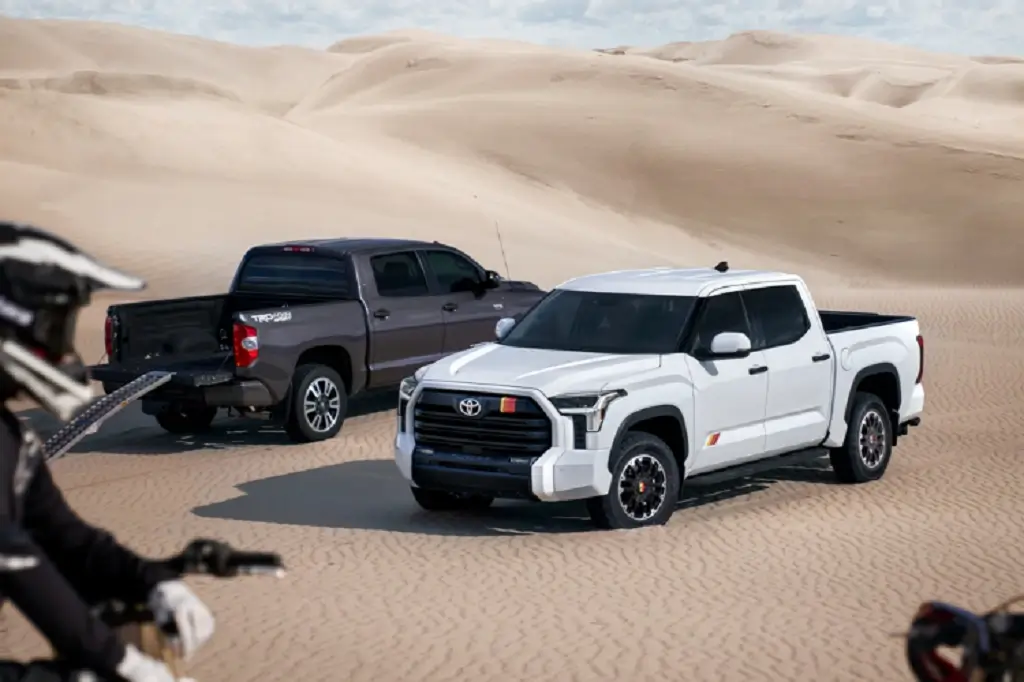
The Toyota Tundra i-FORCE MAX is one of the strongest full-size hybrid pickups because its electric motor adds muscle instead of simply chasing MPG. The system pairs a twin-turbo V6 with electric assistance, producing 437 hp and 583 lb-ft. Toyota lists up to 12,000 pounds of towing capacity, giving the Tundra enough strength for campers, trailers, boats, and serious weekend work.
Battery type: Nickel metal hydride
Key features: Twin-turbo V6, i-FORCE MAX hybrid system, 14-inch screen, available 8.1-foot bed, 120V/400W outlet
Base price: From about $58,560 for the i-FORCE MAX
Range: Gas powered, so range depends on fuel tank, driving style, load, and trim
The hybrid is especially appealing if you want strong acceleration and towing without moving to a fully electric truck.
2. Ford F-150 Hybrid: The Undisputed Class Leader
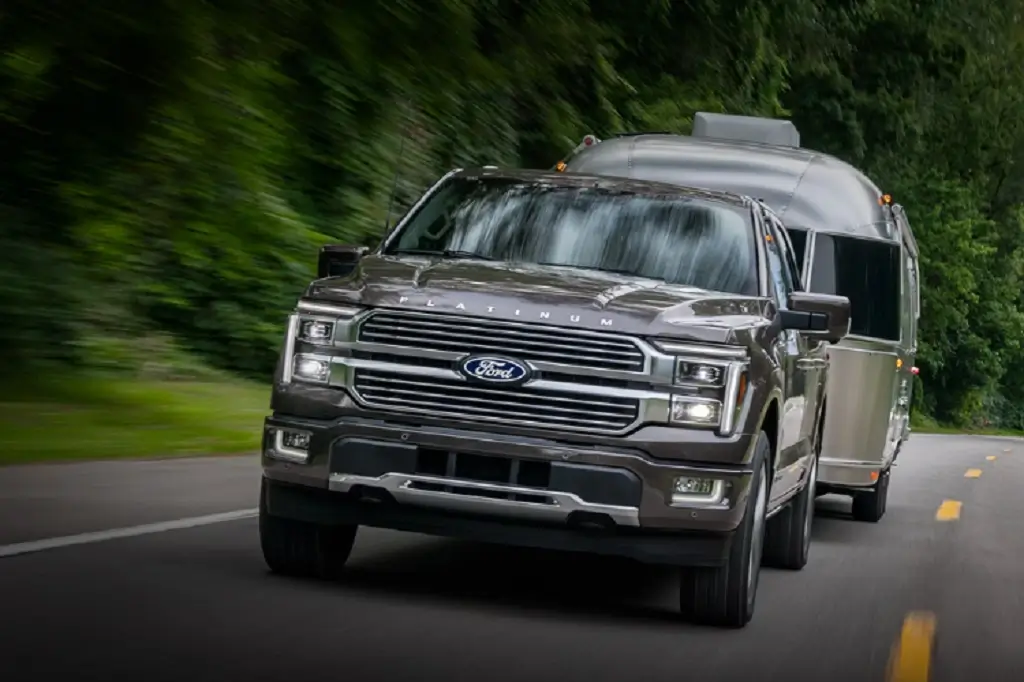
The Ford F-150 PowerBoost remains one of the most complete hybrid trucks in America because it feels like a normal full-size pickup first and a hybrid second. Ford’s 3.5L PowerBoost V6 makes 430 hp and 578 lb-ft of torque. You can also get the available 7.2 kW Pro Power Onboard system, which can turn the truck into a rolling power station for tools, camping equipment, or emergency use.
Battery type: Lithium-ion
Key features: PowerBoost hybrid, Pro Power Onboard, large bed choices, SuperCrew cabin, strong towing
Base price: Varies by trim and configuration
Range: Gas powered, with driving range dependent on tank and configuration
For a family that also uses its truck for work, the F-150 is hard to ignore. You get familiar gas-station convenience with electric assistance when you need extra torque.
3. Toyota Tacoma Hybrid: The Midsize King
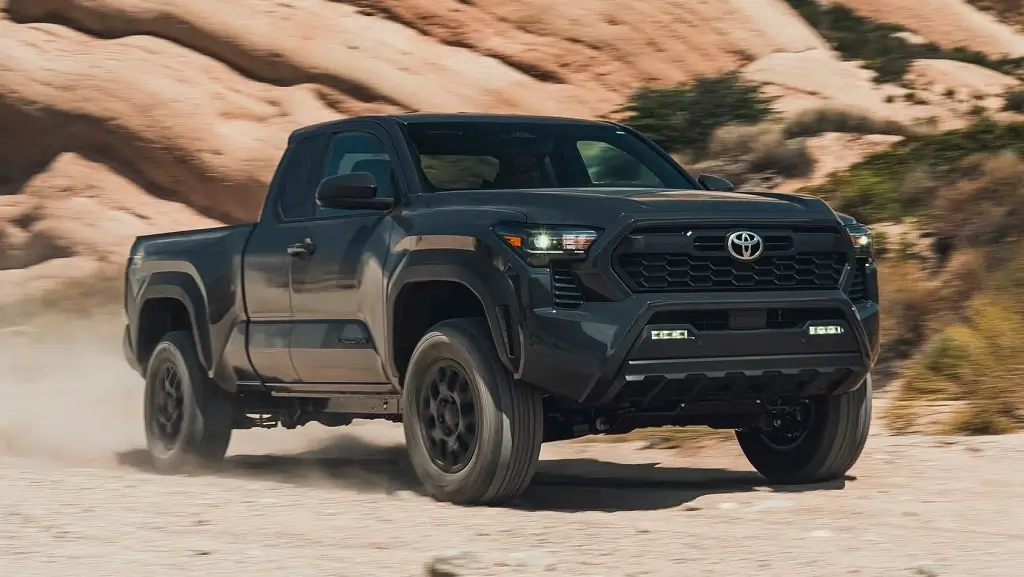
If a full-size pickup feels too large for your driveway, the Toyota Tacoma i-FORCE MAX gives you a smaller package without giving up serious performance. Its 2.4L turbocharged hybrid system makes 326 hp and 465 lb-ft of torque. Toyota offers the system on trims aimed at both daily driving and serious off-road use, including Trailhunter and TRD Pro.
Battery type: Nickel metal hydride
Key features: 326 hp, 465 lb-ft, four-wheel drive, 2400W power supply on applicable trims, off-road hardware
Base price: $47,335 for the TRD Sport i-FORCE MAX
Range: Gas powered
The Tacoma’s hybrid system is best viewed as a power upgrade with some fuel savings, rather than a fuel-sipping commuter system. Car and Driver’s testing has also found the fuel economy gain is modest compared with the standard powertrain.
4. Ford Maverick Hybrid: The Affordable Compact Champion
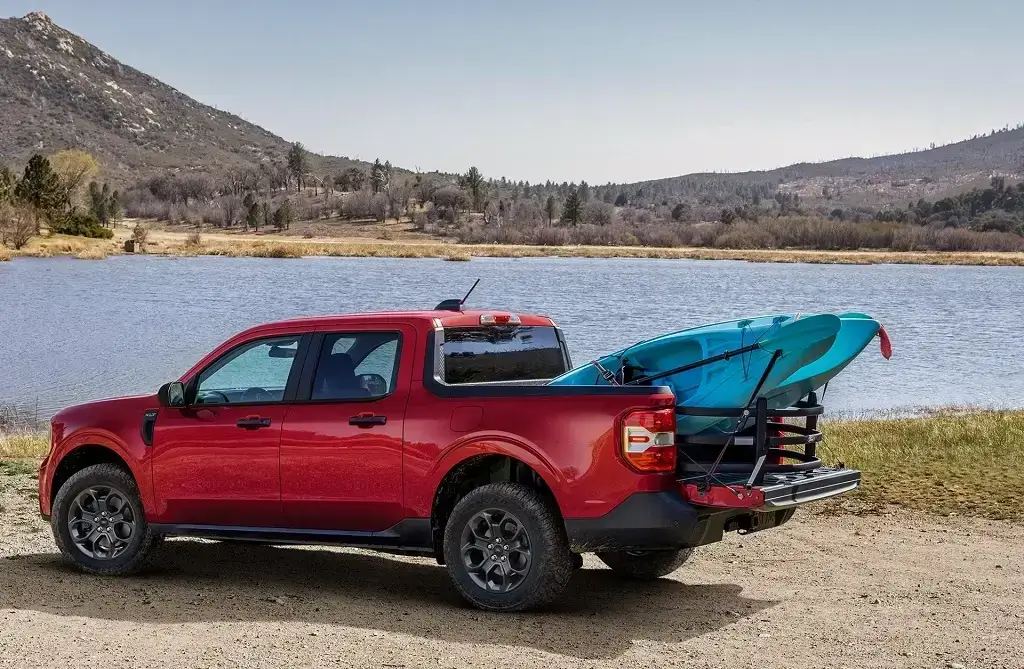
The Ford Maverick Hybrid is the truck I’d point you toward first if your daily driving happens around town and your trailer needs are modest. Ford says the 2026 Maverick hybrid can reach 42 mpg city, while available equipment can raise towing capacity to 4,000 pounds. The truck starts in the high $20,000 range, making it one of the most approachable New Hybrid Trucks in America.
Battery type: Lithium-ion
Key features: 2.5L hybrid, compact body, five-seat cabin, available AWD, 4,000-pound towing
Base price: $27,145 for the 2026 XL before hybrid selection
Range: About 580 miles based on an EPA-style 38 mpg combined estimate and 13.8-gallon tank, depending on configuration.
Edmunds tested the 2026 Maverick and awarded it a 7.6/10, while its testing regularly exceeded 40 mpg combined in real-world driving.
5. Ram 1500 Ramcharger: Trading Capability for Cabin Comfort
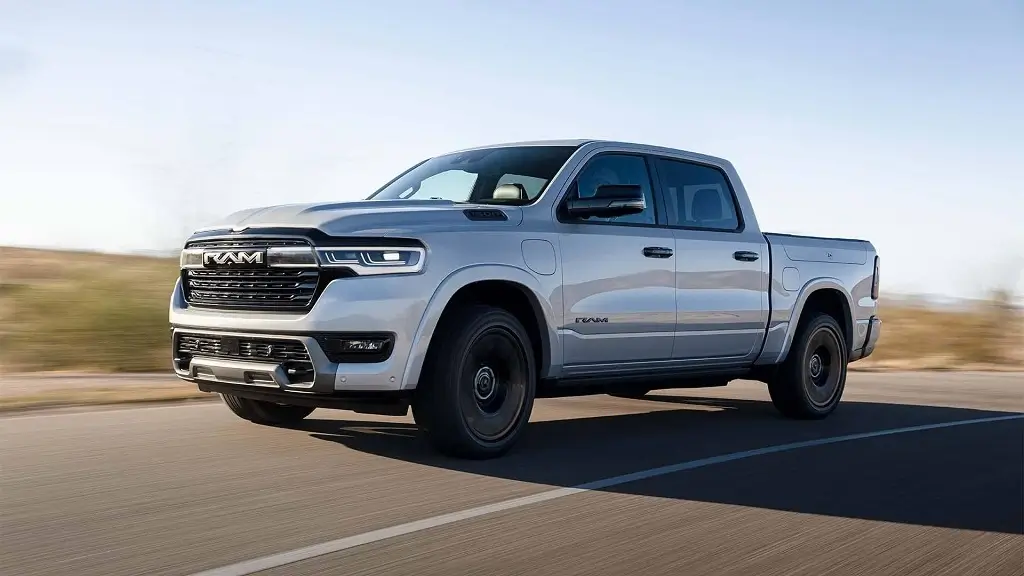
The Ram 1500 Ramcharger deserves careful classification because it represents the direction of electrified trucks rather than a simple traditional hybrid. Ram’s range-extended electric strategy is built around electric drive with a gasoline engine used to generate electricity. The closely related Ram 1500 REV is projected for 2026 and uses a 92 kWh battery with a 130 kW generator, with Ram estimating up to 690 miles of total range.
Battery type: 92 kWh lithium-ion on the Ram 1500 REV
Key features: Range extender, electric drive, large cabin, high towing potential
Base price: Final pricing and exact production configuration should be checked before purchase
Range: Ram projects up to 690 miles total for the REV
This is the kind of truck to watch if you want electric driving without planning every long trip around charging stops.
6. Jeep Gladiator 4xe: Pairing Trail Grit with Plug-in Tech
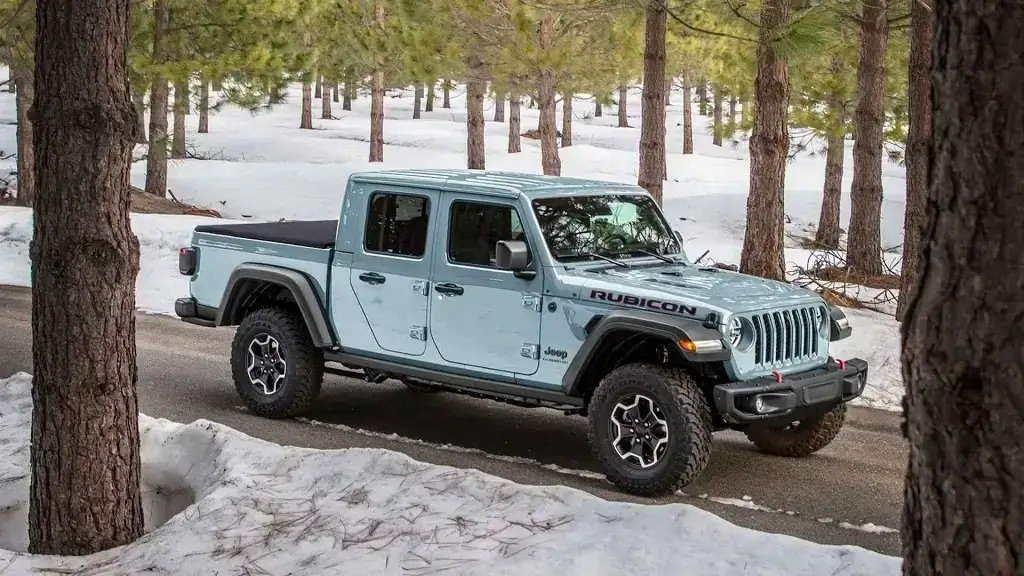
The Jeep Gladiator 4xe sounds like an obvious addition to a list of New Hybrid Trucks, but the current 2026 facts tell a different story. Jeep’s official 2026 Gladiator information lists the 3.6L Pentastar V6, with 285 hp and up to 7,700 pounds of towing, but does not list a Gladiator 4xe powertrain.
Battery type: Not applicable for the confirmed 2026 Gladiator
Key features: 4×4, removable doors and roof, Trail Rated capability
Base price: From $39,820 for the 2026 Gladiator Sport
Range: Gas powered
So, if you’re shopping today, don’t let an old 4xe rumor make you wait for a truck Jeep hasn’t confirmed. The current Gladiator is still a rugged gas pickup.
7. Ram 1500 eTorque: The Mild-Hybrid Workhorse
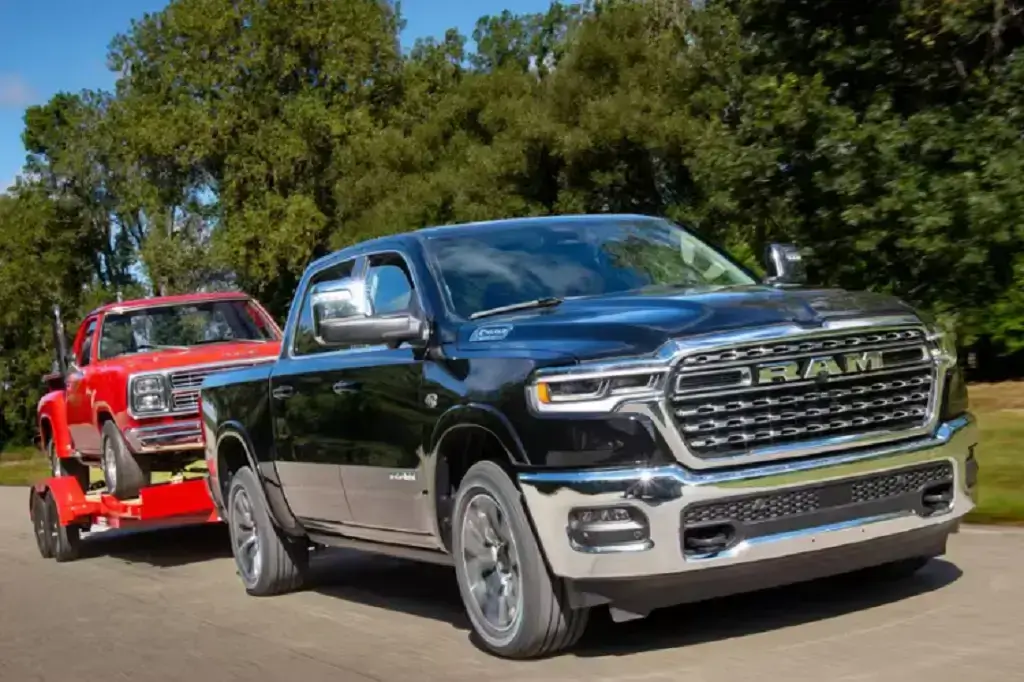
The Ram 1500 eTorque sits in a different category from the Tundra or F-150 PowerBoost. Its mild-hybrid system uses a belt-driven motor generator to assist the gasoline engine and improve start-stop operation. The 2026 Ram 1500 with the 3.6L Pentastar V6 and eTorque produces 305 hp and 269 lb-ft, with up to 8,130 pounds of towing in the listed 4×2 configuration.
Battery type: Small lithium-ion mild-hybrid battery
Key features: Start-stop assistance, torque boost, conventional truck feel
Base price: Depends on Ram 1500 trim and engine
Range: Gas powered
Don’t expect EV-style driving. Think of eTorque as a helper standing beside the engine, making starts smoother and reducing wasted fuel during repeated stops.
8. Ford F-Series Super Duty Hybrid: Heavy-Duty Efficiency
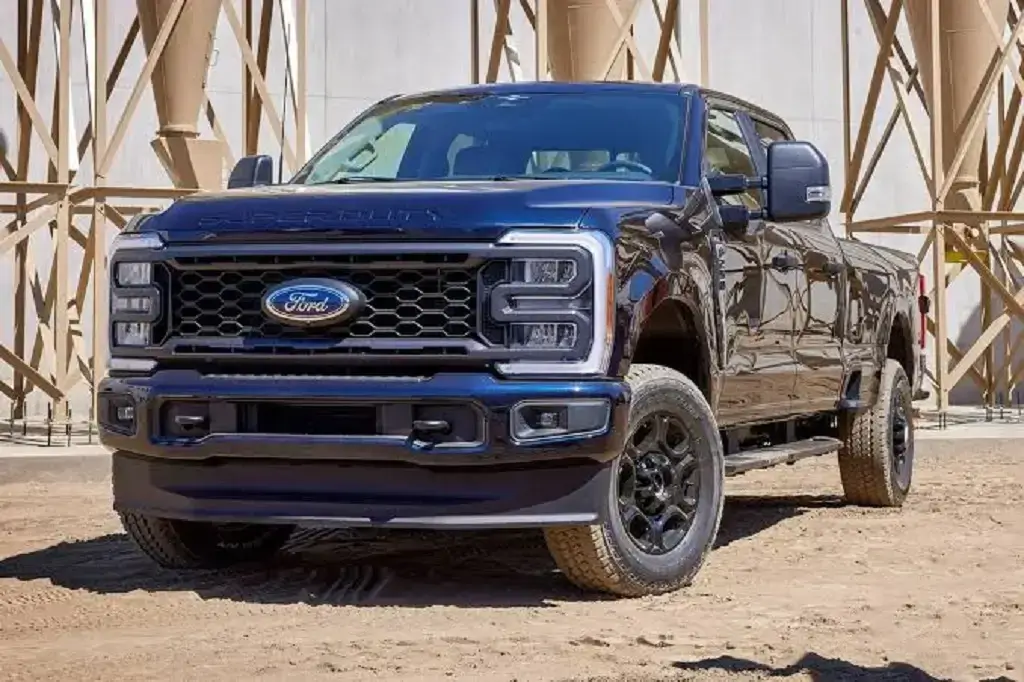
The Ford F-Series Super Duty Hybrid is one of the names that needs a warning label in a 2026 buying guide. Ford’s current Super Duty information does not establish a production 2026 hybrid model, while the company’s current page is already promoting 2027 Super Duty packages.
Battery type: Not confirmed for a 2026 production hybrid
Key features: Super Duty remains focused on heavy-duty towing and work capability
Base price: Depends on confirmed engine and trim
Range: Not applicable as a confirmed hybrid
If you need an F-250 or F-350 today, buy based on the powertrain actually offered, not a future hybrid rumor. That’s a safer approach when you’re spending work-truck money.
Best 2026 Hybrid Trucks by Category
The best new hybrid trucks depend on how you use your pickup. A family that drives 20 miles to work each day needs something very different from a contractor pulling a large trailer. The Maverick is hard to beat for simple daily transportation, while the Tacoma is better suited to midsize adventure use. For full-size work, the Tundra and F-150 give you much more towing and cargo capability. Your best choice starts with your actual weekly routine, not the biggest number in a brochure.
| Category | Best pick | Why it stands out |
|---|---|---|
| Small & compact | Ford Maverick Hybrid | Low price and strong fuel economy |
| Midsize | Toyota Tacoma i-FORCE MAX | Hybrid power plus off-road ability |
| Full-size | Ford F-150 PowerBoost | Strong balance of power, towing and technology |
| Full-size alternative | Toyota Tundra i-FORCE MAX | 437 hp and 583 lb-ft |
| Mild hybrid | Ram 1500 eTorque | Familiar truck experience with electric assist |
| Electric alternative | Chevy Silverado EV | Up to 478 miles GM-estimated range |
1. Small & Compact Trucks
The compact class is where the New Hybrid Trucks story makes the most sense for everyday families. You don’t need a giant hood and a huge engine to carry mulch, bicycles, camping gear, furniture, or a weekend project. The Maverick’s small footprint also makes parking much easier than a full-size pickup.
2026 Ford Maverick
The 2026 Maverick hybrid can deliver 42 mpg city and up to 4,000 pounds of towing with the right equipment. Edmunds also found more than 40 mpg in real-world testing, which shows why this truck appeals to people who want pickup utility without traditional truck fuel bills.
2. Midsize Trucks
A midsize hybrid is the sweet spot if you want better maneuverability than a full-size truck but still need real off-road hardware. The Tacoma is especially strong here because Toyota uses the hybrid system to create more torque, not just better fuel economy. The tradeoff is price, weight, and only a modest MPG improvement over some nonhybrid versions.
Toyota Tacoma i-FORCE MAX
The Tacoma i-FORCE MAX makes 326 hp and 465 lb-ft, with four-wheel drive and serious off-road equipment available. Trailhunter and TRD Pro models make it a compelling choice for buyers who spend weekends on trails instead of just driving to the hardware store.
3. What Are the Best Full-Size Pickup Trucks?
For full-size buyers, the Ford F-150 PowerBoost and Toyota Tundra i-FORCE MAX are the two key New Hybrid Trucks to test. The F-150 brings useful technology such as Pro Power Onboard, while the Tundra brings 437 hp and 583 lb-ft of torque. Your final choice should depend on towing, cabin layout, dealer support, payload needs, and the price you actually negotiate.
Ford F-150 Hybrid, Toyota Tundra Hybrid
The F-150’s PowerBoost makes 430 hp and 578 lb-ft, while the Tundra i-FORCE MAX makes 437 hp and 583 lb-ft. The numbers are close enough that a test drive matters more than a spreadsheet. Sit in both, connect your trailer if possible, check the bed height, and see which truck feels natural for your family.
Hybrid vs. Fully Electric Pickup Trucks: Which is Right for You?
A hybrid truck gives you gasoline flexibility, while an electric truck gives you electric-only driving. With a hybrid, you can fill up in minutes and keep driving even when charging is not convenient. With an EV, you can reduce tailpipe emissions and enjoy instant electric torque, but long towing trips can require more planning because towing can reduce range.
Your driving pattern should decide this. If you travel long rural routes, tow frequently, or don’t have dependable home charging, a hybrid can be the easier choice. If most of your driving is local and you can charge at home, an electric pickup can make a lot of sense.
| Feature | Hybrid Pickup Truck | Fully Electric Pickup Truck |
|---|---|---|
| Power source | Gasoline engine + electric motor | Battery + electric motors |
| Refueling/charging | Quick gasoline refueling | Requires charging |
| Long-distance driving | Easier with fewer stops | Needs more charging planning |
| Towing | Good for frequent long-distance towing | Strong towing performance, but range can drop significantly |
| Home charging | Helpful but not essential | Highly recommended |
| Tailpipe emissions | Produces emissions | Zero tailpipe emissions |
| Driving feel | Mix of gas and electric power | Smooth and instant electric power |
| Best for | Long trips, towing, rural driving, flexibility | Daily driving, home charging, lower tailpipe emissions |
| Main advantage | Convenience and flexibility | Electric-only driving and instant torque |
1. Best Electric Alternatives in 2026
If you are open to going beyond New Hybrid Trucks, the Rivian R1T, Chevrolet Silverado EV, and Tesla Cybertruck deserve a look. These trucks offer full electric drive, so they have no gasoline engine and no conventional transmission. The key question is not simply range, though. You should also consider charging access, towing distance, cold-weather performance, payload, and the availability of fast chargers along your normal routes.
For long-distance towing, electric trucks need more planning than their highway range numbers suggest. A trailer changes energy use dramatically, so compare real towing tests rather than relying only on the advertised maximum range.
2. Future Electric Trucks: What’s Coming in 2026-2030
The next wave of electrified pickups will blur the line between hybrid and EV. Range-extended designs are especially interesting because they can use a battery for electric driving while carrying a gasoline generator for longer trips. Ram’s 1500 REV is one example, with Ram projecting 690 miles of total range, 14,000 pounds of maximum towing, and a 92 kWh battery.
Other manufacturers are also adjusting their EV plans as customer demand, charging networks, battery costs, and federal policy change. That means you should be careful with articles that list a future truck as if it were already sitting on a dealer lot. Release dates can move.
Why Choose a Hybrid Truck in 2026? Benefits & Advantages
The biggest reason to choose a hybrid is simple: you get truck capability with a chance to use less fuel. Electric motors are very good at producing torque from a standstill, which is useful when moving a heavy truck or trailer. Hybrid systems can also recover energy during braking and reuse it later.
For families, there is another benefit. You don’t have to completely change your habits. You still fill the tank at a normal gas station, but the electric system helps during low-speed driving, acceleration, and stop-start traffic. That’s a much smaller lifestyle change than moving from gasoline to full electric.
What Are the Biggest Benefits for Everyday Drivers?
You can expect the greatest savings when your driving includes traffic, frequent stops, and regular daily trips. Hybrid systems have more opportunities to recover braking energy in those conditions. Highway driving can still be efficient, but the difference between a hybrid and gasoline truck may shrink as speed rises.
The best New Hybrid Trucks also give you another benefit: choice. You can buy a small Maverick for basic household work, a Tacoma for trails, or a full-size F-150 or Tundra when towing and cabin space matter more.
Buyer’s Guide: How to Choose the Right Hybrid Truck
Start with your actual needs, not the truck sitting at the top of a ranking. Ask yourself how much you tow, how often you carry passengers, whether you need four-wheel drive, and how much bed space you use each month. Then look at the price difference between the hybrid and gas versions.
Use this quick checklist:
- Check towing needs: Don’t buy a small truck for a trailer that needs a larger tow rating.
- Check payload: Passengers, tools, cargo, and trailer tongue weight all count.
- Compare MPG: Use combined EPA estimates where possible.
- Price the hybrid premium: Calculate how long fuel savings take to recover it.
- Test the rear seat: Bring your family along before buying.
- Check bed length: A five-foot bed may not replace a six-foot bed for your work.
- Drive the truck loaded: A hybrid can feel very different with a trailer attached.
How Do You Compare Total Ownership Costs?
Purchase price is only the first number. You should also consider fuel, insurance, tires, scheduled maintenance, financing, registration, and depreciation. A truck that costs $5,000 more but saves $150 a month in fuel won’t recover the premium overnight.
For example, the Maverick’s strong fuel economy can make a meaningful difference for high-mileage drivers. Edmunds reports a 38 mpg combined EPA estimate for the front-wheel-drive hybrid and more than 40 mpg during its real-world testing.
Comparing Total Ownership Costs: Fuel vs. Battery vs. Maintenance
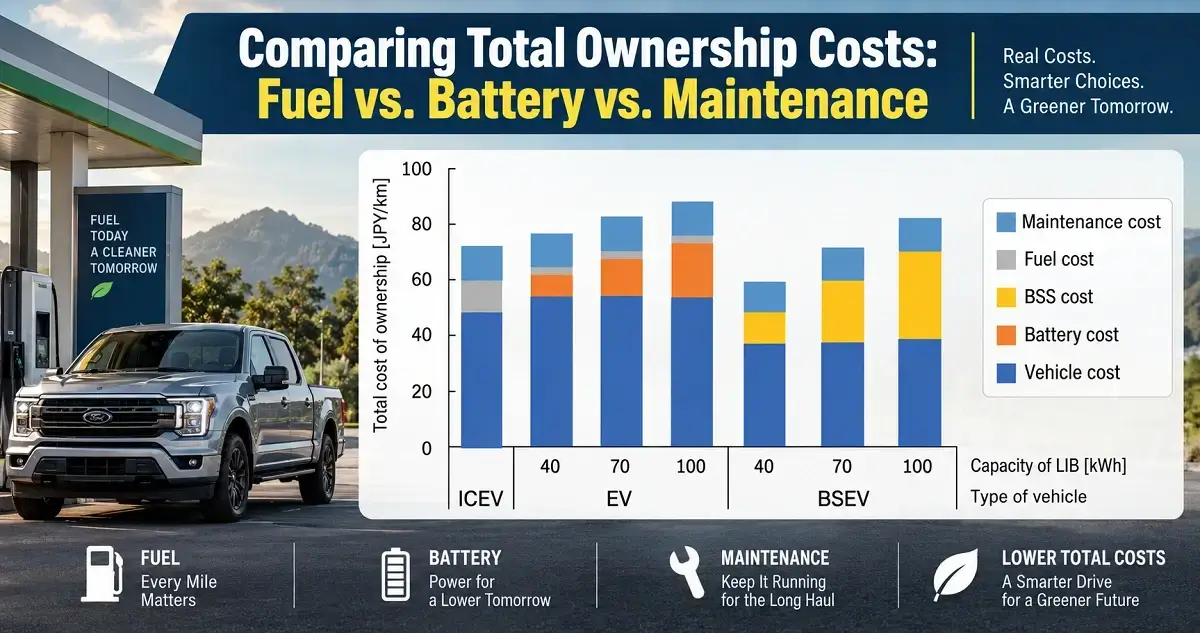
Hybrid ownership does not mean zero maintenance. You still have an engine, oil, coolant, brakes, tires, and other normal truck components. The battery and electric motor add technology, but modern hybrid systems are designed to work alongside conventional drivetrains rather than replace every service item.
The smartest comparison is your own annual mileage. If you drive 20,000 miles a year, fuel economy matters much more than if you drive 5,000 miles. At today’s fuel prices, calculate your expected gallons per year before deciding whether the hybrid premium makes financial sense.
| Ownership Cost | Hybrid Truck | Gas Truck | What It Means for You |
|---|---|---|---|
| Fuel | Usually lower fuel consumption | Usually higher fuel consumption | Higher mileage makes hybrid fuel savings more valuable |
| Battery | Includes a hybrid battery system | No hybrid battery | Check warranty coverage and long-term replacement costs |
| Engine Maintenance | Oil, coolant, filters, and other services still required | Similar routine engine service | A hybrid does not eliminate regular maintenance |
| Brakes | Regenerative braking can reduce brake wear | Conventional braking causes more wear | Hybrid brakes may last longer in some driving conditions |
| Tires | Regular tire replacement is required | Regular tire replacement is required | Driving style and truck weight affect tire life |
| Maintenance Costs | May vary because of hybrid components | More familiar conventional system | Compare service costs before buying |
| Annual Mileage | More attractive for high-mileage drivers | Can make sense for low-mileage drivers | Calculate your yearly miles before choosing |
| Overall Ownership Cost | Potentially lower with high fuel savings | May have a lower purchase price | Compare purchase price plus long-term running costs |
What Other Vehicles Should You Consider?
Don’t limit your search to New Hybrid Trucks if you don’t truly need a pickup. A hybrid SUV can offer better rear-seat space, a smoother ride, and a covered cargo area. A small SUV may also be easier to park and cheaper to insure.
If you need an open bed only a few times a year, renting a pickup for those jobs can be cheaper than owning a large truck all year. If you tow every weekend, however, a dedicated pickup still makes more sense.
What Should You Check Before Buying a 2026 Hybrid Truck?
Check the exact VIN’s equipment list, not just the model name. Hybrid availability can change by trim, drivetrain, cab, bed, and region. Toyota’s current 2026 Tacoma listings, for example, show different i-FORCE MAX trims with different pricing and equipment.
Also ask the dealer for the out-the-door price. A low advertised MSRP can change once destination fees, accessories, dealer add-ons, taxes, financing, and registration are included. Your real budget should be based on the final number.
Conclusion
The best New Hybrid Trucks for 2026 prove that you don’t have to choose between useful truck power and better fuel economy. The Ford Maverick Hybrid is the standout choice for value and everyday efficiency, while the Toyota Tacoma i-FORCE MAX is the better fit for midsize off-road buyers. If you need a full-size pickup, the Ford F-150 PowerBoost and Toyota Tundra i-FORCE MAX are the two trucks that deserve the most attention.
The important part is matching the truck to your life. Don’t pay for 12,000 pounds of towing capacity if you never tow. Don’t buy a compact pickup if you regularly pull a large camper. And don’t assume every announced hybrid truck is already available. For 2026, the safest shopping strategy is to focus on confirmed models, compare the full ownership cost, and take your top two or three choices for a real test drive.
FAQs
What is the difference between a hybrid truck and an electric truck?
A hybrid truck combines a gasoline engine with an electric motor and battery. An electric truck uses electric motors as its main source of propulsion and does not need a gasoline engine. New Hybrid Trucks are often easier for buyers who want better efficiency without changing how they refuel.
Do hybrid pickup trucks require special maintenance?
Hybrid pickups still need normal maintenance such as oil changes, tires, brake inspections, and fluid checks. The hybrid battery and electric components add extra systems, but you generally don’t maintain them like a separate vehicle. Always follow the manufacturer’s service schedule for your specific truck.
Which hybrid truck has the highest towing capacity?
Among the confirmed conventional hybrid trucks covered here, the Toyota Tundra i-FORCE MAX is rated for up to 12,000 pounds of towing, depending on configuration. The exact rating for your truck can change based on trim, drivetrain, cab, bed, and equipment.
Are hybrid trucks more expensive than gas trucks?
Usually, the hybrid version costs more than a comparable gas version, but the gap depends heavily on the model and trim. The important question is whether your fuel savings and added capability justify that higher purchase price. High-mileage drivers have more opportunity to recover the premium.
Can hybrid trucks save money on fuel?
Yes, they can, but your savings depend on mileage, fuel prices, traffic, weather, towing, and driving habits. The 2026 Ford Maverick Hybrid, for example, has an EPA-estimated 38 mpg combined in front-wheel-drive form, and Edmunds recorded more than 40 mpg during real-world testing.
Are New Hybrid Trucks better for towing than electric trucks?
There isn’t one answer for every truck. Hybrid pickups can be convenient for long towing trips because you can refuel quickly, while electric trucks can provide strong low-speed torque. If you tow often, compare real towing range, payload, charging or refueling access, and trailer weight rather than looking at horsepower alone.

Rate This Article
Be the first to rate this article
Thanks for rating!
All Car Brands
View all brands →
















More Updates
Handpicked Accessories for Every Journey
PRIVON 60W H4 LED Headlight for Bike – 7000L, 6000K White LED Light for Night Ride
Ceat Zoom Rad 140/60 R17 63P Tubeless Bike Tyre

ShineXPro Helmet Cleaner & Microfiber Cloth – Anti Bacterial Foaming Helmet Cleaning Spray
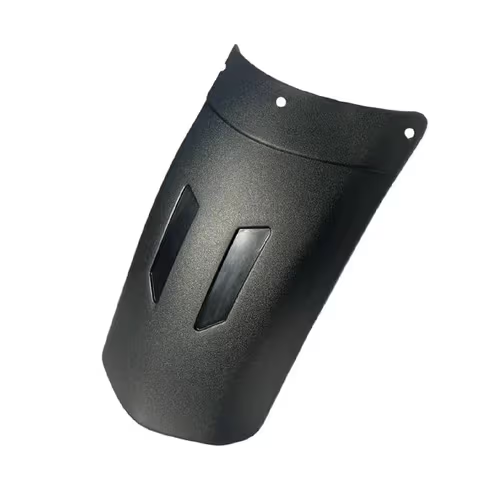
Universal Front Fender Mudguard Extender Extension Fits for Motorcycle

Boldfit Full Face Helmet Mask for Bikers in Riding UV Protected
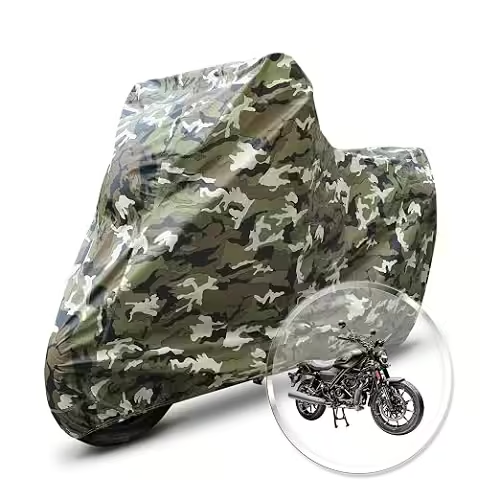
Neodrift JungleMax Bike Cover for Harley-Davidson X440
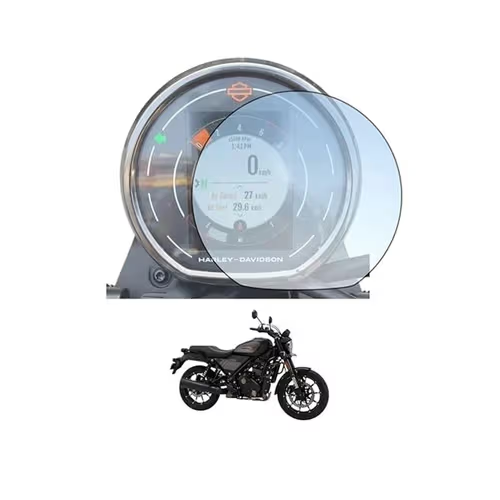
Wisely Pack 2 Screen Guard for Harley Davidson X440T Bike – Instrument Cluster Accessories
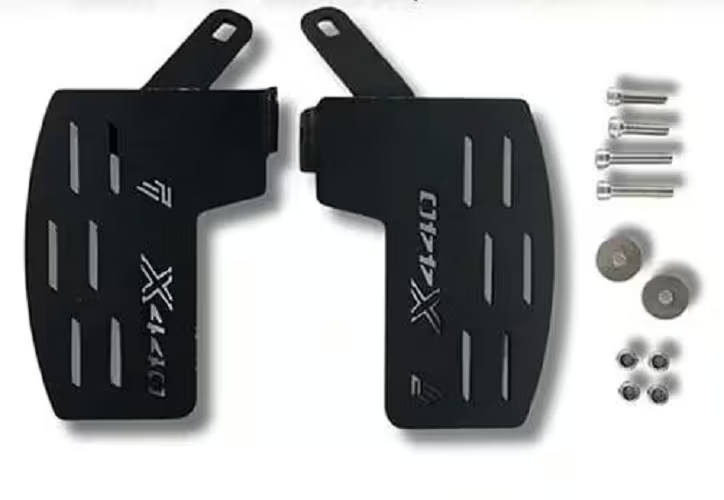
PHANTOM Premium Adjustable Footrest for Harley – Motorcycle Accessory for Touring & City Riding
L3 MODZ Ladies Foot Rest for KTM Duke (BS6 Gen2) Models
Apollo Alpha S1 130/70 R17 62H Radial Tubeless Bike Tyre
30W Motorcycle Type-C USB Phone Charger with PD & Quick Charge

ELTRON TURBO Turn Signal Indicator Lights Compatible for KTM

Steelbird SBA 7 7Wings Flip-Up Helmet for Men with Skull Cap

Vega Atom Open Face Helmet with Clear Visor, Black
Steelbird SBH-23 Brutal Open Face Helmet with Skull Cap
Axor X Cross Dual Visor Full Face Off-Road Helmet – Dull Black Orange

Probiker Protective Full Finger Bike Riding Gloves – Motorcycle, Cycling, and Hiking

XTRIM Protekt Universal Bike Riding Gloves for Men – Black, Red

Rynox Air GT Leather Motorcycle Riding Gloves – Cuff Length | Grey Red

BADOWL RYDON Knuckle Protection Riding Gloves – Touchscreen Sports Gloves

Microfiber Car Duster with Long Handle Cleaning Brush

Robustt Car Interior Cleaning Brush Combo – Scratch Free Car Duster

ORJILO 5-Piece Microfiber Car Duster Kit – Extendable Long Handle Duster for Car
ShineXPro Microfiber Car Cleaning Cloth (500 GSM, Extra Large (35×75 CM))

Wavex Tyre Polish for Car & Bike (1L) – With Applicator and Microfiber Cloth

ShineXPro Glass Cleaner Spray (300 ml) – Streak Free Car Glass Cleaner Liquid

SOFTSPUN Microfiber Chenille Wash Mitt (1700 GSM)
Tusa V1 Cordless Vacuum Cleaner for Car – High Power Portable Lightweight Wireless Vacuum

SOFTSPUN Microfiber Cloth (40×40 cm, 340 GSM) – Automotive Microfibre Towels for Car
SEZNIK 4-in-1 Cordless Vacuum Cleaner & Blower

GOODAIR Royal Premium Non-Electric Car Air Purifier
Portronics 38W Dual Output Fast Car Charger with 20W Type-C PD & 18W USB with Cars for iPhone
AutoBizarre High Gloss Carbon Fibre Paint Protection For Car

APPUCOCO Mini Car Trash Bin – Black
FOVERA Memory Foam Car Neck Rest Pillow – Medium, Black

360° Vacuum Magnetic Car Phone Mount – Strong Suction Cup Phone Holder for Car
Amazon Basics 5D Custom Fit Car Floor Mats for Swift Facelift
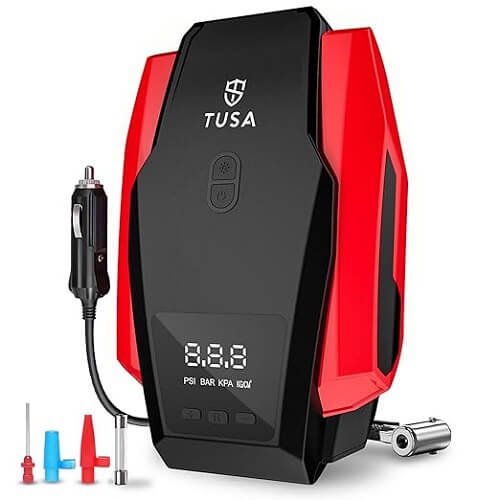
TUSA Drive X 12V DC Portable Tyre Inflator – 150 PSI, Air Compressor
![Qubo Dashcam Pro 4K [2026 Edition] – Dual Channel | ADAS | Ultra-Wide 8MP UHD+ Front, 2MP FHD Rear](https://neudeals.co/wp-content/uploads/2026/09/Qubo-Dashcam-Pro-4K-Sensor.jpg)
Qubo Dashcam Pro 4K [2026 Edition] – Dual Channel | ADAS | Ultra-Wide 8MP UHD+ Front, 2MP FHD Rear
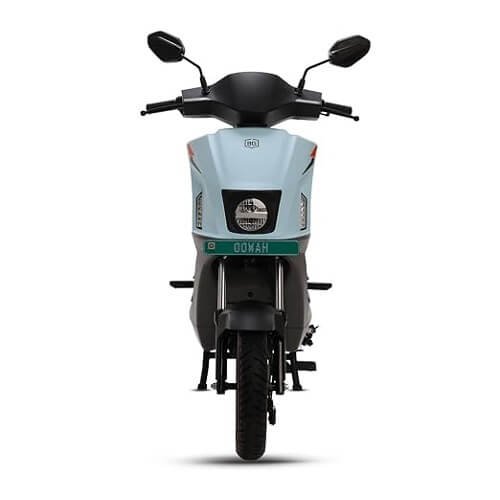
Oowah EX Electric Scooter – Removable Lithium-ion Battery , Laguna Blue
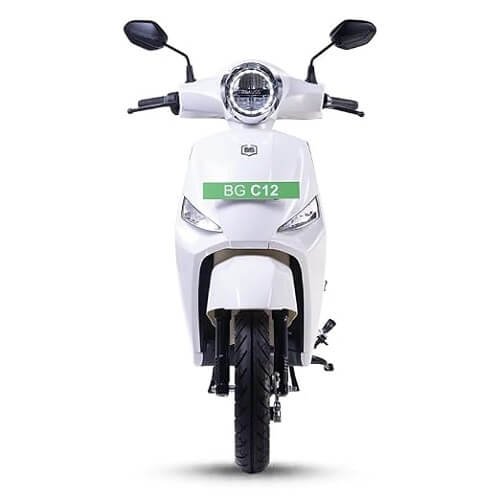
BG C12i EX Gen 2 Electric Scooter – Removable 2.0 kWh LFP Battery, 60 km/h Top Speed
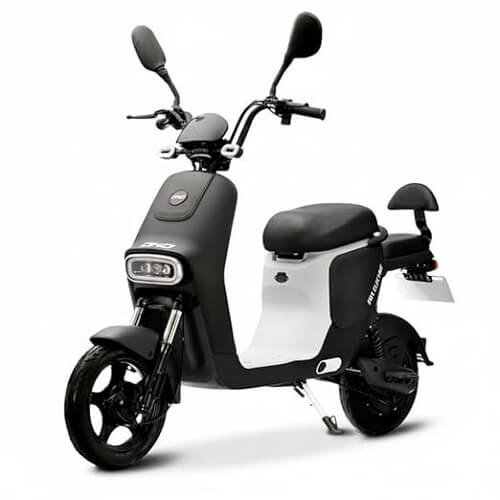
EOX OKO Electric Scooter – Removable Lithium Battery, 40-50 km Long-Range
EOX OLO Low Speed Electric Scooter – 45Km Mileage, Pastel Yellow & Black
EOX E2 Low Speed Electric Scooter – 60-70Km Range, Portable Lithium Battery
Okinawa Praise PRO Electric Scooter – Li-Ion Battery
EOX® ROX Electric Scooter – 48V Removable Lithium Battery, 50-60 km Long-Range
MIOOX Electric Scooter – 51.8V 28AH Range 55-65km Front Disc
AMO Low Speed Electric Scooter – 60-70 Km Range in Grey
AMO Jaunty 3W Low-Speed Electric Scooter – Blue and Black
Bajaj Chetak C2501 Electric Scooter – Glossy Active Black
Bajaj Chetak C3501 Electric Scooter – Brooklyn Black
Royal Enfield Classic 350 with Disc & Alloy Wheels Motorcycle – Stealth Black
Royal Enfield Bullet 350 Disc & Spoke Wheel Motorcycle – Battalion Black
Royal Enfield Hunter 350 with Disc & Alloy Wheels Motorcycle – Dapper Grey
Hero MotoCorp Passion+ i3S Drum – Black Heavy Grey
Hero MotoCorp XTREME 125R Bike(ABS) – Stallion Black
Hero MotoCorp HF Deluxe Drum – Black Grey
Hero MotoCorp XTREME 125R FI ABS SEAT DS (OBD2B) Motorcycles – Black
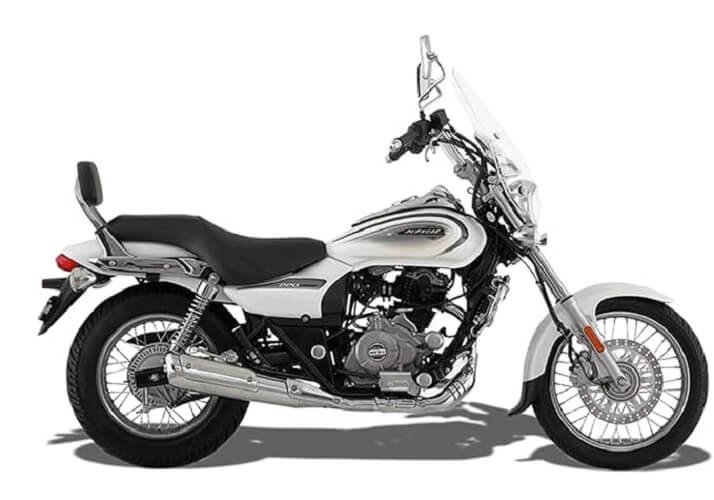
Bajaj Avenger 220 Cruise Motorcycle – Moon White
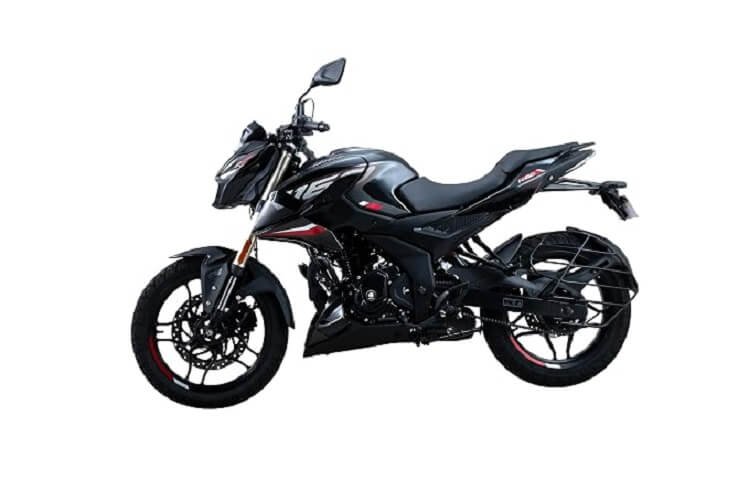
Bajaj Pulsar N 160 Ug Motorcycle – Brooklyn Black
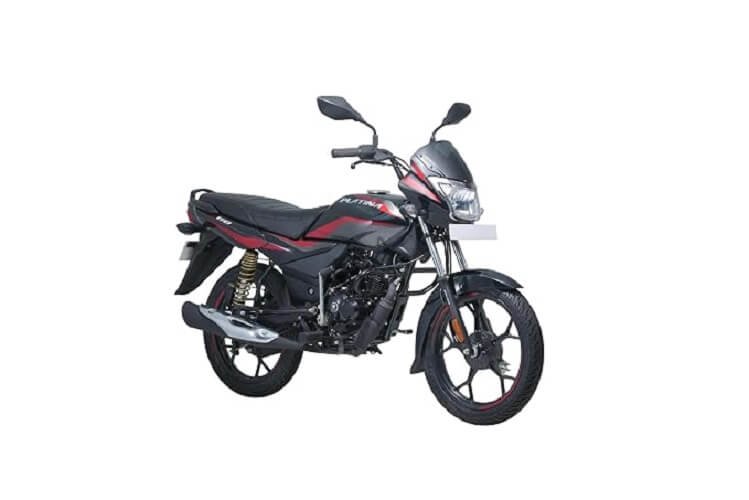
Bajaj Platina 110 Es Drum Motorcycle – Black Red
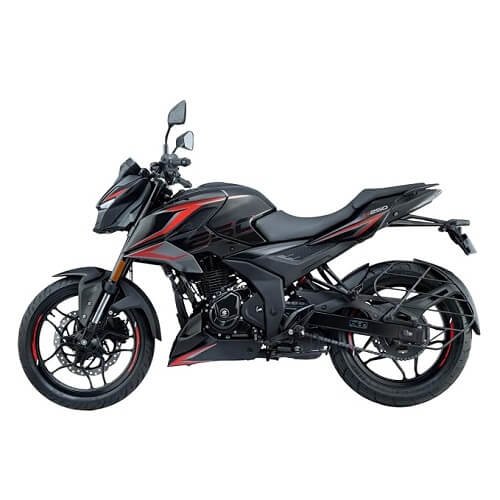
Bajaj Pulsar N 250 Ug Motorcycle – Brooklyn Black
Harley Davidson X440 T 440cc Motorcycle – Pearl Blue
Harley Davidson X440 S 440cc Motorcycle – Matte Black
Harley Davidson X440 Vivid 440cc Motorcycle – Metallic Thick Red
Harley Davidson X440 T 440 CC Motorcycle – Pearl Red
KTM Duke 200 PRO Bike – Dark Galvano Black
KTM Duke 390 R Bike – Electronic Orange
KTM Adventure X 390 Bike – Orange
KTM Adventure 250 Bike – White
As an Amazon Associate, Neu Auto earns from qualifying purchases. When you purchase through one of the Amazon links above, Neu Auto may receive a commission at no additional cost to you.