

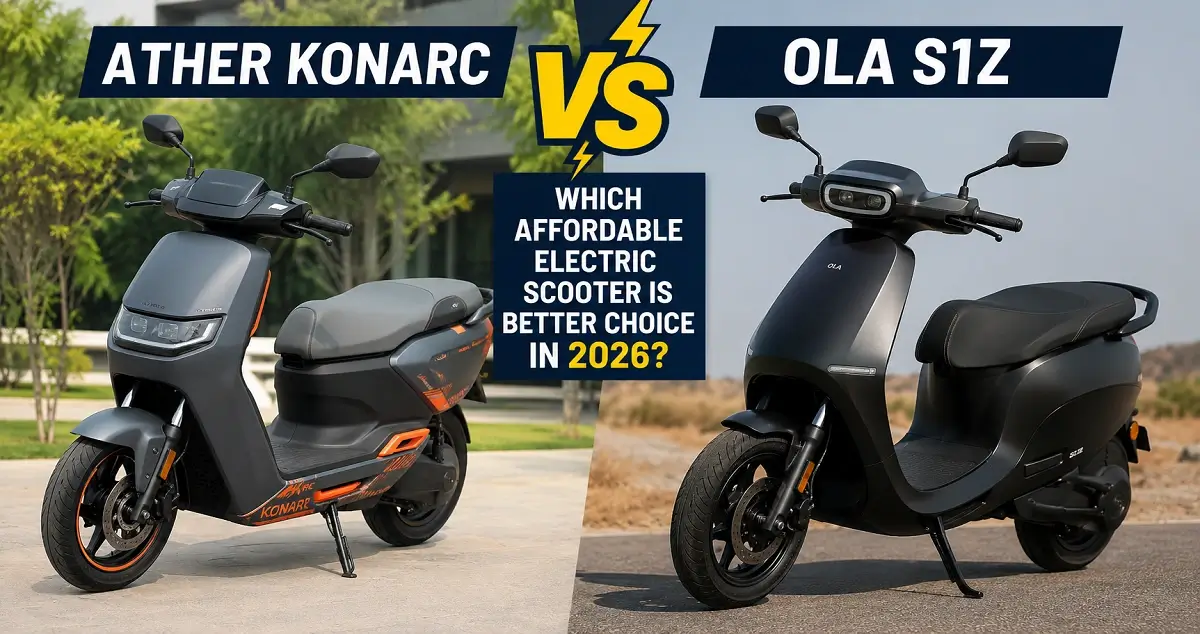
If you want an affordable electric scooter in 2026, the Ather Konarc vs Ola S1Z comparison is hard to ignore. Both target everyday Indian riders, but their strengths are very different.
Key Highlights
- Ola S1Z starts at ₹79,999, while the Ather Konarc starts at ₹99,999 ex-showroom.
- The S1Z 3.1 kWh claims 179 km IDC range, compared with 100 km IDC for the entry Konarc.
- The Ola S1Z uses LFP battery cells and MoveOS 5.
- The Konarc brings a metal body, steel unibody chassis, 14-inch front wheel and long-travel suspension.
- Ather offers a combined charging setup that can cut 0 to 80% home charging to about 2 hours on the 2.1 kWh version with the additional charger.
- Both scooters use a 4 kW peak motor and have a claimed 70 km/h top speed.
- Ola’s 5.1 kWh S1Z costs ₹99,999 and claims 301 km IDC range, but deliveries are scheduled later than the 3.1 kWh model.
- Ather Energy sold 239,124 electric two-wheelers in FY2026, while Ola Electric sold 164,294, according to industry data.
- Ather’s Q1 FY27 losses were significantly reduced, while Hero MotoCorp recently announced plans to raise its stake in Ather to 32.8%.
Ather Konarc vs Ola S1Z: Detailed Price Comparison
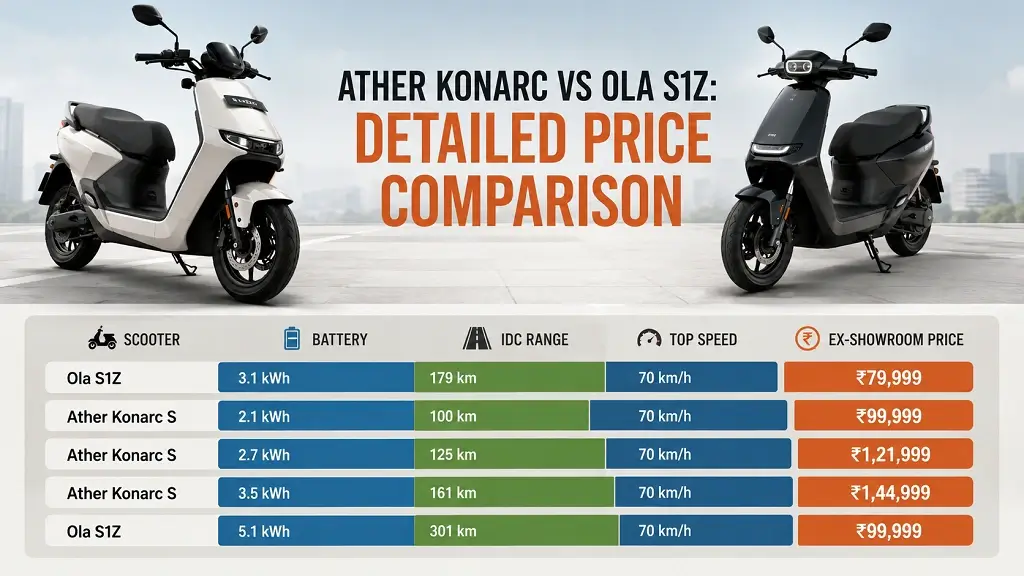
Price is where this comparison gets interesting. The entry Ola S1Z 3.1 kWh costs ₹79,999, making it ₹20,000 cheaper than the entry Ather Konarc S 2.1 kWh at ₹99,999. The Ola also offers a 5.1 kWh version at ₹99,999.
| Scooter | Battery | IDC Range | Top Speed | Ex-showroom Price |
|---|---|---|---|---|
| Ola S1Z | 3.1 kWh | 179 km | 70 km/h | ₹79,999 |
| Ather Konarc S | 2.1 kWh | 100 km | 70 km/h | ₹99,999 |
| Ather Konarc S | 2.7 kWh | 125 km | 70 km/h | ₹1,21,999 |
| Ather Konarc S | 3.5 kWh | 161 km | 70 km/h | ₹1,44,999 |
| Ola S1Z | 5.1 kWh | 301 km | 70 km/h | ₹99,999 |
The headline figures make Ola look like the clear value winner. But price alone doesn’t tell the whole story. Ather spends more of its engineering budget on chassis design, suspension, braking and charging flexibility.
₹79,999 Ola S1Z vs ₹99,999 Ather Konarc: What Do You Get for the Extra Cost?
The extra ₹20,000 gets you a very different scooter. The Konarc has a metal body, steel unibody chassis, 14-inch front wheel and long-travel suspension. These parts matter when you ride over broken city roads every day.
The Ola S1Z counters with more battery capacity and a longer claimed range. Its 3.1 kWh model has a 179 km IDC claim, while the entry Konarc has a 2.1 kWh battery and 100 km IDC range.
My buying view: if your first priority is range and price, pick the S1Z. If your priority is ride quality, physical build and family use, the Konarc makes a stronger case.
1. Range: Ola S1Z Takes the Lead Comfortably
The range battle is not close at the entry level. The Ola S1Z 3.1 kWh claims 179 km IDC, while the ₹99,999 Konarc S uses a 2.1 kWh battery and claims 100 km IDC.
| Model | Battery | Claimed IDC Range | Price |
|---|---|---|---|
| Ola S1Z | 3.1 kWh | 179 km | ₹79,999 |
| Ather Konarc | 2.1 kWh | 100 km | ₹99,999 |
Remember, IDC range is a test figure, not a promise for every ride. Speed, rider weight, traffic, temperature and tyre pressure all affect real-world range. For longer daily commutes, the Ola has the stronger numbers on paper.
2. Battery Technology: Two Distinct Approaches
Ola uses its Bharat Cell LFP technology in the S1Z. Ola says its LFP cells are designed for long life and thermal stability, and the S1Z range uses battery packs made for Indian conditions.
Ather takes a different route with its Bedrock battery system and aluminium battery casing. The Konarc’s battery and motor carry an IP67 rating.
For you, the important point is simple:
- Ola: bigger battery choices and strong range claims.
- Ather: compact battery options with a strong focus on integration and charging.
- Both: designed for daily urban electric use.
- Do not judge battery quality only by kWh. Thermal management, warranty, charging habits and after-sales support also matter.
3. Performance & Motor: How Closely Matched Are They?
This is one area where the Ather Konarc vs Ola S1Z fight becomes much closer. Both entry models use a motor with around 4 kW peak power and a claimed 70 km/h top speed. The Ola S1Z 3.1 kWh claims 0 to 40 km/h in 4.6 seconds, while Ather quotes 5 seconds for the 100 km Konarc and 4.7 seconds for its larger battery versions.
In normal city traffic, you won’t see a night-and-day difference.
Ola wins on paper: 4.6 seconds to 40 km/h.
Ather’s advantage: its ride setup is designed more around controlled, comfortable family commuting than outright acceleration.
4. Chassis and Ride Comfort: Why Ather Konarc Has the Advantage
This is where I’d spend extra money if your roads are rough.
The Konarc uses a steel unibody chassis, metal body, 14-inch front wheel and long-travel suspension. Ather quotes 90 mm front and 100 mm rear suspension travel, while its 1,352 mm wheelbase gives the scooter a planted footprint.
The 14-inch front wheel is especially useful when you meet potholes, broken patches and uneven speed breakers. The S1Z is more focused on giving you maximum battery value at a low price. For a family carrying a pillion every day, I’d give the Konarc the ride-comfort advantage.
5. Charging Tech: Ather’s Interesting Combined Charging Advantage
Charging is one of the Konarc’s smartest features.
The scooter comes with a 450W onboard charger. Ather also offers a combined charging setup that can add another 450W of charging capacity. On the 2.1 kWh version, Ather lists 0 to 80% home charging in about 2 hours with the combined charger. The standard charger takes about 4 hours for 0 to 80% on the 2.1 kWh model.
The Ola S1Z 3.1 kWh takes about 5 hours 42 minutes for 0 to 80%, while the 5.1 kWh version takes about 6 hours 16 minutes, according to Ola’s specifications. If you need to recharge quickly between trips, Ather’s approach is worth serious attention.
6. Software and Connected Features: Ola’s Feature-Packed Approach
Ola has a clear software advantage. The S1Z gets MoveOS 5, OTA updates, GPS tracking, ride statistics, geofencing, time fencing, cruise control, reverse mode and regenerative braking.
Ather also offers connected functions, navigation, OTA updates on supported variants, 4G LTE/GNSS and app features. Higher Konarc variants get a 7-inch display and additional connected features.
If you enjoy connected features and software tools, Ola gives you a lot for the money. If you prefer a clean riding experience with useful controls and a strong physical package, Ather keeps things practical.
7. Warranty & Ownership Experience: Strengthening the Case
Warranty is easy to overlook when you’re excited about range and features.
- Ola lists a 3-year/40,000 km scooter warranty for the S1Z.
- Ather lists 3 years/30,000 km for the vehicle and battery as standard. AtherStack Pro can extend battery coverage to 5 years/60,000 km, with longer warranty options available.
That means Ola has the better standard kilometre limit, while Ather offers more flexibility if you buy its extended coverage. Before paying, check the exact warranty terms for your selected variant. Battery warranty conditions matter more than a flashy feature list when you plan to keep the scooter for years.
8. Service and Ownership: The Deciding Factors
Service can turn a good EV into a frustrating purchase, so don’t choose only from a website.
- Ather entered 2026 with strong sales momentum. It sold 260,070 electric scooters in FY2026 in one industry tally, while its sales growth helped it reach a 17% market share.
- Ola has a much larger installed customer base, but its sales were under pressure in FY2026. Industry data put Ola’s FY2026 sales at 164,294 units, down 52% year over year.
At your local level, the better question is:
How close is the nearest service centre, and how quickly does it handle parts and repairs?: That answer can change your buying decision more than a 10 km range difference.
What Should You Check Before Buying an Ather Konarc or Ola S1Z?
Before you book either scooter, take these five steps:
- Take a proper test ride, not just a five-minute showroom ride.
- Ride over a speed breaker and a rough road.
- Sit with a family member on the rear seat.
- Check the actual boot space with your helmet.
- Ask the dealer about delivery, warranty, service time and replacement parts.
Also check the final on-road price. Ex-showroom prices do not include every ownership cost.
Ather Konarc vs Ola S1Z: Full Specifications Comparison
| Specification | Ather Konarc S 100 | Ola S1Z 3.1 kWh |
|---|---|---|
| Ex-showroom price | ₹99,999 | ₹79,999 |
| Battery | 2.1 kWh | 3.1 kWh |
| IDC range | 100 km | 179 km |
| TrueRange | 80 km | Not stated |
| Motor peak power | 4 kW | 4 kW |
| Top speed | 70 km/h | 70 km/h |
| 0 to 40 km/h | 5 sec | 4.6 sec |
| Battery chemistry | Ather Bedrock system | LFP |
| Standard charging | 450W | Home charging |
| 0 to 80% | 4 hours | 5 hr 42 min |
| Combined charging | Available as add-on | Not listed |
| Vehicle warranty | 3 years/30,000 km | 3 years/40,000 km |
| Body | Metal | Ola platform body |
| Front wheel | 14-inch | Not the same large-wheel setup |
| Software | AtherStack | MoveOS 5 |
Specifications are based on current manufacturer information and can vary by variant.
Tyres and Brakes (Including Ather’s Electronic Braking Tech)
Ather puts noticeable attention on braking and chassis control. The Konarc gets an Advanced Electronic Braking System on applicable versions, along with AutoHold and other safety functions on higher variants.
The scooter also gets a large 14-inch front wheel, which can help stability over uneven surfaces. Ola focuses more on electronic riding aids. The S1Z includes regenerative braking and reverse mode through MoveOS 5.
When you test ride, don’t just squeeze the brake once. Try a gentle stop, a harder stop and a slow-speed turn. That’s where you feel the difference in control.
Dimensions, Capacity and Practicality
The Konarc has a 1,352 mm wheelbase, 14-inch front wheel and up to 31 litres of under-seat storage according to Ather’s product information.
That combination suits family use well. A long wheelbase can help the scooter feel stable, while the large front wheel can make broken roads less annoying.
The Ola S1Z’s biggest practical advantage is its battery capacity. The 5.1 kWh model offers a claimed 301 km IDC range. If you mainly ride in a city and charge at home every night, you may not need a huge battery. If you travel long distances each day, battery size becomes much more important.
Availability: Another Key Difference to Consider
Availability is important because both products are new to the market.
Ola says the S1Z 3.1 kWh deliveries are scheduled from December 2026, while the 5.1 kWh version is scheduled from March 2027.
Ather has already launched the Konarc, with the S range starting at ₹99,999. Ather’s official configurator lists the 100 km, 125 km and 161 km versions, while the Z line and higher-range versions are being introduced separately. So if you want a scooter soon, check your local dealer stock and confirmed delivery date before making the final decision.
Is Ola S1Z Better Than Ather Konarc, or Is It Worth Paying ₹99,999?
For pure specifications, Ola S1Z looks stronger.
- You pay ₹79,999 and get a 3.1 kWh battery, 179 km IDC range, 4 kW peak motor and 70 km/h claimed top speed.
- The Konarc asks ₹20,000 more at entry level and gives you only 100 km IDC range. That sounds like a poor deal until you ride it.
The Konarc is selling a different idea: stronger physical construction, larger front wheel, longer suspension travel, family comfort and faster optional home charging.
- Best value on paper: Ola S1Z
- Best range for the money: Ola S1Z
- Best rough-road focus: Ather Konarc
- Best family comfort focus: Ather Konarc
- Best software package: Ola S1Z
- Best charging flexibility: Ather Konarc
The Bigger Question: Why Pay ₹99,999 for a 100 km Konarc?
This is the question you should ask before buying. You’re not paying ₹20,000 extra for range. You’re paying for the scooter’s hardware package.
The Konarc uses a metal body and steel unibody chassis, a 14-inch front wheel, long-travel suspension and Ather’s charging system. Ather has clearly designed it as a family scooter rather than a stripped-down budget EV. If your daily route includes rough roads, school runs, a passenger and frequent stops, these details matter.
But if you mostly want cheap electric commuting, the S1Z is difficult to ignore. That’s why I wouldn’t call the Konarc overpriced. I’d call it a different kind of value.
Why Is Ather Growing Even While It Is Still Loss-Making?
Yes, Ather has been loss-making, but the business is moving in the right direction.
Reuters reported that Ather had significantly reduced losses in Q1 FY27, helped by demand for its family-focused Rizta. Hero MotoCorp also announced an investment that would increase its stake in Ather from 29.88% to 32.8%.
That doesn’t mean Ather has suddenly become profitable. It means the company has shown stronger sales momentum and attracted continued backing from a major two-wheeler manufacturer. For you as a buyer, the more useful question is whether Ather can keep growing its service network, parts supply and product range.
Which Electric Scooter Is Better Than Ola S1Z?
There isn’t one answer for every rider. If you want a family-focused scooter, the Ather Konarc deserves a look. If you want established mainstream options, the TVS iQube, Bajaj Chetak and Ather Rizta are also worth test riding.
The market data gives you a useful clue. In 2026, TVS, Bajaj and Ather have been among India’s strongest electric two-wheeler brands. Autocar India reported that TVS, Bajaj and Ather together held a large share of electric two-wheeler sales during the year. Don’t buy an EV because someone says it is the “best.” Pick the one that fits your roads, charging access, passenger needs and local service support.
What Should You Choose: Ather Konarc or Ola S1Z?
Choose the Ola S1Z if your biggest priorities are:
- Lower starting price
- Bigger battery
- Longer claimed range
- More software features
- Strong value for money
- A ₹79,999 entry point
Choose the Ather Konarc if your priorities are:
- Family comfort
- Metal body
- Stronger chassis feel
- 14-inch front wheel
- Long-travel suspension
- Faster optional home charging
- Ather’s established EV ecosystem
Final Thoughts
The Ola S1Z wins the specification and price battle. At ₹79,999, the 3.1 kWh version gives you a lot of battery and technology for the money.
But the Ather Konarc wins the hardware and family comfort battle. Its metal body, steel unibody chassis, large front wheel and suspension setup make the extra money easier to understand. If you ride 30 to 50 km a day and want maximum value, I’d start with the S1Z. If you carry family members, face rough roads and care more about how the scooter feels after thousands of kilometres, I’d spend more time testing the Konarc.
FAQs
Which is the best electric scooter to buy in 2026?
There is no single best scooter for every buyer. TVS iQube, Bajaj Chetak, Ather Rizta, Ather Konarc and Ola S1Z all target different needs. For budget range, the Ola S1Z is impressive. For family comfort and hardware, the Ather Konarc deserves a close look.
Which EV is better, Ola or Ather?
The answer depends on your priorities. Ola S1Z offers a lower starting price and stronger claimed range, while Ather Konarc focuses more on ride comfort, chassis strength, charging flexibility and family use. Ather also had stronger 2026 sales momentum than Ola in several industry reports.
Is Ather a loss-making company?
Yes, Ather has been loss-making, but its losses have been narrowing. Reuters reported that the company had significantly reduced losses in Q1 FY27, while Hero MotoCorp increased its planned stake in Ather to 32.8%.
Which electric scooter is better than Ola?
That depends on what you want. The Ather Konarc can be a better choice for family comfort and chassis hardware. TVS iQube and Bajaj Chetak are also strong alternatives with large sales volumes in 2026.
What are the top 3 electric scooters in India?
For a practical 2026 shortlist, start by test riding the TVS iQube, Bajaj Chetak and Ather Rizta. All three have shown strong sales performance in the Indian EV market. July 2026 industry data placed the iQube and Chetak ahead of the Rizta in monthly volume.
Is Ola scooter success or failure?
Ola is neither a simple success nor a simple failure. Its FY2026 sales fell sharply, but the company remains a major EV player and reported a narrower Q1 FY27 loss. The S1Z gives Ola another opportunity to compete through aggressive pricing, battery technology and software.

Rate This Article
Be the first to rate this article
Thanks for rating!
All Car Brands
View all brands →












More Updates
Handpicked Accessories for Every Journey
PRIVON 60W H4 LED Headlight for Bike – 7000L, 6000K White LED Light for Night Ride
Ceat Zoom Rad 140/60 R17 63P Tubeless Bike Tyre
ShineXPro Helmet Cleaner & Microfiber Cloth – Anti Bacterial Foaming Helmet Cleaning Spray
Universal Front Fender Mudguard Extender Extension Fits for Motorcycle

Boldfit Full Face Helmet Mask for Bikers in Riding UV Protected
Neodrift JungleMax Bike Cover for Harley-Davidson X440
Wisely Pack 2 Screen Guard for Harley Davidson X440T Bike – Instrument Cluster Accessories
PHANTOM Premium Adjustable Footrest for Harley – Motorcycle Accessory for Touring & City Riding
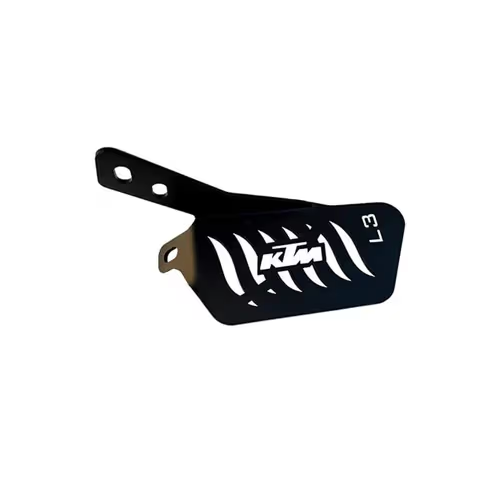
L3 MODZ Ladies Foot Rest for KTM Duke (BS6 Gen2) Models
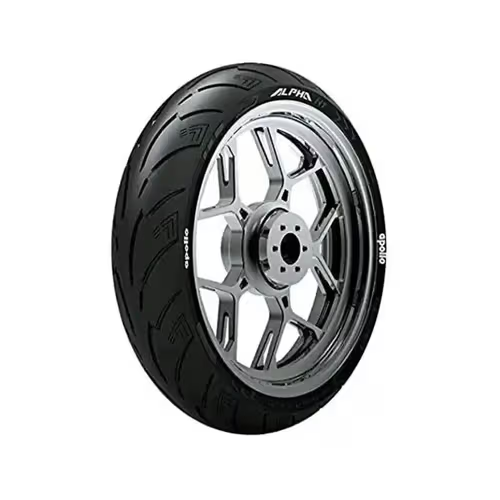
Apollo Alpha S1 130/70 R17 62H Radial Tubeless Bike Tyre
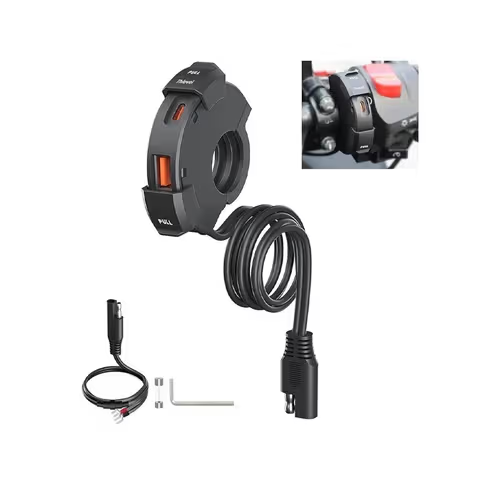
30W Motorcycle Type-C USB Phone Charger with PD & Quick Charge
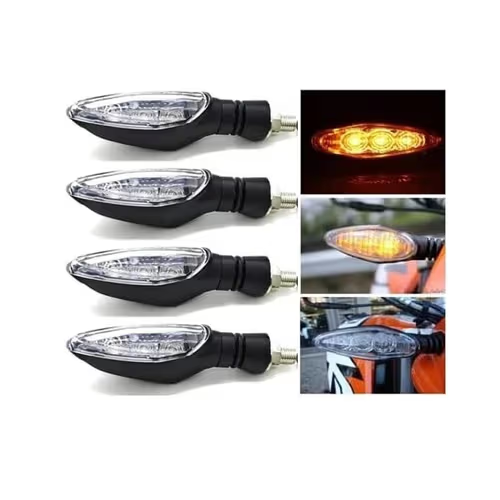
ELTRON TURBO Turn Signal Indicator Lights Compatible for KTM
Steelbird SBA 7 7Wings Flip-Up Helmet for Men with Skull Cap
Vega Atom Open Face Helmet with Clear Visor, Black
Steelbird SBH-23 Brutal Open Face Helmet with Skull Cap
Axor X Cross Dual Visor Full Face Off-Road Helmet – Dull Black Orange
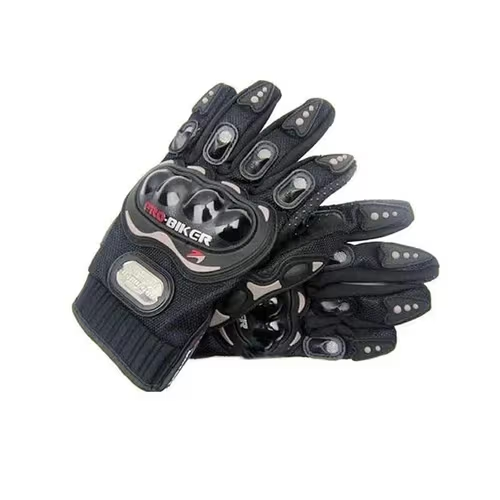
Probiker Protective Full Finger Bike Riding Gloves – Motorcycle, Cycling, and Hiking
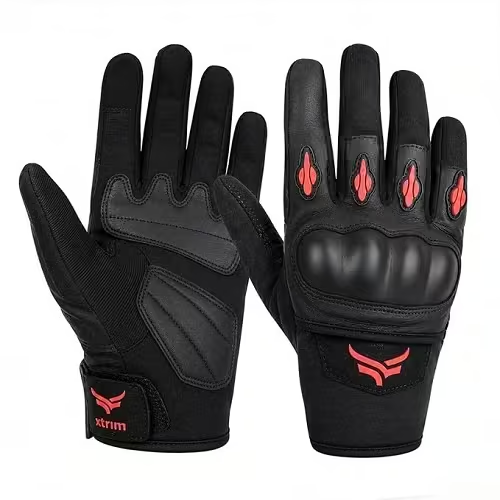
XTRIM Protekt Universal Bike Riding Gloves for Men – Black, Red
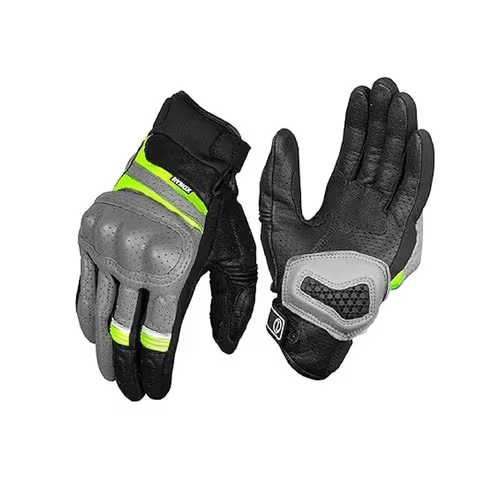
Rynox Air GT Leather Motorcycle Riding Gloves – Cuff Length | Grey Red
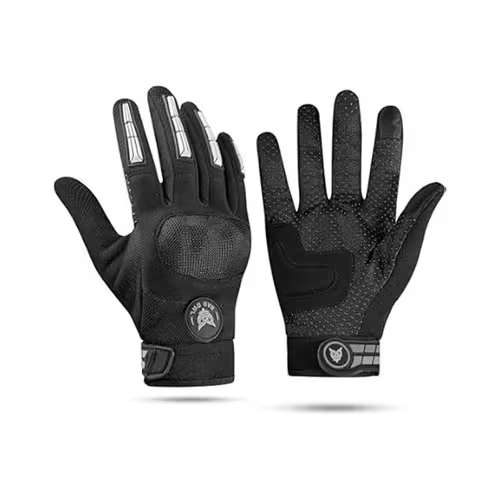
BADOWL RYDON Knuckle Protection Riding Gloves – Touchscreen Sports Gloves
Microfiber Car Duster with Long Handle Cleaning Brush

Robustt Car Interior Cleaning Brush Combo – Scratch Free Car Duster

ORJILO 5-Piece Microfiber Car Duster Kit – Extendable Long Handle Duster for Car
ShineXPro Microfiber Car Cleaning Cloth (500 GSM, Extra Large (35×75 CM))
Wavex Tyre Polish for Car & Bike (1L) – With Applicator and Microfiber Cloth

ShineXPro Glass Cleaner Spray (300 ml) – Streak Free Car Glass Cleaner Liquid
SOFTSPUN Microfiber Chenille Wash Mitt (1700 GSM)
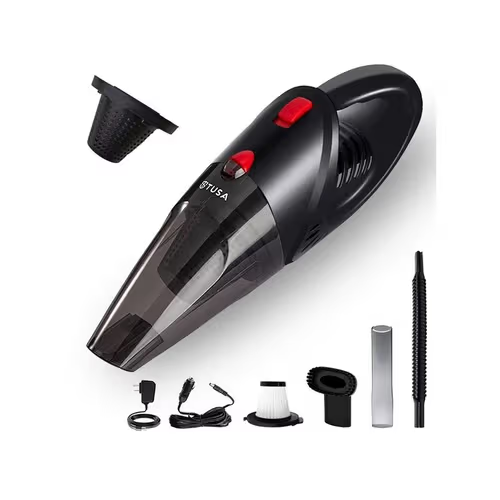
Tusa V1 Cordless Vacuum Cleaner for Car – High Power Portable Lightweight Wireless Vacuum
SOFTSPUN Microfiber Cloth (40×40 cm, 340 GSM) – Automotive Microfibre Towels for Car
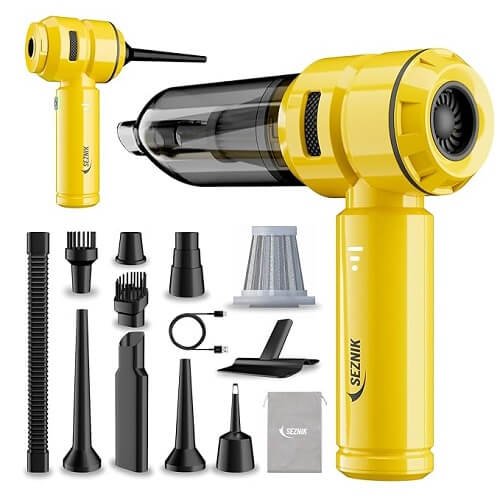
SEZNIK 4-in-1 Cordless Vacuum Cleaner & Blower
GOODAIR Royal Premium Non-Electric Car Air Purifier
Portronics 38W Dual Output Fast Car Charger with 20W Type-C PD & 18W USB with Cars for iPhone
AutoBizarre High Gloss Carbon Fibre Paint Protection For Car
APPUCOCO Mini Car Trash Bin – Black
FOVERA Memory Foam Car Neck Rest Pillow – Medium, Black
360° Vacuum Magnetic Car Phone Mount – Strong Suction Cup Phone Holder for Car
Amazon Basics 5D Custom Fit Car Floor Mats for Swift Facelift
TUSA Drive X 12V DC Portable Tyre Inflator – 150 PSI, Air Compressor
![Qubo Dashcam Pro 4K [2026 Edition] – Dual Channel | ADAS | Ultra-Wide 8MP UHD+ Front, 2MP FHD Rear](https://neudeals.co/wp-content/uploads/2026/09/Qubo-Dashcam-Pro-4K-Sensor.jpg)
Qubo Dashcam Pro 4K [2026 Edition] – Dual Channel | ADAS | Ultra-Wide 8MP UHD+ Front, 2MP FHD Rear
Oowah EX Electric Scooter – Removable Lithium-ion Battery , Laguna Blue
BG C12i EX Gen 2 Electric Scooter – Removable 2.0 kWh LFP Battery, 60 km/h Top Speed
EOX OKO Electric Scooter – Removable Lithium Battery, 40-50 km Long-Range
EOX OLO Low Speed Electric Scooter – 45Km Mileage, Pastel Yellow & Black
EOX E2 Low Speed Electric Scooter – 60-70Km Range, Portable Lithium Battery
Okinawa Praise PRO Electric Scooter – Li-Ion Battery
EOX® ROX Electric Scooter – 48V Removable Lithium Battery, 50-60 km Long-Range
MIOOX Electric Scooter – 51.8V 28AH Range 55-65km Front Disc
AMO Low Speed Electric Scooter – 60-70 Km Range in Grey
AMO Jaunty 3W Low-Speed Electric Scooter – Blue and Black
Bajaj Chetak C2501 Electric Scooter – Glossy Active Black
Bajaj Chetak C3501 Electric Scooter – Brooklyn Black
Royal Enfield Classic 350 with Disc & Alloy Wheels Motorcycle – Stealth Black
Royal Enfield Bullet 350 Disc & Spoke Wheel Motorcycle – Battalion Black
Royal Enfield Hunter 350 with Disc & Alloy Wheels Motorcycle – Dapper Grey
Hero MotoCorp Passion+ i3S Drum – Black Heavy Grey
Hero MotoCorp XTREME 125R Bike(ABS) – Stallion Black
Hero MotoCorp HF Deluxe Drum – Black Grey
Hero MotoCorp XTREME 125R FI ABS SEAT DS (OBD2B) Motorcycles – Black
Bajaj Avenger 220 Cruise Motorcycle – Moon White
Bajaj Pulsar N 160 Ug Motorcycle – Brooklyn Black
Bajaj Platina 110 Es Drum Motorcycle – Black Red
Bajaj Pulsar N 250 Ug Motorcycle – Brooklyn Black
Harley Davidson X440 T 440cc Motorcycle – Pearl Blue
Harley Davidson X440 S 440cc Motorcycle – Matte Black
Harley Davidson X440 Vivid 440cc Motorcycle – Metallic Thick Red
Harley Davidson X440 T 440 CC Motorcycle – Pearl Red
KTM Duke 200 PRO Bike – Dark Galvano Black
KTM Duke 390 R Bike – Electronic Orange
KTM Adventure X 390 Bike – Orange
KTM Adventure 250 Bike – White
As an Amazon Associate, Neu Auto earns from qualifying purchases. When you purchase through one of the Amazon links above, Neu Auto may receive a commission at no additional cost to you.