

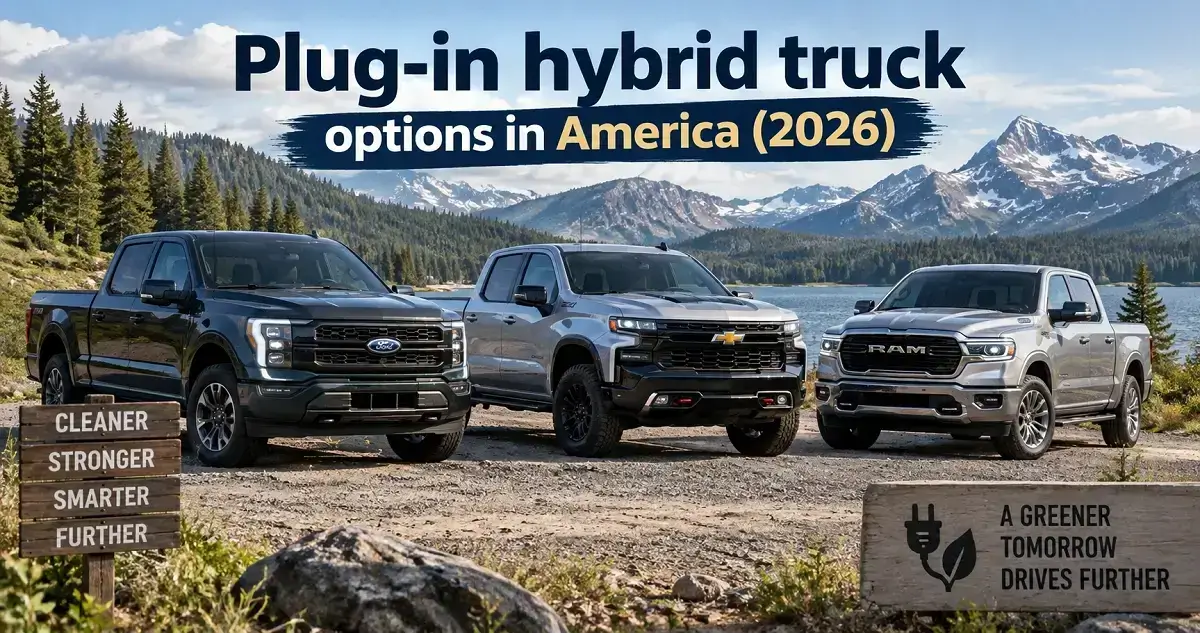
If you want electric driving without giving up long road trips, the Plug-in Hybrid Truck in America market is worth watching in 2026. These trucks combine electric power for shorter trips with a gasoline engine for longer journeys. This gives you more flexibility without relying only on charging stations. For buyers who want efficiency, capability, and everyday practicality, plug-in hybrid trucks offer an interesting middle ground.
Key Highlights
- The Ram 1500 REV, previously called the Ram 1500 Ramcharger, is the standout range-extended truck planned for America.
- Ram lists a manufacturer-estimated 690-mile total driving range for the 1500 REV.
- Ram also lists up to 14,000 pounds of towing and 2,625 pounds of payload.
- The Ram uses a 92-kWh battery and a 130-kW generator powered by a 3.6-liter Pentastar V6.
- The 2026 Ford F-150 PowerBoost remains a strong full-hybrid alternative, with up to 430 horsepower, 578 lb-ft of torque, and 11,600 pounds of towing capacity.
- The 2026 Ford Maverick Hybrid is a smaller, family-friendly choice, rated at 42 city, 35 highway, and 38 combined MPG in its FWD configuration.
- The federal clean vehicle tax credits are not available for vehicles acquired after September 30, 2025, so you should not build a 2026 purchase budget around the old federal credit.
- Owner feedback on existing Ram and Ford hybrid trucks shows strong praise for comfort, power, fuel savings, and onboard power, but buyers also report concerns about price and long-term battery ownership.
What Buyers Need to Know About PHEV Trucks
The biggest thing to understand about the Plug-in Hybrid Truck in America market is that the words “plug-in hybrid” can describe more than one type of system. A traditional PHEV normally uses a battery and an internal-combustion engine, and both can help move the truck. A range-extended electric truck takes a different approach. The wheels are driven mainly by electric motors, while the gasoline engine works as a generator when the battery needs more energy. Ram’s upcoming 1500 REV follows this range-extended idea, using a 92-kWh battery, a 130-kW generator, and a 3.6-liter V6.
That difference matters when you shop. You aren’t simply choosing between gas and electricity. You’re choosing how the truck manages energy during your daily commute, highway trip, towing job, and weekend adventure. If you can charge at home, you can start many drives with a full battery. If you travel far from chargers, gasoline provides a backup. That combination is attractive for American families who want quieter electric driving but still need the freedom to cross several states without planning every stop around a charging station.
How Does a Plug-in Hybrid Truck Work?
A plug-in hybrid truck connects to an external charger, stores electricity in a larger battery, and uses that stored energy to reduce gasoline use. You can normally charge it at home using a 120-volt outlet or a faster 240-volt Level 2 setup. When the battery has energy available, the electric system does much of the work. Once the battery gets low, the gasoline system can provide additional energy.
- External charging: You can plug the truck into a home or public charger to replenish the battery.
- Larger battery: A PHEV truck uses a larger battery than a standard hybrid, allowing it to drive on electric power for certain trips.
- 120-volt charging: A standard household outlet can be used for slower charging.
- 240-volt Level 2 charging: A Level 2 setup can provide faster home charging.
- Electric driving: When the battery has enough energy, the electric system can handle much of the driving.
- Gasoline backup: When the battery gets low, the gasoline powertrain can provide additional energy.
- Different powertrain designs: Ram describes the 1500 REV differently because its V6 sends mechanical power through an onboard generator rather than simply driving the wheels like a conventional hybrid.
Top Plug-In Hybrid Models to Consider in 2026
The Plug-in Hybrid Truck in America category is still small compared with gas and standard hybrid pickups. That’s the reality buyers face in 2026. Ford offers the F-150 PowerBoost full hybrid and Maverick Hybrid, but neither is a plug-in hybrid because you cannot plug the battery into an external charger. Ram’s 1500 REV is the major full-size range-extended option to watch, and Ram currently lists its availability as projected for 2026.
This makes your shopping list unusual. If you specifically require an externally chargeable truck, you have far fewer choices than if you’re simply looking for hybrid technology. You should also be careful with older articles that still call the Ram truck the “Ramcharger.” Ram’s current website calls the range-extended pickup the Ram 1500 REV, while earlier announcements used the Ramcharger name.
1. Ram 1500 Ramcharger, Now Listed as Ram 1500 REV
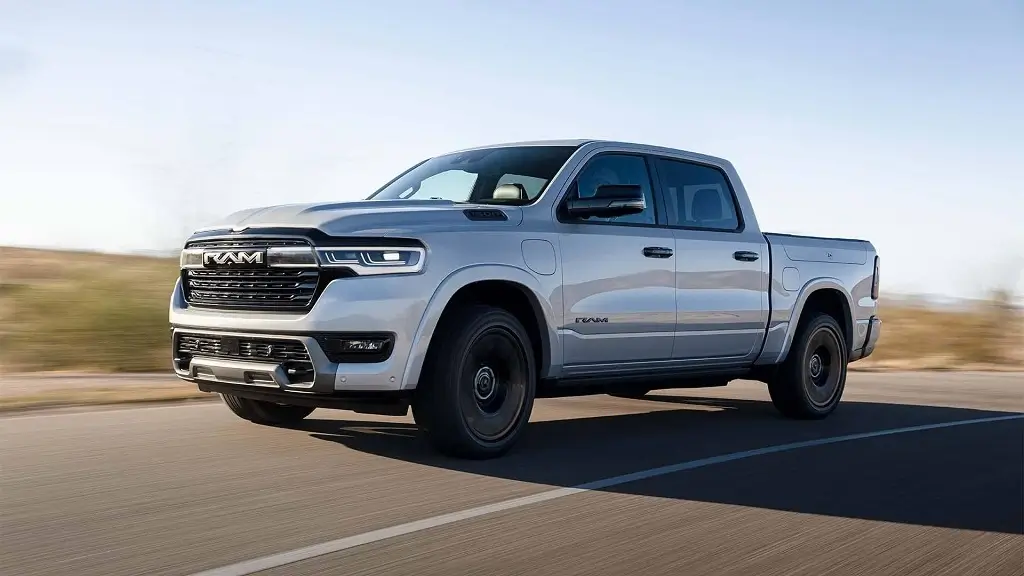
The Ram 1500 REV is the most interesting answer for shoppers searching for a Plug-in Hybrid Truck in America in 2026. Ram says it uses a 92-kWh liquid-cooled battery and a 130-kW generator. The manufacturer projects up to 690 miles of total driving range, along with 647 horsepower, 610 lb-ft of torque, 14,000 pounds of maximum towing, and 2,625 pounds of maximum payload. Those are serious truck numbers, especially for buyers who want electric driving without accepting the shorter road-trip range of many battery-only pickups.
Charging is also part of the appeal. Ram says the truck supports Level 1, Level 2, and Level 3 charging, with DC fast charging at up to 145 kW. The company says a 400-volt DC fast charger can add up to 50 miles of all-electric range in 10 minutes. These are manufacturer claims for a preproduction vehicle, so you should treat them as targets rather than real-world guarantees until production trucks are independently tested.
2. Best Standard Hybrid Alternatives, Ford F-150 & Maverick
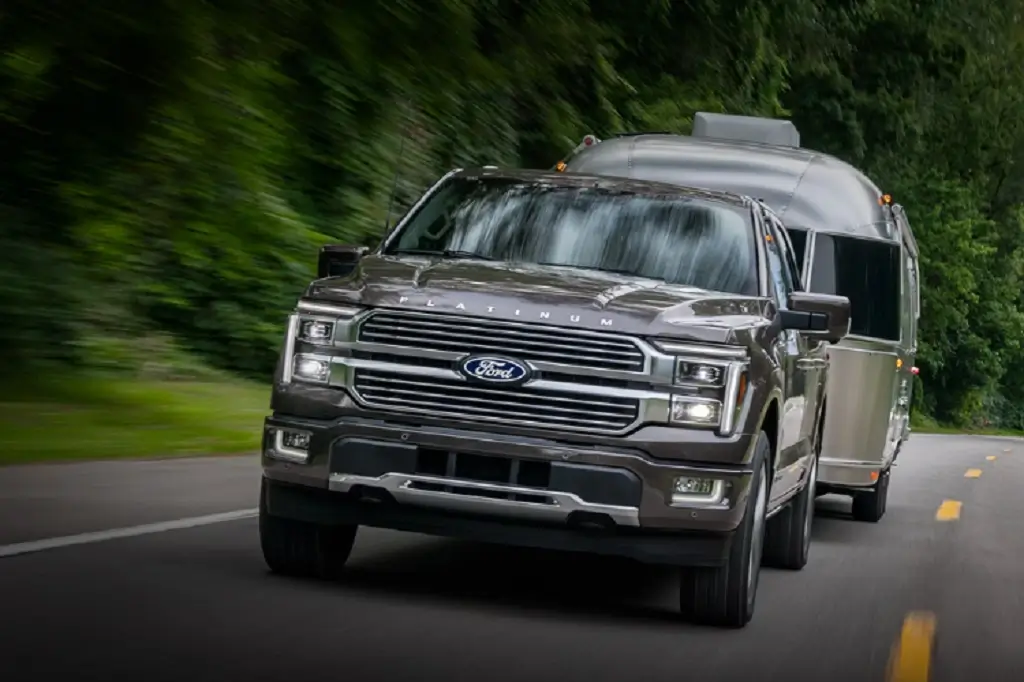
If you don’t need plug-in charging, Ford gives you two practical alternatives. The 2026 F-150 PowerBoost is a full-size hybrid with 430 horsepower, 578 lb-ft of torque, and a maximum towing rating of 11,600 pounds when properly equipped. It also offers Pro Power Onboard, which can provide up to 2 kW on many hybrid configurations, with 7.2 kW available on certain versions.
The smaller 2026 Ford Maverick Hybrid takes a different approach. Its 2.5-liter hybrid powertrain is rated at 42 city, 35 highway, and 38 combined MPG in FWD form. Maximum towing is 2,000 pounds normally, or up to 4,000 pounds with the right configuration and 4K Tow Package.
| Truck | Powertrain type | Key capability |
|---|---|---|
| Ram 1500 REV | Range-extended electric | Up to 690-mile total range, 14,000-lb towing |
| Ford F-150 PowerBoost | Full hybrid | 430 hp, 578 lb-ft, up to 11,600-lb towing |
| Ford Maverick Hybrid | Full hybrid | Up to 42 city MPG, up to 4,000-lb towing |
Plug-in Hybrid Truck Prices in America
Pricing is one area where 2026 buyers should be prepared to wait for final numbers. Ram has positioned the 1500 Ramcharger as a 2026 plug-in hybrid truck, but final retail pricing can vary by trim, equipment, destination charges, and market availability.
For buyers comparing plug-in hybrid truck prices in America, the current picture looks like this:
| Truck / Pricing Reference | 2026 Price Status | Estimated Price Range | What Buyers Should Know |
|---|---|---|---|
| Ram 1500 Ramcharger | Final pricing pending | About $60,000–$100,000 | Wide estimate; final MSRP should be confirmed by Ram |
| Entry-level configuration | Not officially confirmed | Around $60,000+ | Actual equipment and trim pricing may change the starting point |
| Higher-trim configuration | Not officially confirmed | Up to around $100,000 | Premium features and options can significantly increase the price |
| Home Level 1 charging | Widely available | Low installation cost | Uses a standard household outlet but charges slowly |
| Home Level 2 charging | Installation dependent | Several hundred to several thousand dollars | Faster charging, but professional electrical work may be required |
How Much Does a Plug-in Hybrid Truck Cost in 2026?
Your real purchase price can be very different from the advertised starting price. Trim level, four-wheel drive equipment, destination charges, options, dealer pricing, financing, and local taxes can all change the final number. With a new technology truck, I would also look closely at warranty coverage and battery terms instead of focusing only on MSRP. Ram currently lists an 8-year/100,000-mile e-powertrain and battery limited warranty for its electric lineup, alongside a 3-year/36,000-mile basic warranty.
For a family buyer, the smarter calculation is total ownership cost. Ask yourself how many miles you drive each year, how often you can charge at home, what your electricity rate is, and how much gasoline your current truck consumes. A truck that costs more upfront can still make sense if your daily driving uses cheap home electricity. But if you rarely charge and spend most of your time towing at highway speeds, the fuel-saving advantage may be smaller than you expect.
Electric Range, Gas Range and Overall Driving Range
Range is where the Plug-in Hybrid Truck in America concept becomes easy to understand. A battery-only truck has one energy source, so towing and cold weather can make its range planning more important. A range-extended truck carries a gasoline generator, giving you another way to keep moving. Ram’s current 1500 REV information gives a manufacturer-estimated total range of up to 690 miles.
Don’t confuse total range with electric-only range. Ram’s published 690-mile figure is the combined driving target, not 690 miles of battery-only driving. The battery gives you electric driving capability, while the generator extends the trip when needed. This setup may be especially useful for families who live in areas with limited fast charging or who regularly tow boats, campers, and trailers over long distances. Your actual range will change with speed, weather, cargo, towing, terrain, tire choice, and driving style.
How Many Miles Can a Plug-in Hybrid Truck Drive on Battery Power?
This is one of the most important unanswered questions for buyers because the exact electric-only range can be more useful than the headline total range. Ram’s current official 1500 REV page emphasizes the 690-mile total driving estimate and its battery size, while the production vehicle and final specifications remain subject to change. Ram also says its 400-volt DC fast charging system can add up to 50 miles of all-electric range in 10 minutes under its stated conditions.
For your own shopping, focus on your daily miles rather than chasing the biggest range number. If you drive 35 miles to work and can recharge every night, even a moderate electric range could cover most weekday driving. If your regular trip is 100 miles each way, you’ll care much more about usable battery range and charging speed. Towing changes the calculation again because a heavy trailer can dramatically increase energy demand.
Battery Size, Charging and Fuel Economy
Battery size is not just a number on a specification sheet. A bigger battery can provide more electric driving, but it also adds weight, cost, and charging time. The Ram 1500 REV’s 92-kWh battery is large enough to support its range-extended design, and Ram pairs it with a 130-kW generator.
For most families, home charging will be the heart of the ownership experience. Plug in after dinner, let the truck charge overnight, and start the next morning with stored energy. Ram says its electric trucks support Level 1 charging from a standard 120-volt outlet and Level 2 charging from a 240-volt setup. Level 3 DC fast charging is intended for quicker public charging during longer journeys.
How Long Does It Take to Charge a Plug-in Hybrid Truck?
Charging time depends on the charger, battery state, temperature, charging rate, and vehicle settings. A 120-volt outlet is convenient but slow, so it makes more sense for topping up small amounts. A professionally installed 240-volt Level 2 charger is much better if you drive regularly and want to recharge overnight. Ram specifically describes Level 2 as suitable for charging a full battery overnight.
DC fast charging is different. Ram says the 1500 REV can accept up to 145 kW and add up to 50 miles of all-electric range in 10 minutes with a 400-volt DC fast charger. That’s useful on a road trip, but don’t assume every charging stop will match that result. Weather, battery temperature, charger condition, state of charge, and charging station output can all affect the real result.
Towing, Payload and Truck Performance
A truck can have impressive electric acceleration and still be a poor work truck if its towing numbers fall short. That’s why towing and payload deserve more attention than horsepower alone. Ram currently claims up to 14,000 pounds of towing and 2,625 pounds of payload for the 1500 REV. Those numbers put the range-extended truck firmly into serious half-ton pickup territory.
Your actual towing limit will depend on configuration, trailer weight, passengers, cargo, hitch setup, and other factors. The same rule applies to Ford’s hybrids. The 2026 F-150 PowerBoost can reach 11,600 pounds of towing capability when properly equipped, while the Maverick Hybrid can reach 4,000 pounds with the appropriate package and configuration.
Can a Plug-in Hybrid Truck Handle Heavy-Duty Towing?
Yes, a properly designed range-extended truck can handle substantial towing, but heavy towing changes the ownership experience. Pulling a large camper increases energy use, reduces electric range, and can increase fuel consumption once the generator is working hard. That’s true even when the truck has excellent headline specifications. If you tow frequently, look beyond the maximum rating and check payload, tongue weight, axle ratings, cooling, trailer brakes, and the exact configuration you plan to buy.
For example, Ford’s 2026 F-150 towing guide warns that trailer tongue weight must be considered along with passengers and cargo so you don’t exceed vehicle weight limits. Ford calculates its maximum ratings using the SAE J2807 method. That’s the kind of detail you should check before signing a purchase agreement. A truck isn’t truly “tow ready” just because the brochure shows a big maximum number.
Plug-in Hybrid vs. Gas and Electric Trucks
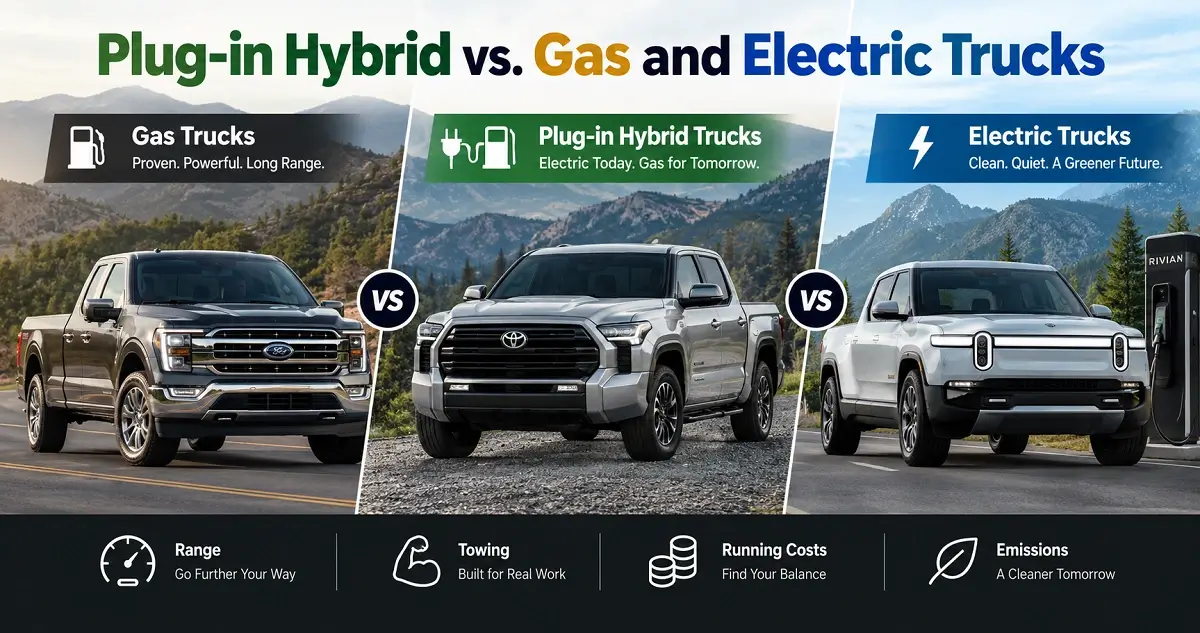
| Feature | Gas Truck | Full EV Truck | Plug-in Hybrid Truck in America |
|---|---|---|---|
| Daily Driving | Runs fully on gasoline | Uses electric power | Uses electric power for shorter trips |
| Long Road Trips | Easy with quick refueling | Requires charging stops | Gasoline provides extra driving range |
| Charging | Not required | Required regularly | Can charge at home |
| Refueling | Fast and widely available | Charging takes longer | Gasoline and electric charging |
| Towing & Hauling | Well suited for heavy use | Can be affected by range loss when towing | Offers a balance of electric driving and gasoline range |
| Best For | Highway drivers, contractors, and heavy-duty use | Drivers with reliable home charging | Families, contractors, and outdoor enthusiasts |
| Main Advantage | Simple and familiar | Quiet, efficient electric driving | Flexibility for both daily trips and longer journ |
Which Truck Powertrain Is Better for Daily Driving and Work?
For daily commuting, an electric-focused powertrain can feel smooth and quiet. Stop-and-go traffic also gives regenerative braking more opportunities to recover energy. If you can charge at home, you may be able to cover much of your weekday driving with electricity. That can make a range-extended truck feel more like an EV during normal family use.
For work, the answer depends on the job. If you haul tools around town and tow a trailer only occasionally, a hybrid or range-extended truck can be a strong fit. If you tow 10,000 pounds every week across long highway routes, you need to examine real-world fuel use and charging access much more carefully. A standard F-150 PowerBoost may be a simpler choice today because it is already established in the market, while the Ram 1500 REV remains a new technology with projected 2026 availability.
2026 Tax Credits, Incentives and Ownership Costs
This is where older online articles can cause real confusion. The federal clean vehicle credits changed under the 2025 tax law. The IRS currently states that the New Clean Vehicle Credit, Previously-Owned Clean Vehicle Credit, and Qualified Commercial Clean Vehicle Credit are not available for vehicles acquired after September 30, 2025.
That means you should not assume a 2026 plug-in truck automatically receives the old federal incentive. State and local programs can be different, and utility companies may offer their own charging incentives. Those programs can change by location, income, vehicle type, or purchase date. Check the IRS and your state or utility before you count any incentive as part of your buying budget.
Are Plug-in Hybrid Trucks Eligible for Tax Credits in America?
For a normal consumer purchasing a vehicle in 2026, the old federal clean vehicle credit is not available for a vehicle acquired after September 30, 2025. The IRS explains that eligible vehicles acquired by that deadline may still qualify if the other requirements are met, including placing the vehicle in service.
The situation is different from simply saying “PHEVs never qualify.” Historically, plug-in hybrids could meet clean vehicle requirements because the federal definition included vehicles with an external charging source and a battery of at least 7 kWh, subject to other rules. For a 2026 purchase, however, the termination date is the key issue. You should check current federal and state rules before relying on any tax savings.
Pros and Cons of Plug-in Hybrid Trucks
A Plug-in Hybrid Truck in America can be a smart bridge between two worlds, but it isn’t perfect. The biggest benefit is flexibility. You can use electricity for local driving and gasoline-backed energy for longer trips, while still getting the towing and cargo capability expected from a full-size pickup.
The downside is complexity and cost. You have a large battery, electric motors, charging hardware, power electronics, and a gasoline engine or generator system. That’s more technology than a basic gas truck. You also need access to charging if you want the system to deliver its biggest benefit.
Pros:
- Electric driving for daily trips.
- Gasoline-backed range for long journeys.
- Strong towing potential.
- Quiet and smooth low-speed driving.
- Home charging convenience.
- Less dependence on public charging than a battery-only truck.
- Potentially lower fuel use for short daily trips.
Cons:
- Higher purchase price than many gas trucks.
- Limited model choice in America.
- More complex powertrain technology.
- Heavy towing can reduce electric range.
- Federal clean vehicle credits ended for post-September 30, 2025 acquisitions.
- Final production pricing and specifications can change for new models.
Is a Plug-in Hybrid Truck Worth Buying in America?
For the right driver, yes. If you commute during the week, can install a Level 2 charger at home, and still take long family road trips, the concept is hard to ignore. You get the calm, quick feel of electric driving for normal use without having to plan every long trip around charging stations.
But don’t buy one just because “hybrid” sounds efficient. Your driving pattern matters more than the badge. If you drive 20 miles a day and rarely tow, a smaller hybrid pickup may save you more money. If you tow a heavy trailer every weekend, a proven full-size hybrid or conventional truck may make more sense until real-world range-extended truck testing becomes available.
Conclusion
The Plug-in Hybrid Truck in America market is still young, but 2026 could become an important turning point. Ram’s 1500 REV stands out because it combines a 92-kWh battery, electric drive, a gasoline-powered generator, projected 690-mile total range, and claimed 14,000-pound towing capability.
For buyers who want a proven truck today, the 2026 Ford F-150 PowerBoost remains a compelling full-hybrid choice. It offers 430 horsepower, 578 lb-ft of torque, up to 11,600 pounds of towing, and useful onboard electrical power. The smaller Maverick Hybrid is even more focused on affordable daily driving, with up to 42 city MPG in its FWD configuration.
The smart move is to match the truck to your real life. Count your daily miles, towing needs, charging options, fuel costs, and total purchase budget. Don’t let a huge range number or a big horsepower figure make the decision for you. For many American families, the best Plug-in Hybrid Truck in America will be the one that handles Monday’s commute, Friday’s trailer, and Sunday’s family trip without making ownership stressful.
FAQs
What is the best plug-in hybrid truck in America for 2026?
The Ram 1500 REV is the key range-extended truck to watch in 2026. Ram lists a projected 2026 availability, a 92-kWh battery, up to 690 miles of manufacturer-estimated total range, 14,000 pounds of maximum towing, and 2,625 pounds of maximum payload.
Is the Ford F-150 PowerBoost a plug-in hybrid?
No. The 2026 F-150 PowerBoost is a full hybrid, not a plug-in hybrid. Its battery is charged by the truck’s hybrid system rather than through an external charging plug. Ford lists 430 horsepower, 578 lb-ft of torque, and up to 11,600 pounds of towing capability.
How much can the Ram 1500 REV tow?
Ram currently lists a maximum towing capacity of 14,000 pounds and a maximum payload rating of 2,625 pounds. These are manufacturer claims for the planned truck, so your final capacity will depend on the production configuration and equipment.
Does a plug-in hybrid truck need a home charger?
It doesn’t strictly need one, but home charging makes the concept much more useful. A 120-volt outlet can provide charging, while a 240-volt Level 2 charger is better suited to regular overnight charging. Ram says its electric trucks support Level 1, Level 2, and DC fast charging.
Can I get the federal EV tax credit for a plug-in hybrid truck in 2026?
For vehicles acquired after September 30, 2025, the IRS says the New Clean Vehicle Credit and related clean vehicle credits are no longer available. State or local incentives may have separate rules, so check those programs before buying.
Should I buy a plug-in hybrid truck or a regular hybrid truck?
Choose a plug-in or range-extended truck if you can charge regularly and want more electric driving. Choose a regular hybrid if you want simple fueling and don’t want to plan around charging. For heavy towing and long-distance work, compare the exact truck, trailer weight, payload, fuel economy, and charging access before making your final choice.

Rate This Article
Be the first to rate this article
Thanks for rating!
All Car Brands
View all brands →
















More Updates
Handpicked Accessories for Every Journey
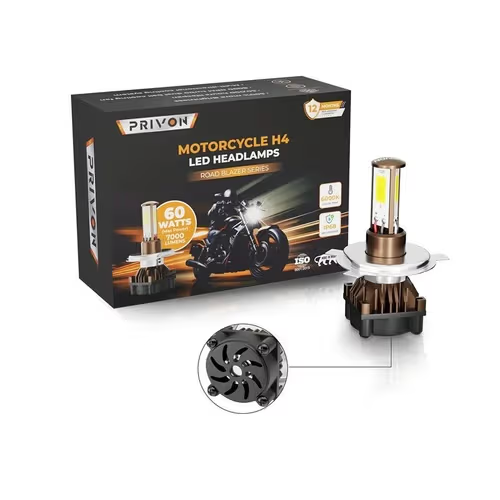
PRIVON 60W H4 LED Headlight for Bike – 7000L, 6000K White LED Light for Night Ride
Ceat Zoom Rad 140/60 R17 63P Tubeless Bike Tyre

ShineXPro Helmet Cleaner & Microfiber Cloth – Anti Bacterial Foaming Helmet Cleaning Spray
Universal Front Fender Mudguard Extender Extension Fits for Motorcycle

Boldfit Full Face Helmet Mask for Bikers in Riding UV Protected

Neodrift JungleMax Bike Cover for Harley-Davidson X440
Wisely Pack 2 Screen Guard for Harley Davidson X440T Bike – Instrument Cluster Accessories
PHANTOM Premium Adjustable Footrest for Harley – Motorcycle Accessory for Touring & City Riding
L3 MODZ Ladies Foot Rest for KTM Duke (BS6 Gen2) Models
Apollo Alpha S1 130/70 R17 62H Radial Tubeless Bike Tyre
30W Motorcycle Type-C USB Phone Charger with PD & Quick Charge

ELTRON TURBO Turn Signal Indicator Lights Compatible for KTM

Steelbird SBA 7 7Wings Flip-Up Helmet for Men with Skull Cap

Vega Atom Open Face Helmet with Clear Visor, Black

Steelbird SBH-23 Brutal Open Face Helmet with Skull Cap

Axor X Cross Dual Visor Full Face Off-Road Helmet – Dull Black Orange

Probiker Protective Full Finger Bike Riding Gloves – Motorcycle, Cycling, and Hiking

XTRIM Protekt Universal Bike Riding Gloves for Men – Black, Red

Rynox Air GT Leather Motorcycle Riding Gloves – Cuff Length | Grey Red

BADOWL RYDON Knuckle Protection Riding Gloves – Touchscreen Sports Gloves

Microfiber Car Duster with Long Handle Cleaning Brush

Robustt Car Interior Cleaning Brush Combo – Scratch Free Car Duster

ORJILO 5-Piece Microfiber Car Duster Kit – Extendable Long Handle Duster for Car

ShineXPro Microfiber Car Cleaning Cloth (500 GSM, Extra Large (35×75 CM))

Wavex Tyre Polish for Car & Bike (1L) – With Applicator and Microfiber Cloth

ShineXPro Glass Cleaner Spray (300 ml) – Streak Free Car Glass Cleaner Liquid

SOFTSPUN Microfiber Chenille Wash Mitt (1700 GSM)

Tusa V1 Cordless Vacuum Cleaner for Car – High Power Portable Lightweight Wireless Vacuum

SOFTSPUN Microfiber Cloth (40×40 cm, 340 GSM) – Automotive Microfibre Towels for Car

SEZNIK 4-in-1 Cordless Vacuum Cleaner & Blower

GOODAIR Royal Premium Non-Electric Car Air Purifier
Portronics 38W Dual Output Fast Car Charger with 20W Type-C PD & 18W USB with Cars for iPhone

AutoBizarre High Gloss Carbon Fibre Paint Protection For Car

APPUCOCO Mini Car Trash Bin – Black

FOVERA Memory Foam Car Neck Rest Pillow – Medium, Black

360° Vacuum Magnetic Car Phone Mount – Strong Suction Cup Phone Holder for Car
Amazon Basics 5D Custom Fit Car Floor Mats for Swift Facelift
TUSA Drive X 12V DC Portable Tyre Inflator – 150 PSI, Air Compressor
![Qubo Dashcam Pro 4K [2026 Edition] – Dual Channel | ADAS | Ultra-Wide 8MP UHD+ Front, 2MP FHD Rear](https://neudeals.co/wp-content/uploads/2026/09/Qubo-Dashcam-Pro-4K-Sensor.jpg)
Qubo Dashcam Pro 4K [2026 Edition] – Dual Channel | ADAS | Ultra-Wide 8MP UHD+ Front, 2MP FHD Rear
Oowah EX Electric Scooter – Removable Lithium-ion Battery , Laguna Blue
BG C12i EX Gen 2 Electric Scooter – Removable 2.0 kWh LFP Battery, 60 km/h Top Speed
EOX OKO Electric Scooter – Removable Lithium Battery, 40-50 km Long-Range
EOX OLO Low Speed Electric Scooter – 45Km Mileage, Pastel Yellow & Black
EOX E2 Low Speed Electric Scooter – 60-70Km Range, Portable Lithium Battery
Okinawa Praise PRO Electric Scooter – Li-Ion Battery
EOX® ROX Electric Scooter – 48V Removable Lithium Battery, 50-60 km Long-Range
MIOOX Electric Scooter – 51.8V 28AH Range 55-65km Front Disc
AMO Low Speed Electric Scooter – 60-70 Km Range in Grey
AMO Jaunty 3W Low-Speed Electric Scooter – Blue and Black
Bajaj Chetak C2501 Electric Scooter – Glossy Active Black
Bajaj Chetak C3501 Electric Scooter – Brooklyn Black
Royal Enfield Classic 350 with Disc & Alloy Wheels Motorcycle – Stealth Black
Royal Enfield Bullet 350 Disc & Spoke Wheel Motorcycle – Battalion Black
Royal Enfield Hunter 350 with Disc & Alloy Wheels Motorcycle – Dapper Grey
Hero MotoCorp Passion+ i3S Drum – Black Heavy Grey
Hero MotoCorp XTREME 125R Bike(ABS) – Stallion Black
Hero MotoCorp HF Deluxe Drum – Black Grey
Hero MotoCorp XTREME 125R FI ABS SEAT DS (OBD2B) Motorcycles – Black
Bajaj Avenger 220 Cruise Motorcycle – Moon White
Bajaj Pulsar N 160 Ug Motorcycle – Brooklyn Black
Bajaj Platina 110 Es Drum Motorcycle – Black Red
Bajaj Pulsar N 250 Ug Motorcycle – Brooklyn Black
Harley Davidson X440 T 440cc Motorcycle – Pearl Blue
Harley Davidson X440 S 440cc Motorcycle – Matte Black
Harley Davidson X440 Vivid 440cc Motorcycle – Metallic Thick Red
Harley Davidson X440 T 440 CC Motorcycle – Pearl Red
KTM Duke 200 PRO Bike – Dark Galvano Black

KTM Duke 390 R Bike – Electronic Orange
KTM Adventure X 390 Bike – Orange
KTM Adventure 250 Bike – White
As an Amazon Associate, Neu Auto earns from qualifying purchases. When you purchase through one of the Amazon links above, Neu Auto may receive a commission at no additional cost to you.