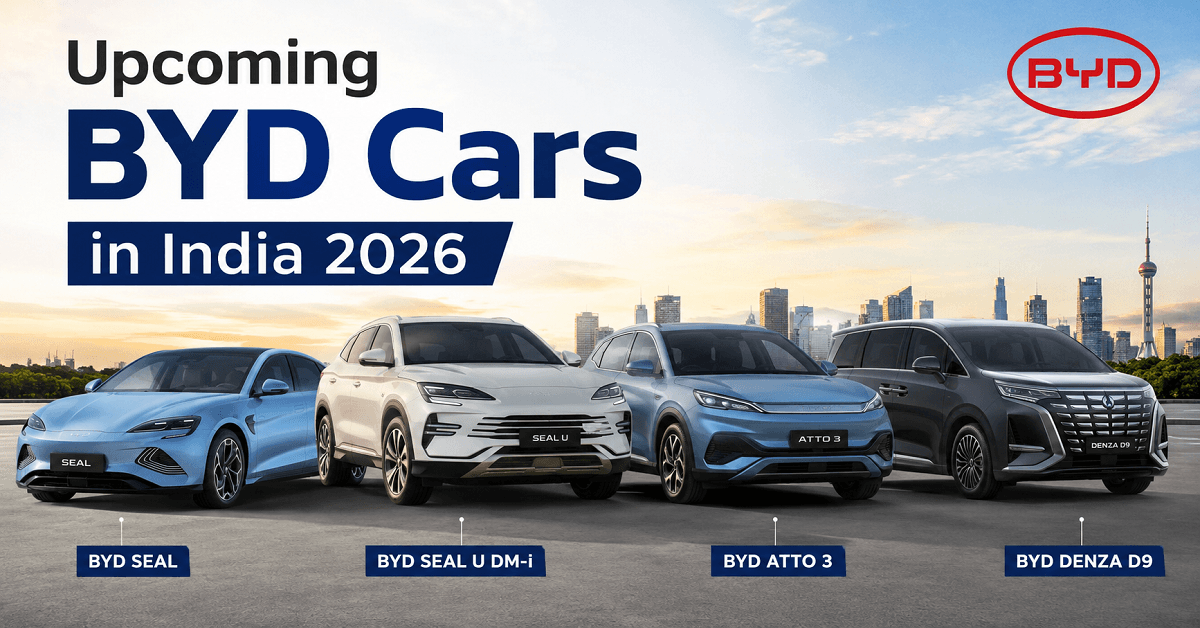

Looking for the next BYD cars to launch in India? BYD is expanding its lineup with new electric and hybrid models. From the BYD Seal U DM-i and BYD Atto 2 to the Denza D9 and BYD Leopard 8, here are the key upcoming BYD cars to watch.
Key Highlights

- 3 million+ sales: BYD delivered over 3.02 million new energy vehicles globally in 2023, officially outpacing pure EV rivals according to official BYD financial reports.
- 1,000+ km combined range: The DM-i Super Hybrid technology pairs a petrol engine with Blade Battery tech to eliminate range anxiety on long road trips.
- LFP safety standard: Industry experts at CleanTechnica highlight BYD’s LFP Blade Battery as one of the safest power units, passing strict nail penetration tests without catching fire.
- Luxury for less: Models like the Denza D9 offer executive rear seating and dual-power options at a fraction of European luxury MPV costs.
What New BYD Cars Are Coming To India?
You’ve probably noticed BYD showrooms popping up in more cities lately. That’s not an accident. After three years of selling only pure electric cars here, the company is finally widening its net. Between now and early 2027, you can expect six new launches: a plug-in hybrid SUV, a budget electric SUV, a next-gen flagship sedan, a small hatchback, a rugged off-roader, and a luxury MPV that costs more than most Mumbai flats’ down payments.
I’ve spent the better part of the last decade covering the Indian auto industry, watching Hyundai, Tata, and now BYD fight for your garage space. What strikes me about this lineup is how different each car is from the next. BYD isn’t just repeating one formula six times. It’s testing every price bracket at once.
Here’s the full list, with real numbers pulled from BYD’s own filings, dealer sources, and Autocar India’s on-ground reporting.
| Model | Vehicle Type | Powertrain | Est. Range | Standout Feature |
| BYD Seal U DM-i | Mid-size SUV | Plug-in Hybrid | 670+ miles total | Dual-fuel flexibility |
| BYD Atto 2 | Compact SUV | Pure EV | 186 – 248 miles | Easy city driving & low price |
| Next-Gen Seal | Sport Sedan | Pure EV | Up to 400 miles | 800V ultra-fast charging |
| BYD Dolphin | Hatchback | Pure EV | 265 miles | Great value safety suite |
| BYD Leopard 8 | Full-size SUV | Plug-in Hybrid | 600+ miles total | Off-road active suspension |
| Denza D9 | Luxury MPV | EV / PHEV | Up to 385 miles | Rear massage captain chairs |
1. BYD Seal U DM-i: The Company’s First Plug-In Hybrid For India
Expected Price: ₹45 lakh to ₹50 lakh (ex-showroom)
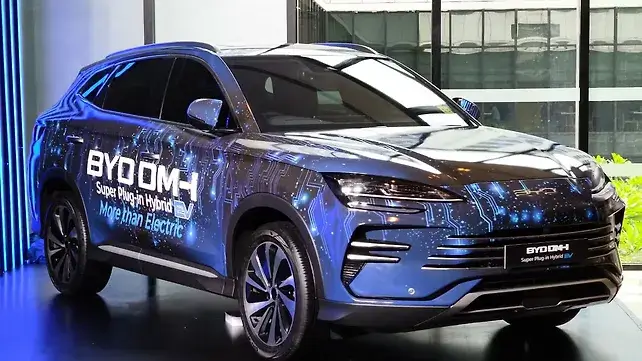
This is the car that changes BYD’s whole India strategy. Until now, if range anxiety scared you off, BYD had nothing for you. The Seal U DM-i fixes that. It runs on BYD’s Super Plug-in Hybrid EV tech, a 1.5-litre turbo petrol engine paired with two electric motors and an 18.3kWh battery. BYD claims a combined range of over 1,200km, with roughly 70km possible on pure electric power alone. You get 19-inch alloy wheels, vegan leather seats, an Infinity premium sound system, 360-degree camera coverage, and BYD’s signature 15.6-inch rotating touchscreen. It also carries a full ADAS suite for highway driving. Think of it as a Hyundai Creta rival that never needs a fuel stop on short trips, but still has a petrol engine for those 800km road trips to your hometown.
2. BYD Atto 2: Sierra.EV Rival
Expected Price: ₹18 lakh to ₹25 lakh (ex-showroom)
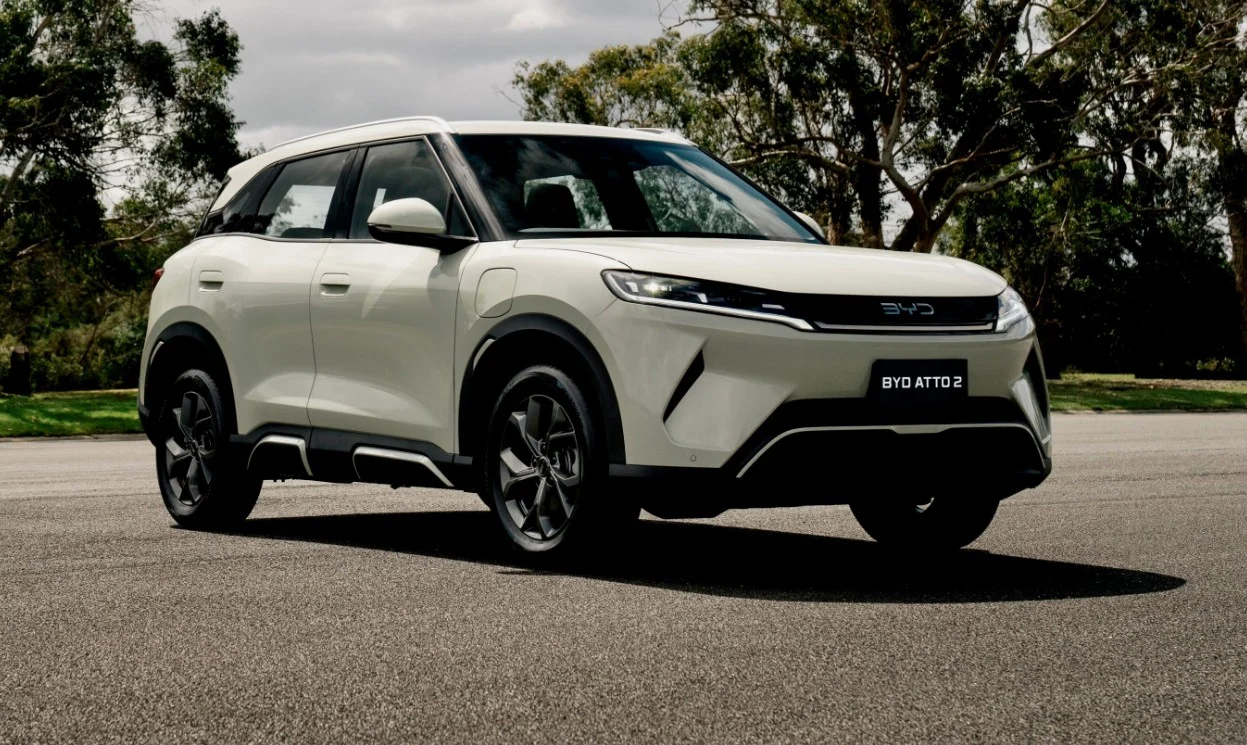
You want an electric SUV, but the Atto 3 feels too pricey. That’s exactly the gap the Atto 2 is built to fill. It’s a compact SUV riding on BYD’s e-Platform 3.0, powered by a 130kW motor good for 290Nm of torque. BYD’s own figures claim 0 to 100 km/h in 7.9 seconds and a range between 312km and 380km depending on the market spec. At 4.3 meters long, it’s a genuinely city-friendly size. Inside, you get a panoramic sunroof, vegan leather trim, heated front seats, and a 400-litre boot that folds out to 1,340 litres. It’s already been spotted testing on Indian roads, which usually means a launch is closer than the press releases let on.
3. Next-Generation BYD Seal: More Range And Technology
Expected Price: ₹55 lakh to ₹65 lakh (estimated, ex-showroom)
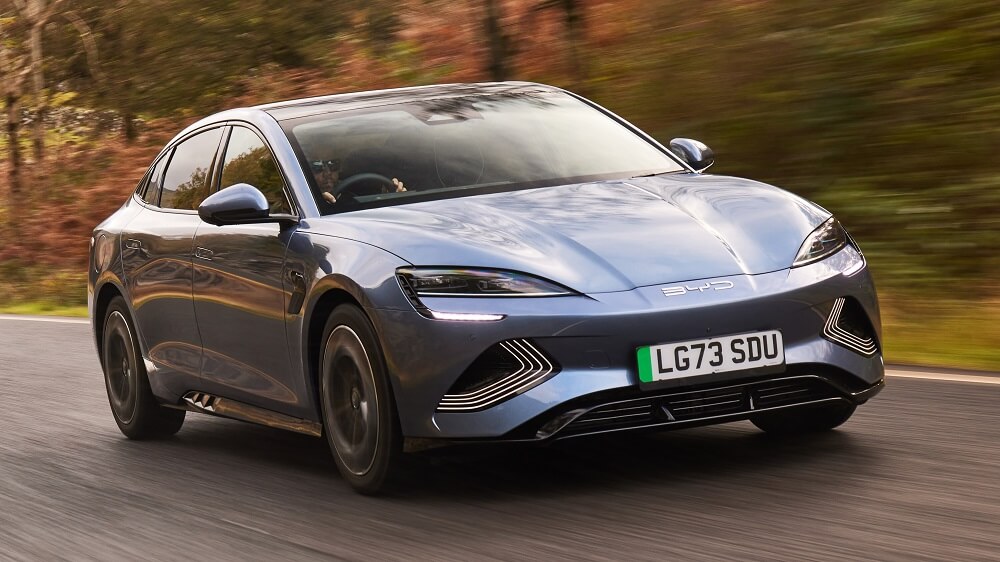
The current BYD Seal already rivals the Tesla Model 3 on paper. The next-generation model, built around BYD’s newer Blade Battery 2.0 tech and an 800V architecture, pushes things further. Chinese market versions of this new platform are chasing a 1,000km range target, a huge jump from anything BYD sells in India right now. Expect a redesigned front fascia closer to the Seal U’s face, quicker DC charging thanks to the 800V setup, and BYD’s DiSus-C adaptive suspension carried over from the current car. India pricing hasn’t been confirmed since this generation hasn’t been officially unveiled here yet, so treat the number above as an early estimate based on the current Seal’s ₹41.5 lakh to ₹53.65 lakh range, adjusted upward for the tech jump.
4. BYD Dolphin: Affordable Electric Hatchback
Expected Price: ₹10 lakh to ₹12.7 lakh (ex-showroom)
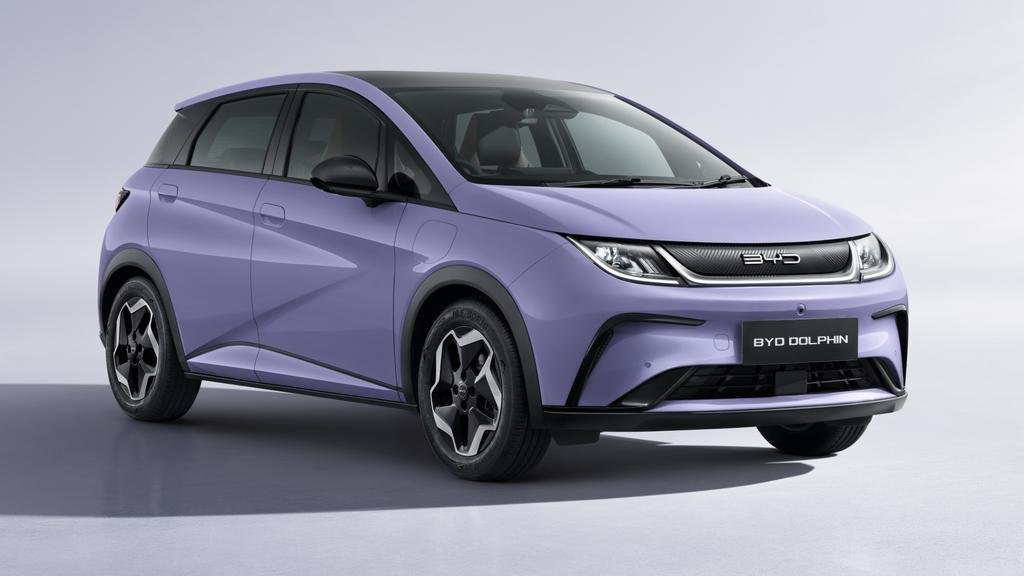
This is BYD’s answer to the Tata Tiago EV and Citroen eC3. The Dolphin is a compact hatchback measuring 4,290mm long with a 2,700mm wheelbase, and BYD has already trademarked the name in India. Globally, it’s offered with battery packs from 32kWh right up to 45kWh, with claimed range figures between 315km and 420km depending on variant. You get a rotatable touchscreen, a digital instrument cluster, a 360-degree camera, and six airbags as standard. Boot space is a modest 345 litres, but it expands to 1,310 litres with the rear seats folded flat. If BYD prices this near ₹10 lakh, it becomes the cheapest EV in the company’s India lineup by a wide margin.
5. BYD Leopard 8: High-Performance Plug-In Hybrid SUV
Expected Price: ₹70 lakh to ₹90 lakh (ex-showroom)
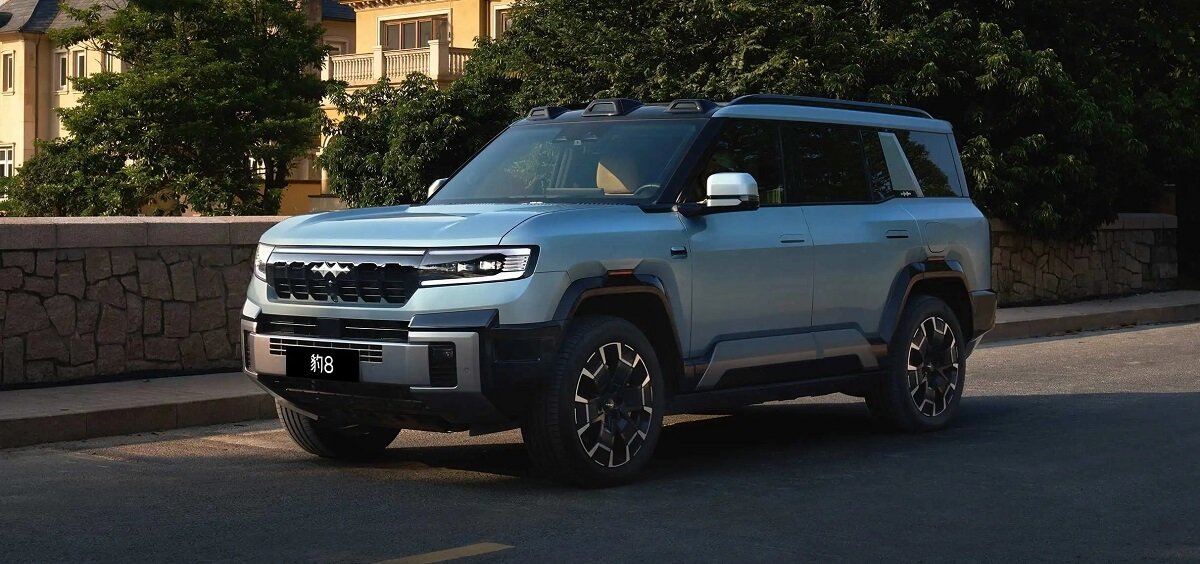
Sold under BYD’s Fang Cheng Bao off-road sub-brand, the Leopard 8 is built for buyers who cross-shop the Land Rover Defender. It’s a genuinely big SUV, 5,195mm long, 1,994mm wide, sitting on a ladder-frame chassis with up to 310mm of ground clearance. Power comes from a plug-in hybrid setup: a 2.0-litre turbo petrol engine plus a dual-motor system and a 36.8kWh battery, together producing a claimed 748hp and 760Nm of torque. BYD says total range (petrol plus electric) touches 1,200km, with about 100km possible on electric power alone. It’s already been patented in India, which is usually one of the clearer signals that a launch is genuinely coming, expected around March 2027.
6. Denza D9: BYD’s Entry Into The Luxury MPV Space
Expected Price: ₹80 lakh to ₹1 crore (ex-showroom)
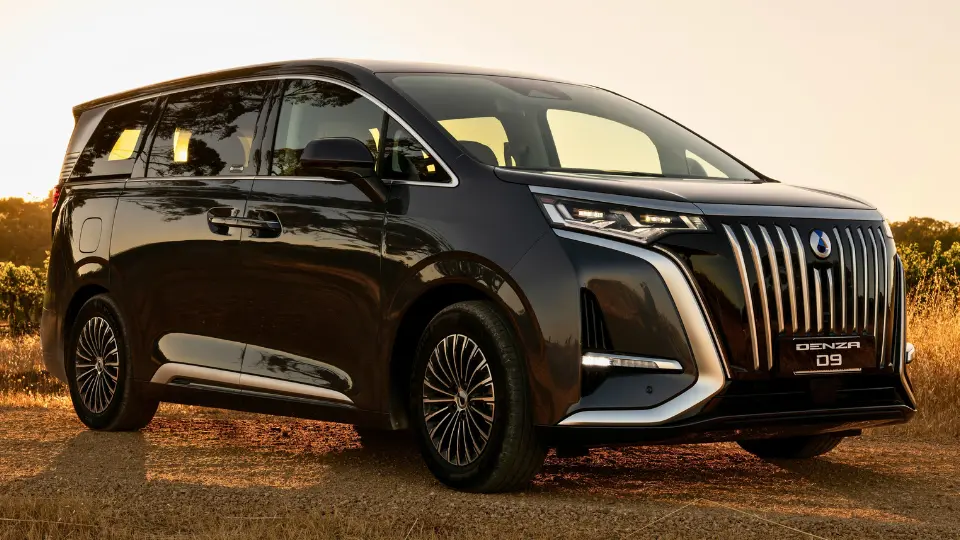
Denza is BYD’s luxury sub-brand, and the Denza D9 is its first car aimed squarely at India. This is a full-size luxury MPV built to compete with the MG M9, Toyota Vellfire, and Mercedes V-Class. Global specs show a 103.36kWh Blade battery delivering up to 520km of WLTC-rated range, with a choice of a single-motor FWD setup (313hp, 360Nm) or a dual-motor AWD version (374hp, 470Nm). It measures a massive 5,250mm in length with a 3,110mm wheelbase, and international units come with DiSus-C adaptive suspension, second-row comfort seating, and in some markets, massage functions and power-sliding doors. India is expected to get the fully electric version first, imported as completely built units, with a possible Diwali 2026 launch.
How To Choose The Right BYD Model For Your Family
Choosing your next vehicle comes down to how you drive every day:
- Calculate your daily commute: If you drive under 30 miles a day, a pure EV like the Atto 2 or Dolphin saves you the most money on fuel.
- Consider your charging setup: If you cannot install a home charger easily, a plug-in hybrid like the Seal U DM-i offers the best safety net.
- Count your passengers: For larger families or business travel, the Denza D9 gives everyone first-class seating room.
Why Could These Cars Matter in India?
India is a difficult market for premium imported cars because pricing can rise quickly when vehicles arrive through import channels. Current BYD models already show this challenge. Autocar India’s current listing places the Seal at ₹41.50 lakh ex-showroom and the Sealion 7 between ₹49.90 lakh and ₹55.90 lakh, while the Atto 3 starts around ₹24.99 lakh. That creates a clear gap between mainstream EVs and BYD’s premium products. The Atto 2 could help fill the lower side of that gap, while the Seal U could give the company a different answer to customers who are not ready to rely completely on public charging.
The Seal U is especially relevant because BYD is bringing its DM-i technology to India at a time when Indian buyers are asking a practical question: What happens when I need to drive 500km but do not want to spend time looking for a charger? A plug-in hybrid offers one possible answer. You can charge at home for short daily trips, then use petrol when the journey is longer. It is not automatically cheaper or better for everyone, but it gives buyers another path between a conventional petrol SUV and a full EV. BYD’s India announcement says the Seal U will be its first PHEV model in the country and that the DM-i system can deliver more than 1,200km of combined range under the claimed test conditions.
What Are Real Owners Saying About BYD Cars?
Real owner feedback gives a much better picture than a brochure, but you should also remember that one person’s experience is not a scientific reliability study. Indian owners have praised the BYD Seal for highway comfort, stability, and range. One Team-BHP owner reported approximately 12,000km over a year and described the car as a joy on highways, with multiple long road trips. Another owner with more than 32,000km praised the Seal’s highway driving, quiet cabin, and roughly 560km range, but also reported peeling steering-wheel material and an issue with the key fob. Those comments are valuable because they show both sides of ownership instead of treating the car as perfect.
Feedback on the Seal U DM-i is similarly mixed. One owner who had used the car for around 1,000 to 1,500 miles described it as comfortable, smooth, and good on range, while another owner reported that the hybrid system worked well after a year and that software was an area where improvements could still be made. There are also negative reports. One 2026 owner described rattling suspension noise, body-panel alignment issues, paint imperfections, and an intermittent reversing-camera signal problem. Another owner reported a real-world EV consumption of about 25kWh per 100km in city use and said the EV range was below the advertised figure in that situation. Another owner in the same discussion reported better results, showing how climate, driving and configuration can change outcomes.
BYD vs Tesla: Who Is Number One?
If you are asking who is number one, BYD or Tesla, the answer depends on what you count. In 2025, BYD sold about 2.26 million battery electric passenger vehicles, while Tesla delivered about 1.64 million vehicles, allowing BYD to overtake Tesla in annual BEV volume. BYD also sold around 2.29 million plug-in hybrids, which Tesla does not offer in the same way. Across all new energy vehicles, BYD delivered more than 4.6 million in 2025. So, by 2025 annual vehicle volume, BYD had the stronger sales position.
For an Indian buyer, the better question is not who wins globally. Ask which company gives you the better car for your location, charging access, service support, budget, and driving pattern. Tesla’s India presence and product strategy should be judged on the models and service network available to Indian buyers. BYD already has an established passenger-car presence in India, but its network is still smaller than the biggest mass-market brands. That makes local support a key part of the buying decision.
Why Is BYD Launching So Many Hybrid And Electric Cars At Once?
You might be wondering why BYD isn’t just picking one segment and sticking to it. There’s a simple business reason behind it. BYD’s domestic China sales have softened as government EV subsidies changed, so the company is leaning hard into exports and hybrids to keep growth alive. India, with its love for SUVs and its growing appetite for premium hybrids, happens to sit right in that strategy. Plug-in hybrids also dodge some of the range anxiety that has kept many Indian buyers away from full EVs, especially outside the big cities where charging infrastructure is still catching up.
There’s also a pricing angle. By spreading launches across ₹10 lakh hatchbacks and ₹1 crore MPVs, BYD covers nearly every buyer in one sweep instead of fighting just one segment at a time.
What BYD Cars Could Arrive in India in 2027?
The answer is not settled yet, and that is where careful wording matters. As of August 2026, the strongest India product evidence points to the Seal U and Atto 2 as the near-term additions, while the current Indian market listing does not confirm a six-model launch plan for 2027. The Denza D9 has been reported as a possible future premium entry, but its launch remains a reported plan rather than a confirmed product announcement. The Dolphin, Leopard 8, and next-generation Seal may attract Indian interest, but there is not enough confirmed information to give you a reliable 2027 launch date for each.
This is important because automotive launch timelines can move quickly. A manufacturer can test a vehicle in India without confirming a launch. A model can be shown to media without a final price. A global model can also be changed for India because of taxes, homologation, charging standards, safety rules, or customer preferences. That is why you should treat “expected 2027” as a watchlist label, not a booking promise. If you are planning to buy a BYD in 2027, keep an eye on official BYD India announcements and final homologation details rather than relying on social media leaks.
Real Owner Reviews
“We bought the BYD Atto 3 last year, and the Blade Battery gave us complete peace of mind. Charging at home overnight costs us a fraction of what gas used to cost. The tech inside is super easy for our kids to use too.”
— Sarah M., Family Driver & Early EV Adopter
“Switching our company fleet to BYD sedans dropped our running costs significantly. Maintenance has been basic, and the cabin materials feel just as good as European brands that cost almost twice as much.”
— David K., Fleet Manager
Conclusion
BYD is placing a big bet on India with this lineup, and honestly, it’s the most interesting stretch of launches the brand has planned here. You’ve got something at nearly every price point: an affordable hatchback under ₹13 lakh, a hybrid SUV that solves range anxiety, and a luxury MPV chasing buyers who currently look at the Vellfire. My advice after years of watching new car launches play out: don’t rush a booking on estimated pricing. Wait for BYD’s official numbers, test drive if you can, and pick the car that matches how you actually drive, not just the one with the flashiest spec sheet.
Frequently Asked Questions
Is there a new BYD coming out?
Yes. The clearest confirmed upcoming BYD for India is the Seal U plug-in hybrid SUV, which BYD has confirmed for launch by the end of 2026. The Atto 2 is also currently listed by Indian automotive sources as an expected 2026 launch. The Seal U will be important because it introduces BYD’s DM-i plug-in hybrid technology to the Indian passenger vehicle market.
Who is no 1 BYD or Tesla?
By 2025, in global battery electric passenger vehicle sales, BYD was ahead of Tesla. BYD sold about 2.26 million BEVs, while Tesla delivered about 1.64 million vehicles. BYD also sells plug-in hybrids, giving it a broader electrified vehicle portfolio. Being number one in sales does not mean every BYD model is better than every Tesla, so buyers should still compare individual cars, charging networks, software, and service.
What is the next model of BYD to be released in 2026?
For India, the Seal U is the most clearly confirmed new BYD model, with BYD stating that it will arrive by the end of 2026. The Atto 2 is also expected in 2026, with current industry estimates suggesting a possible December launch. Final dates, specifications, and prices can change, so buyers should wait for BYD India’s official confirmation before making a booking.
What BYD cars are expected to be launched in India in 2027?
There is no reliable official six-car 2027 launch schedule available at present. The Seal U and Atto 2 are the strongest near-term products in current Indian reporting, while the Denza D9 has been reported as a possible future premium model. The Dolphin, Leopard 8 and next-generation Seal are better treated as watchlist models until BYD confirms their Indian launch plans.
Will BYD launch new cars in India?
BYD is already expanding its Indian portfolio, and the confirmed Seal U launch shows that the company is moving beyond an electric-only lineup. The Atto 2 is also being tracked for India in 2026. Future expansion will depend on pricing, import and manufacturing economics, regulations, charging infrastructure, and demand. Given BYD’s global scale and strong export growth, India remains an important market to watch, but each individual model still needs official confirmation.
About The Author